


Victorian Glass Condiment Set
A victorian glass condiment set brings table service alive with cut glass bottles and silver frames.
Victorian Glass Condiment Set
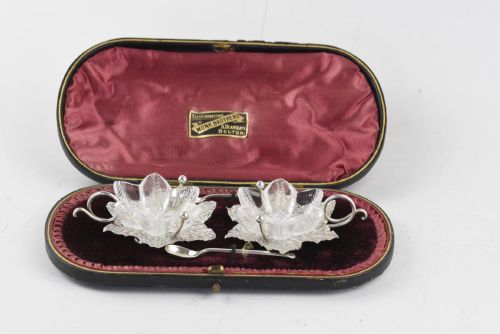
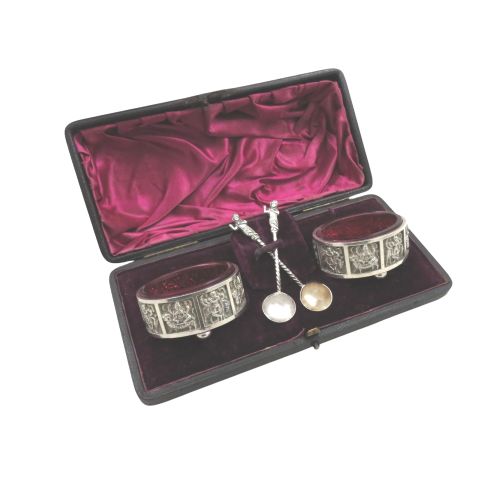
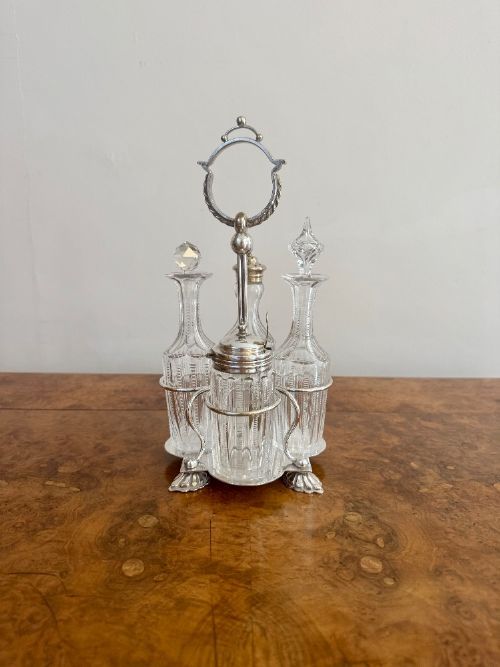
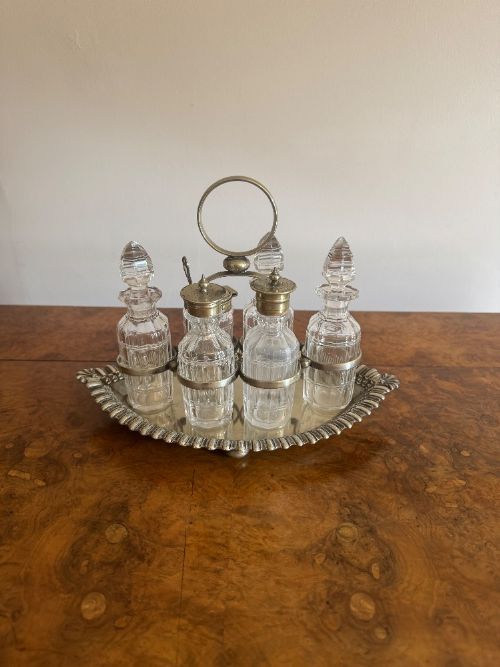
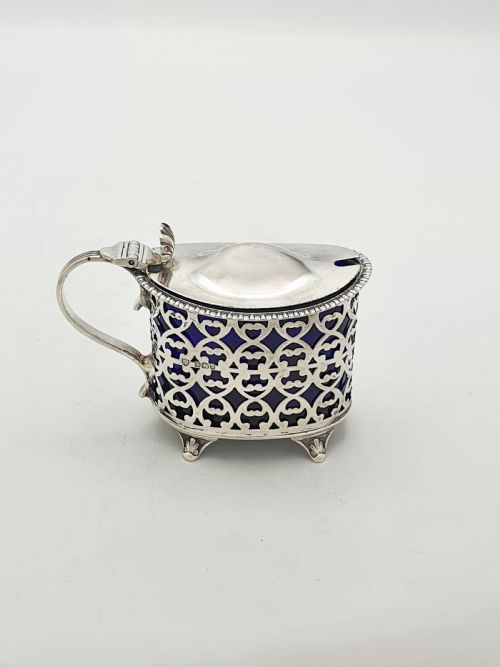
A victorian glass condiment set brings together matched vessels for mustard, oil, vinegar and salts, housed in frames of silver plate or sterling silver. These table pieces span cruet stands holding multiple bottles to smaller pairs of salt cellars and mustard pots.
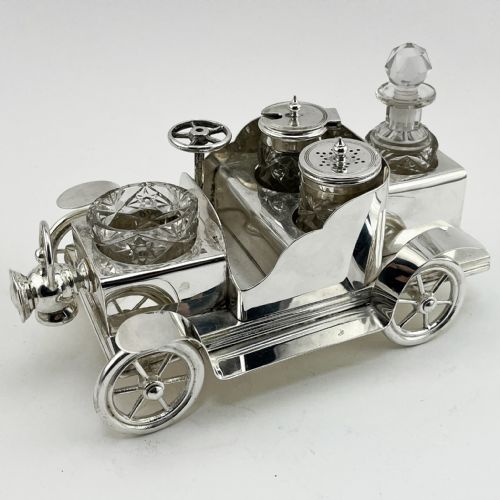
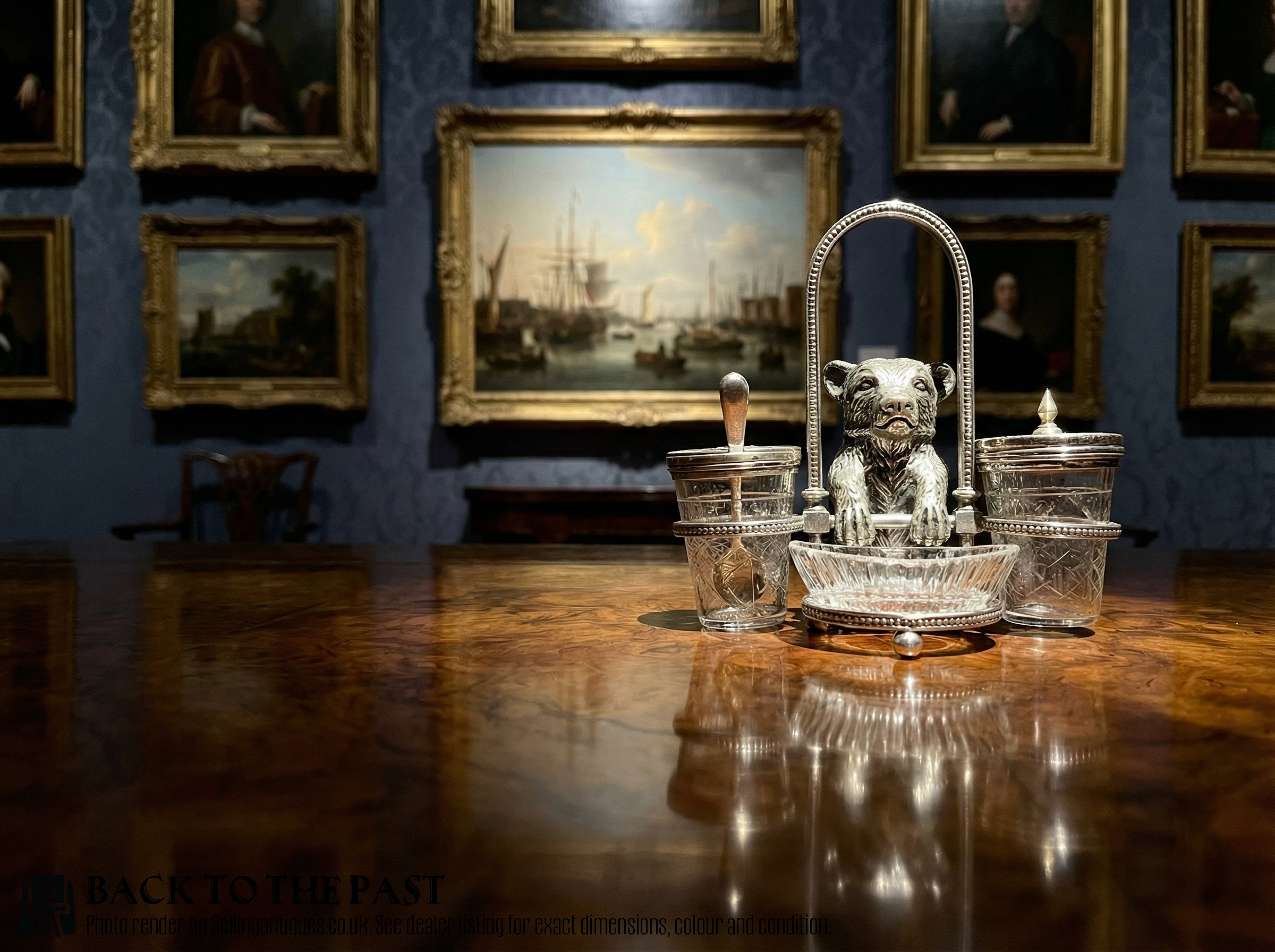
The selections range from multi-bottle silver plated frames dating towards nineteen hundred down to mid-nineteenth century sterling silver stands and individual open salts. Novelty forms such as bears, cars and musical instruments also appear alongside traditional stands.
Materials and Technique
Glass production relies on heavy cut glass, moulded vessels and coloured glass inserts in cobalt or cranberry hues. These glass elements pair with sterling silver and silver plate mounts, often incorporating intricate pierced work or engraved detailing.
Bears and musical instruments hold the pepper.
Quality and Distinction
The standard of a set rests upon the crispness of the glass cutting and the weight of the silver or plated frame. Maker attribution to notable workshops adds distinction to the metalwork.
Completeness dictates value, particularly when original matching glass liners, bottles and spoons remain together in their fitted cases or stands.
Mappin Brothers·Walker & Hall·Elkington & Co·William Hutton & Sons·Wade Wingfield Wilkins
The Victorian Glass Condiment Set Glossary
- Cruet set
- A matched collection of bottles and jars for condiments, held within a metal stand or frame. These sets usually contain provisions for oil, vinegar, mustard and pepper.
- Salt cellar
- A small open vessel used to hold table salt before the invention of free-flowing salt. They often feature coloured glass liners in cobalt or blue.
- Silver plate
- A base metal, typically copper or nickel silver, coated with a thin layer of pure silver. This technique allowed elaborate tableware to be produced at a lower cost than solid silver.
- Cranberry glass
- A rich pinkish-red glass created by adding gold chloride to the molten glass batch. It appears frequently in nineteenth century preserve dishes and bowls.
- Novelty cruet
- A condiment set designed in an amusing or unusual shape, such as an animal, vehicle or musical instrument. These pieces combine utility with decorative whimsy.
Victorian Glass Condiment Set: Frequently Asked Questions
How do I clean the silver and glass?
Wash the glass vessels in warm soapy water and dry them thoroughly with a soft cloth to protect any cut patterns.
Polish the silver frame gently using a dedicated silver cloth, avoiding abrasive cleaners that might damage the plated surface.
Were these sets used daily?
These sets served dining tables during formal meals and daily family gatherings throughout the nineteenth century.
They held essential seasonings and sauces within easy reach of guests dining together.
How do I spot a replacement bottle?
Examine the cut glass pattern and the thickness of the glass across the different bottles in a stand. Minor variations in tint or grinding indicate a replacement gathered over time.
Check whether the base of each bottle fits securely into the corresponding ring of the silver frame.
What is a bachelor cruet?
A bachelor cruet is a smaller version of a standard condiment set, designed for single households or smaller dining arrangements.
These compact sets typically feature fewer bottles while maintaining the same decorative silver frame quality.