

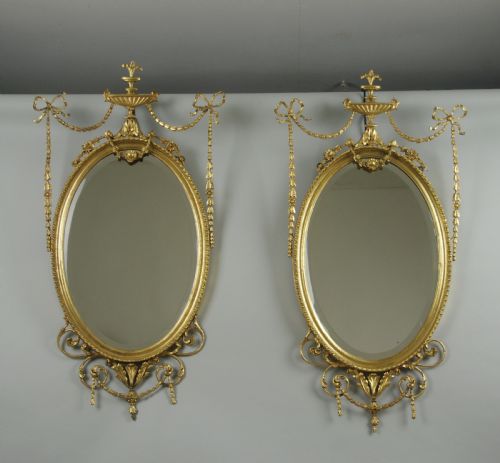


Victorian Gilt Mirror Pair
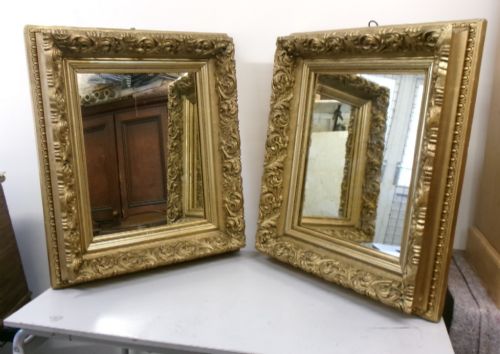
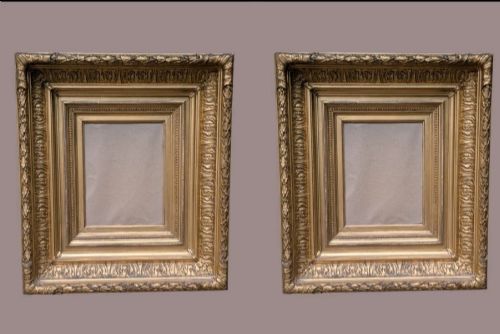
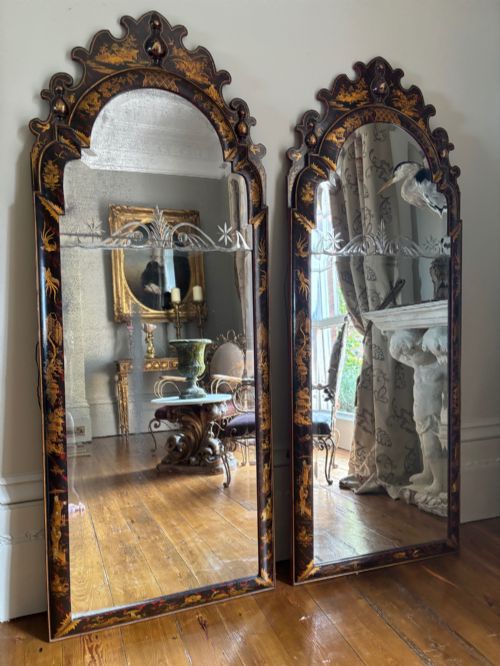
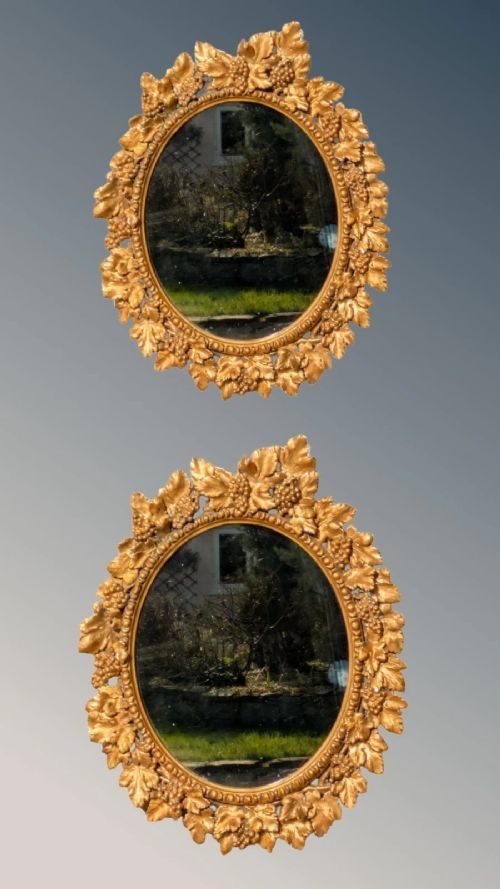
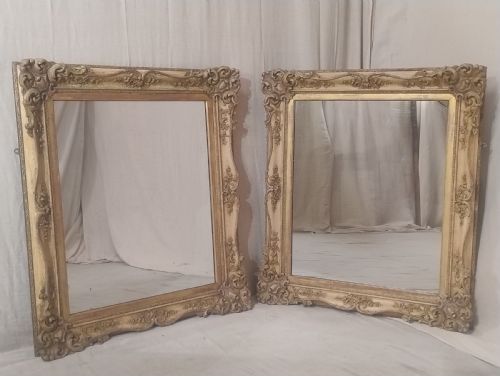
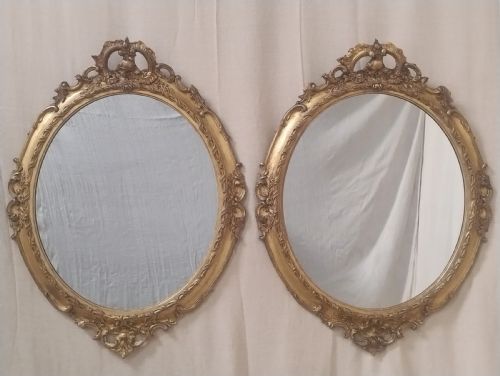
A victorian gilt mirror pair brings balanced splendour to a room, offering matching golden reflection through heavily carved frames that date from the nineteenth century.
Victorian Gilt Mirror Pair
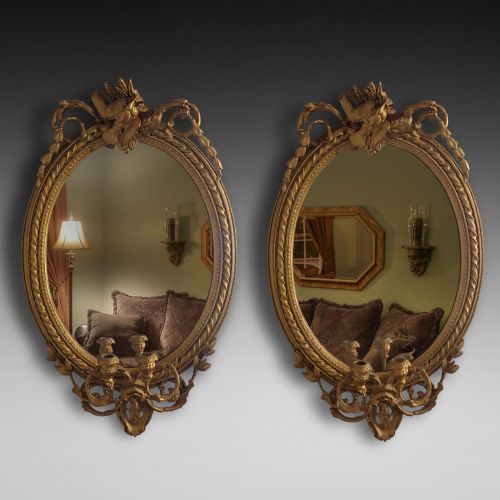
A victorian gilt mirror pair consists of twin looking glasses designed to hang in symmetry, most frequently taking the form of oval wall mirrors framed in elaborate revival styles. These pieces emerge predominantly from the nineteenth century, spanning decades from the early Victorian period through to the late eighteen-eighties and nineties.
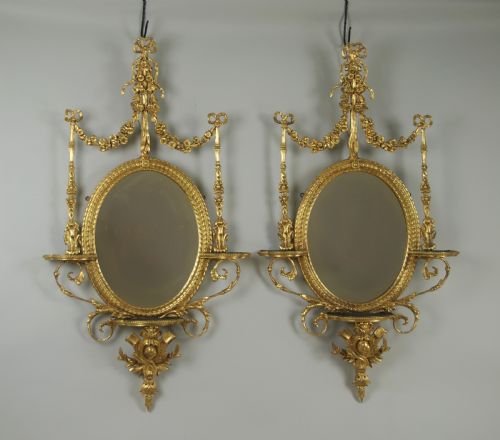
Beyond standard wall mirrors, the search phrase encompasses girandoles equipped with candle sconces, pier glasses intended for placement between windows, and hanging frames adorned with display brackets or ribbon pediments. Oval formats dominate the surviving pairs, often accompanied by substantial timber construction or parcel-gilt details.
Makers and designers of the era drew heavily on historical motifs, resulting in pieces reflecting Rococo Revival, Chippendale Revival, and Adam styles alongside French Chateau influences. Buyers encounter everything from country house proportions measuring over six feet to smaller oval ornaments designed for intimate parlours.
Materials and construction
Craftsmen built the underlying structure of these frames using timber such as pine or walnut, upon which they applied layers of gesso and plaster to form intricate relief decoration. Carved giltwood forms the pinnacle of production, utilising genuine gold leaf laid over preparation layers to catch the candlelight.
Many examples employ composition ornament, a malleable paste pressed into moulds and applied over wooden carcasses to achieve complex scrolling foliage and vine leaf patterns with efficiency. Parcel-gilt techniques combine exposed wood grain with gilded highlights, while the mirror glass itself sits within rebated frames secured by original backboards.
Materials recorded across current and past inventory include traditional gesso, composition ornament, gold leaf, and walnut alongside standard mirror glass.
Assessing quality in matched pairs
The distinction between ordinary production and superior craftsmanship lies in the depth and crispness of the hand-carved gesso relief work. Higher quality pairs display sharply defined acanthus leaves, crisp moulding profiles, and deeply undercut carving rather than soft, muddy cast composition.
Originality of the gilding surface dictates collector value, where undisturbed gold leaf or well-preserved water gilding shows a warm, aged patina instead of flat modern paint. The matching aspect is equally crucial; true pairs retain identical dimensions, synchronised carved details, and matching glass plate thickness without later replacements.
Charles Nosotti·Town and Emanuel·Donald Ross
The Victorian Gilt Mirror Pair Glossary
- Giltwood
- Timber that has been decorated with gold leaf or powder. This material forms the primary lustrous surface on the finest nineteenth-century frames.
- Gesso
- A plaster-like mixture applied to wood frames to create a smooth surface for carving and gilding. Artisans built up thick layers to model intricate three-dimensional decorative motifs.
- Girandole
- A decorative wall mirror featuring attached candle sconces. These fixtures multiplied the available light in a Victorian room by reflecting flickering flames.
- Pier Glass
- A tall mirror designed specifically to hang on the narrow pier of wall between two windows. They frequently paired with matching console tables positioned directly underneath.
- Parcel-Gilt
- Partially gilded decoration where selected portions of the wooden or painted ground remain visible beneath the gold leaf. This technique highlights specific architectural details of the frame.
Victorian Gilt Mirror Pair: Frequently Asked Questions
How were girandole mirrors used?
Girandole mirrors served a practical and decorative purpose by holding lighted candles within attached metal sconces. Positioned strategically on walls, the twin glass plates amplified the warm glow of candlelight across evening drawing rooms.
Over time, these pieces transitioned from primary illumination sources to purely decorative focal points. Homeowners today continue to display them above mantelpieces or side tables where the original candle arms contribute historic character.
Where should I hang large oval mirrors?
Large oval mirrors require sturdy wall fixings attached directly into wooden studs or masonry due to the substantial weight of timber frames and thick glass. Placing them opposite a window maximises natural daylight and creates an illusion of expanded room dimensions.
Matching pairs work exceptionally well when hung in balanced symmetry on either side of a fireplace, doorway, or large piece of furniture. Maintaining eye-level centre points ensures the reflection frames the room harmoniously.
How do I distinguish revival styles?
Revival styles borrow distinct decorative vocabularies from earlier centuries, with Rococo pieces displaying asymmetrical scrolling foliage, C-scrolls, and naturalistic shell motifs. Adam style frames introduce neoclassical symmetry, urns, swags, and ribbon pediments inspired by ancient architecture.
Chippendale revival items often incorporate intricate pierced fretwork with Chinese or Gothic influences. Examining the specific carved motifs allows collectors to date the aesthetic inspiration behind the Victorian interpretation.
Are original mirror plates expected?
Original mirror plates frequently display signs of age, including light foxing, minor silver degradation, and subtle surface distortions from historical manufacturing techniques. These natural imperfections confirm the antique status of the glass and add depth to the reflection.
While replacement glass does occur in pieces that suffered accidental damage during their history, surviving original plates remain desirable. Buyers appreciate the gentle, unhurried clarity that nineteenth-century silvering provides compared to modern float glass.