


Victorian Gilt Candleholder
A victorian gilt candleholder brings nineteenth-century warmth to a room, catching the light in brass, ormolu, and gilt bronze.
Victorian Gilt Candleholder
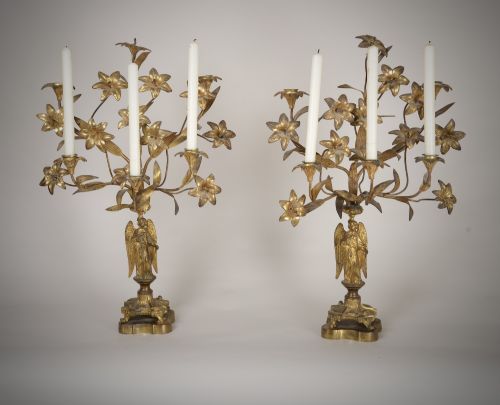
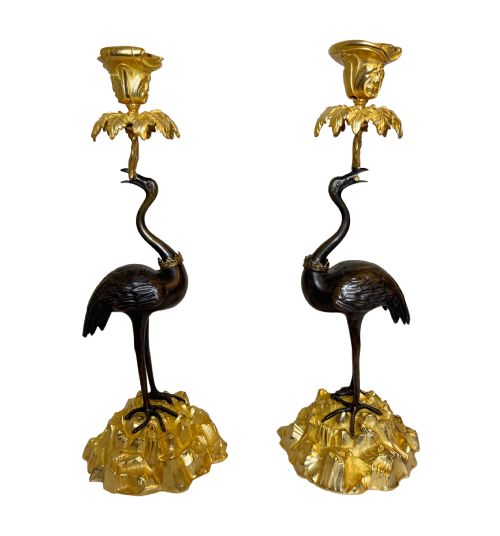
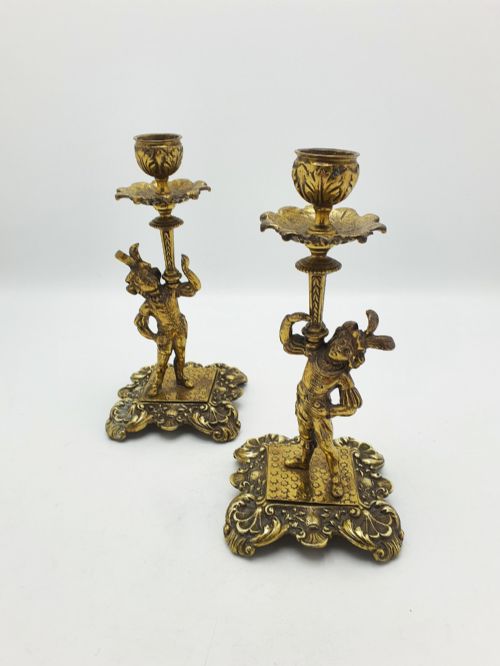
A victorian gilt candleholder encompasses pairs of candlesticks, multi-branched candelabras, wall sconces, and mantel lustres from the nineteenth century. Most pieces found here belong to the Victorian era and the Edwardian period, often taking the form of matched pairs designed for a mantelpiece or side table.
The selection ranges from simple brass stems to elaborate works in ormolu, patinated bronze, and porcelain. Buyers encounter varied regional influences including French Rococo revival, Gothic revival, and the Aesthetic Movement alongside Grand Tour souvenirs.
Materials and construction
Foundry work relies on cast brass, bronze, and gilt metal, frequently combined with white marble bases or porcelain body sections. Ormolu and fire gilding impart a rich golden surface to bronze frames, while cast ironstone and cranberry glass appear in specific decorative vessels.
Many items employ multi-part construction, where nozzles, drip pans, and figural stems are cast separately before being screwed or pinned together. Mixed media pieces unite metalwork with hand-painted ceramic inserts or glass lustres hung with glass drops.
Listings feature brass, gilt bronze, ormolu, marble, and porcelain across the Victorian and Edwardian periods.
Judging quality
Quality rests upon the crispness of the casting and the depth of the chasing work on the metal surface. Superior examples display sharp definition in figural motifs like storks, cherubs, and flamingos, whereas lesser pieces show softened details from worn moulds.
The weight of the bronze, brass, or marble indicates substantial construction. Intact gilding, secure joints, and original matching components elevate a pair above items with mismatched parts or replacement fittings.
The Victorian Gilt Candleholder Glossary
- Ormolu
- Gilded bronze produced by applying a mercury and gold amalgam to a bronze base and heating it. This technique creates a durable, warm golden finish characteristic of fine nineteenth-century lighting.
- Mantle lustre
- A decorative ornamental vase or urn fitted with a candle socket and hung with cut glass prisms. These pieces stand on mantelpieces to reflect candlelight.
- Candelabra
- A branched candlestick holding multiple candles on a single base. Examples in this category often feature two, three, or more arms.
- Patinated bronze
- Bronze that has been treated with chemical solutions to alter its surface colour to dark brown, green, or black. It provides contrast against gilded highlights.
- Gothic revival
- An architectural and decorative style drawing inspiration from medieval design. Pieces in this manner feature pointed arches, quatrefoils, and ecclesiastical motifs.
Victorian Gilt Candleholder: Frequently Asked Questions
How do I clean a gilt candleholder?
Dust metal surfaces gently with a soft, dry brush to remove particles without scratching the thin gilt layer. Avoid abrasive polishes that strip away gold leaf or ormolu.
For porcelain or glass elements, use a damp cloth with mild soap, taking care to keep moisture away from any exposed metal joins or antique paper labels.
What is a mantel lustre?
A mantel lustre is a decorative ceramic or glass vessel fitted with a candle socket and hung with cut glass prisms. They were designed to sit on mantelpieces and catch the ambient light.
Victorian examples often feature cranberry glass or painted porcelain bodies accented with gilt detailing and dangling crystal drops.
How do I date a brass candlestick?
Dating relies on stylistic clues, manufacturing marks, and assembly methods such as the type of threading used on the stem. Victorian pieces often incorporate Revivalist motifs like Rococo scrolls or Gothic arches alongside classical brass and bronze casting.
Comparing the weight, base construction, and patination helps distinguish mid-nineteenth-century examples from later Edwardian productions.