


Victorian Gilt Armchairs
These victorian gilt armchairs bring nineteenth-century reception rooms to life with carved frames, gilded surfaces and period upholstery.
Victorian Gilt Armchairs
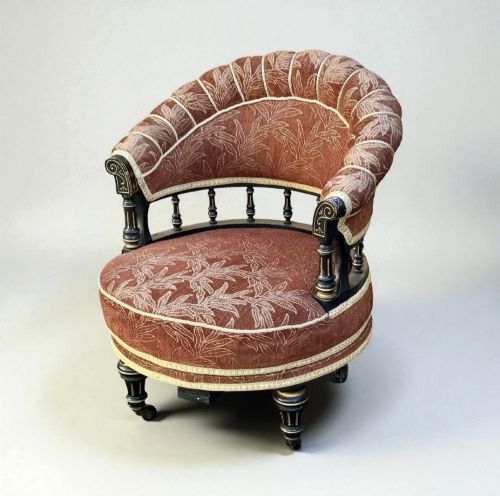
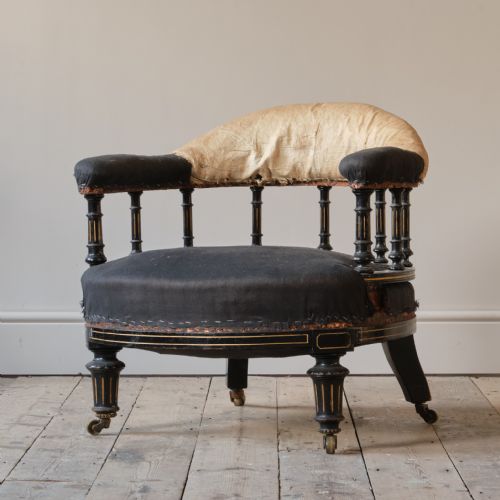
Victorian gilt armchairs encompass seating created across the nineteenth century, including fireside chairs, salon seating and revival fauteuils. The examples on this page range from mid-Victorian giltwood pieces to Aesthetic Movement ebonised designs with gilt highlights.
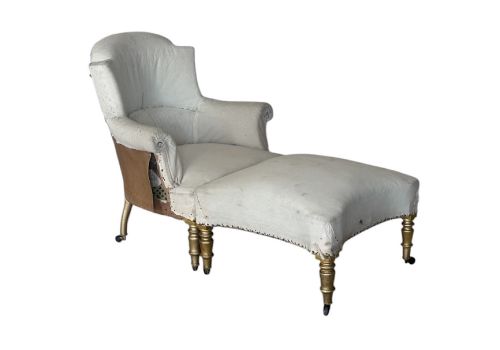
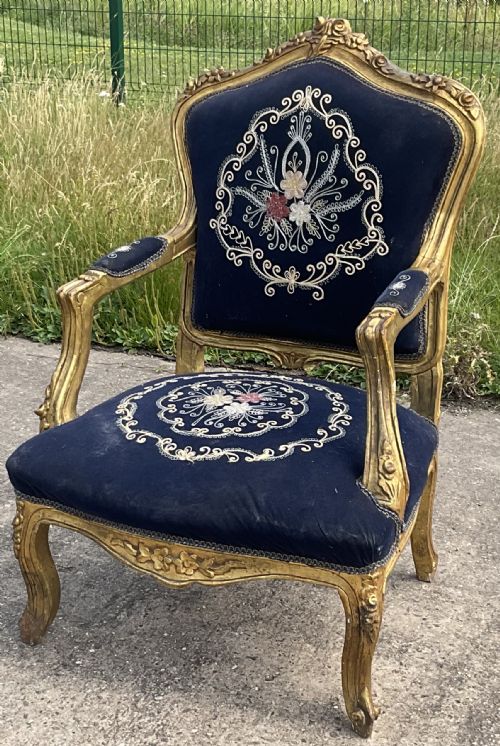
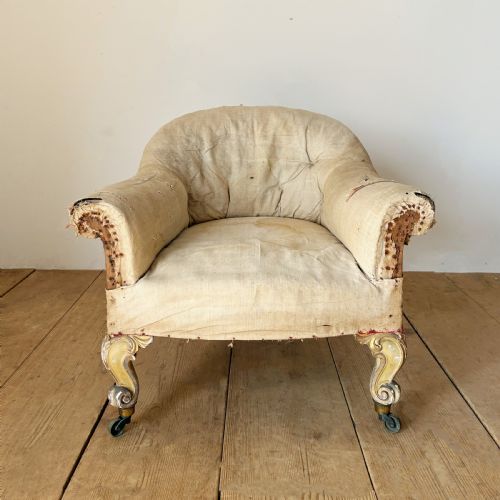
Buyers encounter various forms under this description, from low-slung nursing chairs and tub chairs to larger French-influenced revival armchairs. Many feature carved wooden frames finished in gold leaf or paint, paired with silk, velvet, tapestry or leather coverings.
Materials and construction
Frames are constructed from timbers such as beech, rosewood or ebonised wood, carved with decorative motifs before receiving a layer of gold leaf or surface gilding. This technique provides the metallic lustre characteristic of the style.
Upholstery methods of the period involve stuffing with horsehair or natural fibres over webbing and springs, secured with calico beneath top fabrics like silk damask, velvet or hand-worked tapestry.
The listings combine nineteenth-century giltwood, ebonised wood and beech frames upholstered in silk, velvet, tapestry and leather.
Assessing quality
Quality rests upon the depth and crispness of the hand-carving on the wooden frame, where sharper floral or scroll details distinguish finer workshop output from simpler production. The application of the gilding itself, whether subtle burnished gold leaf or heavier painted finish, alters the visual weight.
Structural integrity of the joints and the retention of period stuffing materials determine the durability of the seating. Original upholstery elements and designated maker attributions elevate certain examples above standard salon chairs.
Gillows·Holland & Sons
The Victorian Gilt Armchairs Glossary
- Giltwood
- Wood that has been coated with a thin layer of gold leaf. This finish creates a luminous metallic surface on the carved frames.
- Fauteuil
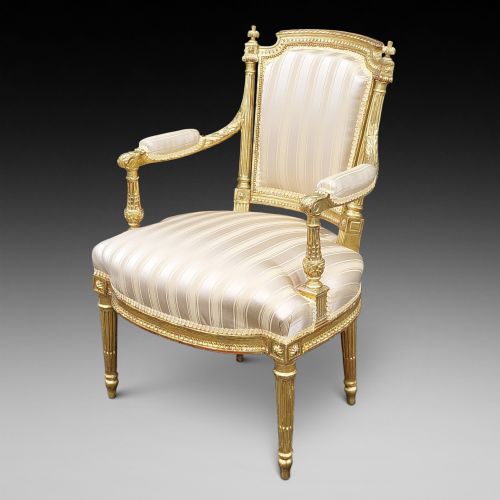
- An open-armed upholstered armchair with exposed wooden framing. Originating in France, this form heavily influenced nineteenth-century revival seating.
- Ebonised
- Wood treated with a chemical stain or dark finish to imitate ebony. It frequently appears alongside gilt highlights in Aesthetic Movement pieces.
- Tub chair
- A curved, enclosed armchair where the back and arms form a single continuous rounded rail. These offer compact and supportive seating.
- Aesthetic Movement
- A late nineteenth-century design style prioritising artistic expression and decorative simplicity over strict historical revival. Pieces often combine ebonised surfaces with gilt decoration.
Victorian Gilt Armchairs: Frequently Asked Questions
Are these chairs comfortable for daily use?
Many nineteenth-century armchairs offer supportive sprung seats, though their proportions suit upright sitting rather than lounging.
Consider the seat height and depth relative to modern furniture before placing them in daily living spaces.
What is the difference between salon and fireside chairs?
Salon chairs are lighter, often built for decorative placement around a drawing room or reception space.
Fireside armchairs feature heavier padding and lower profiles designed for warmth and prolonged sitting.
How can I tell a French revival chair from an English one?
French revival pieces typically follow Louis XVI or Baroque forms with curved cabriole legs and elaborate carved crests. Ninteenth-century English variants often incorporate stricter lines or regional cabinet-making traditions alongside the applied gilding.