

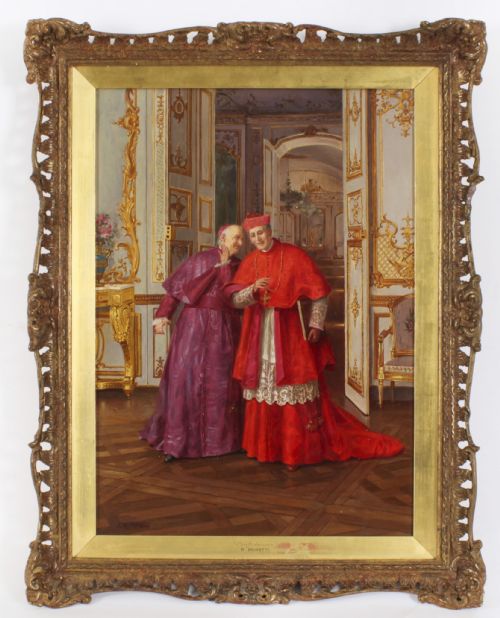
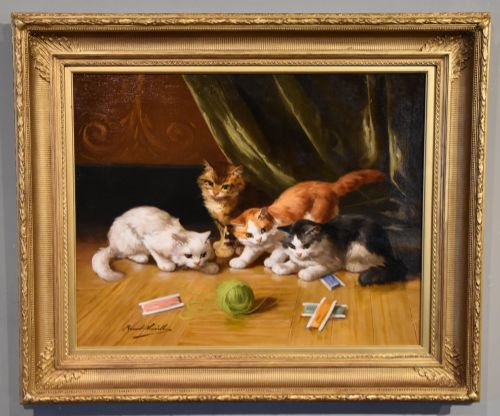
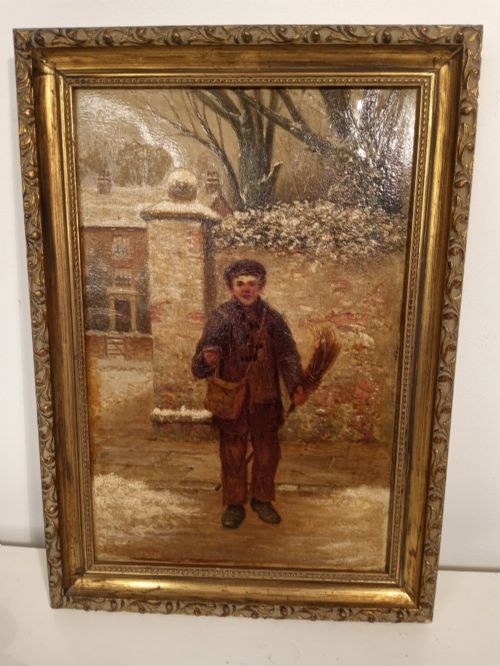
Victorian Genre Portrait Painting
A victorian genre portrait painting captures daily life, ordinary people and domestic narratives with remarkable intimacy.
Victorian Genre Portrait Painting
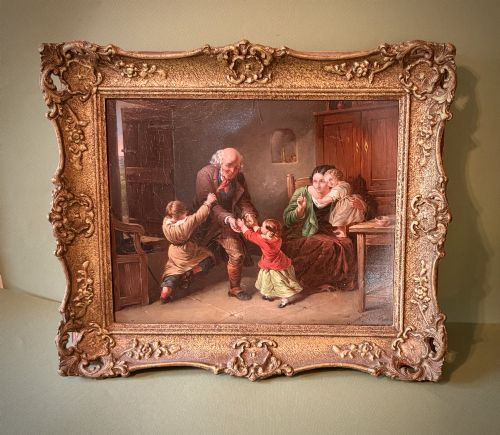
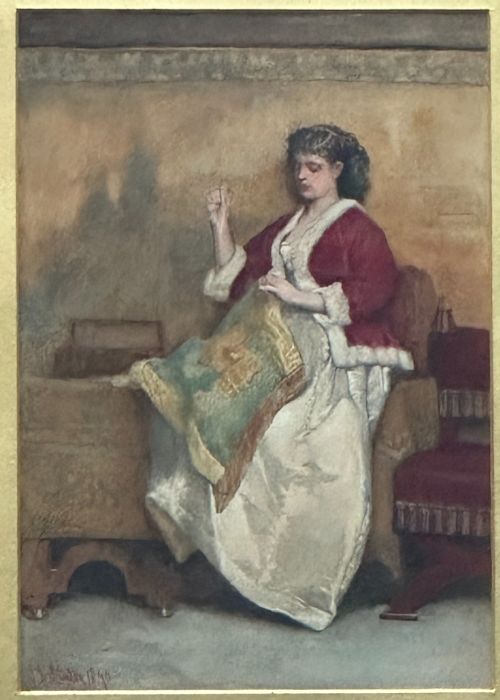
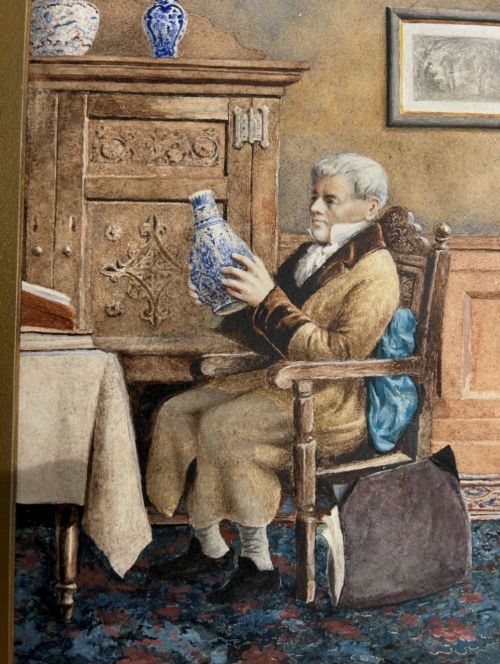
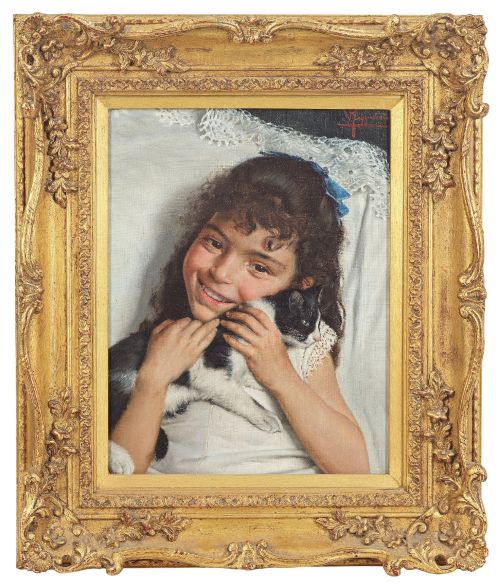
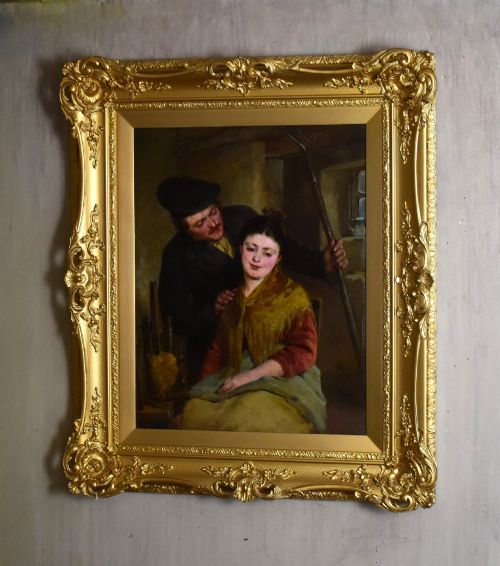
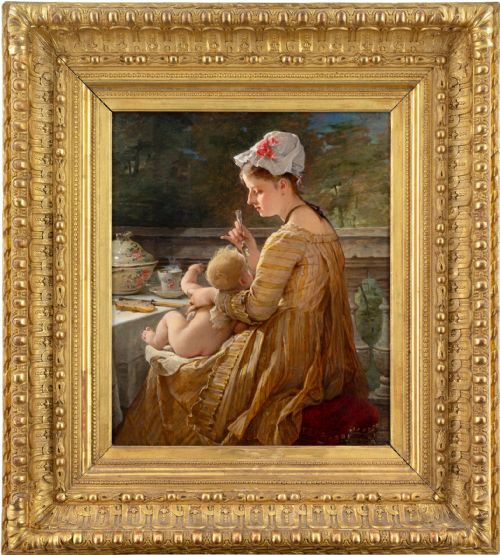
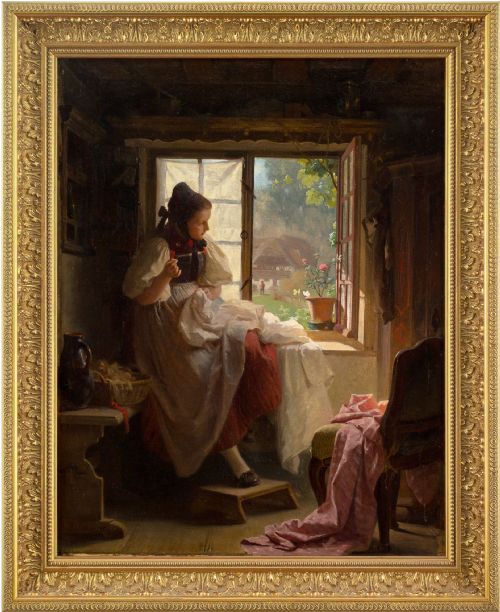
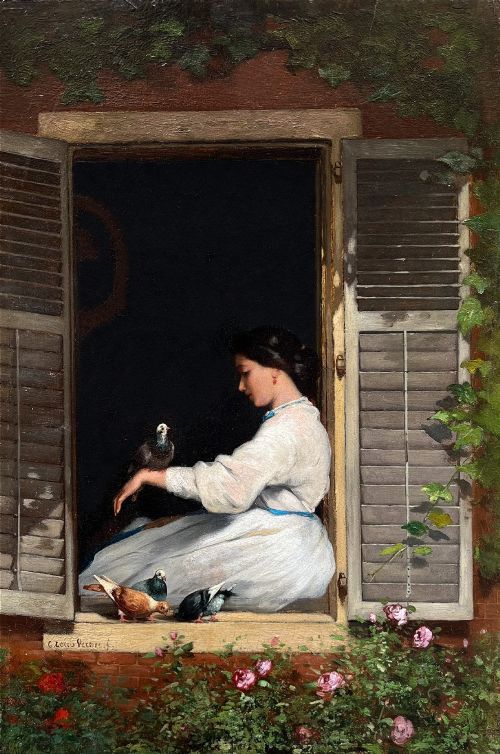
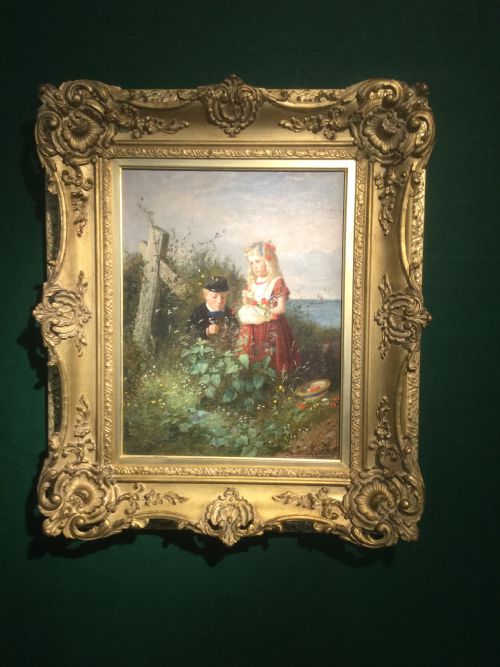
A victorian genre portrait painting depicts figures engaged in everyday domestic or social scenes, often combining portraiture with narrative elements. You will frequently encounter works portraying children, women in interiors, and figures from rural or historical life.
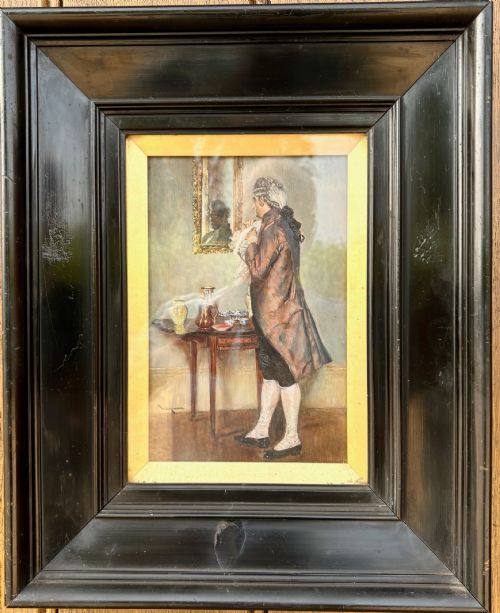
The pieces on this page span the nineteenth century into the early twentieth century, reflecting varied British and European artistic traditions. Subjects range from contemplative moments by a window to lively interactions in country houses and cottage interiors.
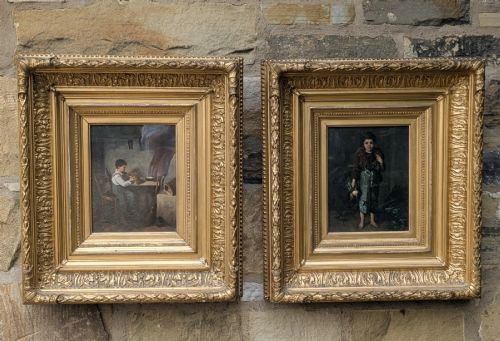
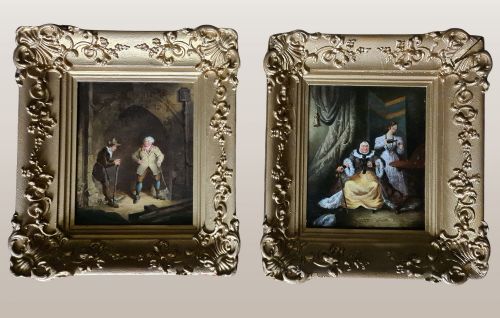
Formats include both oil paintings on canvas or board and watercolour paintings on paper, housed within period frames. These works bridge the gap between formal portraiture and storytelling art, focusing on character and setting.
How they were made
Artists painted primarily with oil paint on canvas or wood panels, building up layers of pigment to achieve depth in costume and interior lighting. Watercolour paintings utilised paper supports for lighter, more fluid compositions.
Many surviving works retain their original frames constructed from wood and gesso, often finished with gold leaf or giltwood. These frames complete the presentation of the artwork and help anchor the piece in its historical period.
Listings feature works spanning the nineteenth and early twentieth centuries, executed in oil and watercolour.
What varies in quality
The distinction between standard works and exceptional examples lies in the handling of light, facial expression and narrative detail. Superior paintings demonstrate precise brushwork in rendering fabrics, interior textures and the psychological state of the sitter.
The integration of the figure within its surrounding environment also determines artistic merit, with better pieces maintaining atmospheric consistency between subject and interior or landscape background.
Sir James Dromgole Linton·Valentine T. Garland·Vittorio Reggianini·Howard Helmick·Adelaïde Salles-Wagner·Max Kaltenmoser·Louis Charles Verwee·Charles Hunt·Renato Moretti·Alfred Arthur Brunel de Neuville·Charles Henry Slater·Byam Shaw·William Arthur Breakspeare·George Bernard O'Neill·John Watkins Chapman·Charles Haigh Wood·Frank Moss Bennett·Filipo Indoni·Haynes King·Charles Burton Barber·W.E. Evans·James Kyd·C.S. Lidderdale·Henry John Yeend King·John Robert Dicksee
The Victorian Genre Portrait Painting Glossary
- Genre painting
- A depiction of everyday subjects and ordinary people rather than grand historical or mythological themes. These scenes focus on domestic interiors, street life and personal moments.
- Oil on canvas
- A traditional painting technique where oil-based pigments are applied to a stretched woven fabric support. This medium allowed artists to blend colours smoothly and rework areas over time.
- Watercolour
- A paint consisting of water-soluble pigments applied to paper, producing luminous and translucent effects. It was frequently utilised for detailed illustrative works.
- Gesso
- A plaster-like mixture applied to wood or canvas to create a smooth, prepared surface for painting or gilding. It formed the foundational layer on many period frames.
- Oleograph
- A mechanical colour print on canvas that mimics the texture and appearance of an oil painting. These reproductions appeared widely in the nineteenth century as affordable wall art.
Victorian Genre Portrait Painting: Frequently Asked Questions
What is a genre portrait painting?
It is an artwork that depicts real people in everyday situations rather than formal posed portraiture. The focus rests on storytelling, daily routines and domestic environments.
These paintings capture moments of work, leisure and family life across different social strata during the nineteenth century.
How were these paintings displayed?
Owners typically hung them in prominent reception rooms and parlours within domestic homes. They served as conversation pieces that reflected the taste and social standing of the household.
Original gilt frames ensured the artwork complemented contemporary Victorian interior decoration schemes.
Are watercolours different from oils?
Watercolours use pigment suspended in a water-soluble vehicle on paper, offering a lighter and more transparent finish. Oil paintings utilise canvas or wood panels with thicker, richer pigment application.
Both mediums held a prominent place in nineteenth-century artistic production and domestic display.
How can I identify the period?
Stylistic clues include the clothing styles of the figures, interior furnishings and the specific treatment of light and narrative. Victorian and late nineteenth-century works often feature detailed realism and rich tonal palettes.
Framing materials and artist signatures or dates recorded on the reverse provide further historical context.