

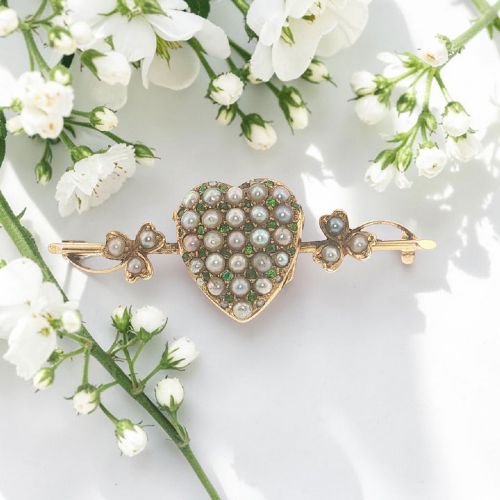
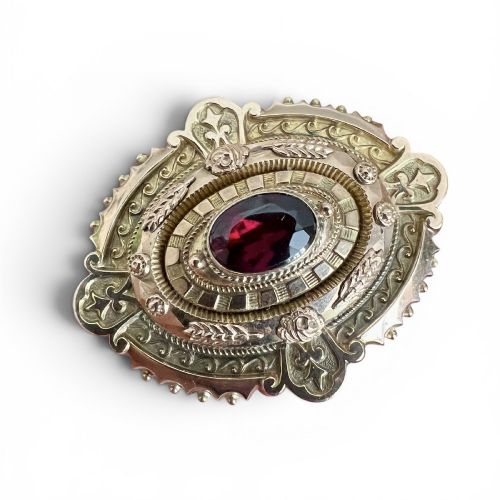


Victorian Garnet Brooch Pin
These victorian garnet brooch pin pieces combine rich deep red stones with gold work, offering wearable historical elegance that collectors prize.

Victorian Garnet Brooch Pin
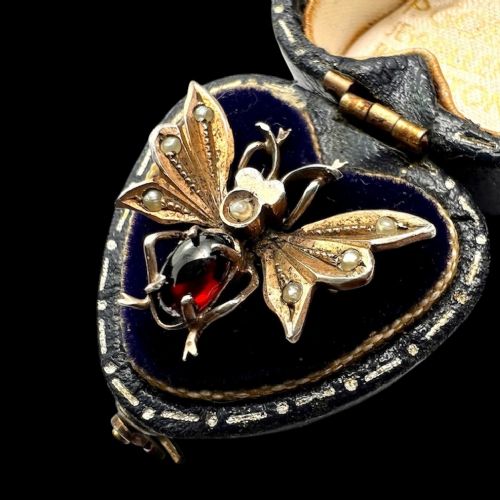
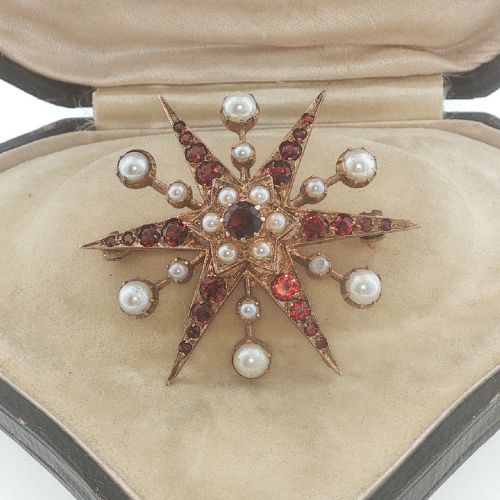
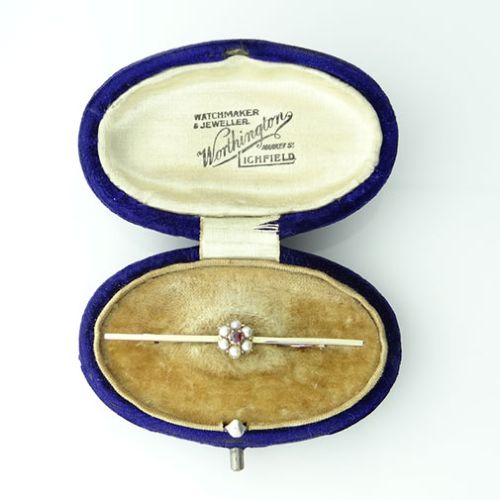
A victorian garnet brooch pin brings together dark red stones and gold mounts, taking forms such as stars, hearts, lockets, and bar brooches. You will most frequently encounter genuine Victorian pieces alongside revival iterations from later decades.
Many examples double as pendants or incorporate seed pearls and diamonds to frame the central stones. The range includes elaborate Etruscan Revival designs alongside simpler starburst and horseshoe configurations.
Materials and construction methods
Maker techniques rely heavily on almandine and carbuncle garnets set into varying purities of yellow gold, including 9ct, 15ct, and 18ct specifications. Artisans often secured these deep red gems with foil backing to enhance their luminous quality.
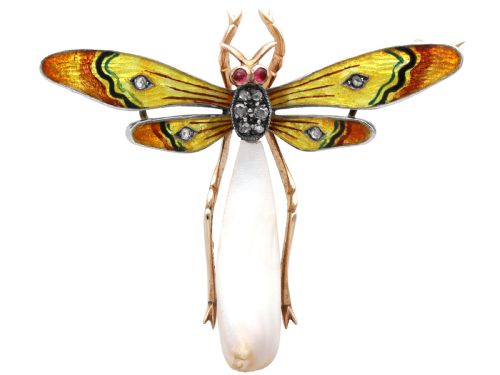
Enamelling, seed pearls, and rose-cut diamonds frequently accent the primary stones. Metalwork ranges from smooth bar mounts to intricate granulation and wirework characteristic of Etruscan Revival pieces.
Victorian Garnet Brooch Pin Retail Price Guide 2026
Typical asking prices for victorian garnet brooch pin among the pieces listed under this phrase on Sellingantiques today, from the lower quarter to the upper quarter. They describe what is for sale here now, not the wider market.
A charming jockey cap pin brooch proves that Victorian sentimentality could happily coexist with a day at the races.
Assessing craftsmanship and condition
Quality separates pieces through the depth and saturation of the garnet stones, alongside the precision of the surrounding gold work. Fine examples display well-matched gems with secure, even prong or bezel settings.
The integrity of the pin mechanism and the delicacy of auxiliary elements like seed pearls or enamel determine the finesse of a piece. Superior items retain crisp detail in their wirework and mountings without distracting solder marks.
The Victorian Garnet Brooch Pin Glossary
- Almandine garnet
- A deep red variety of garnet rich in iron and aluminium, commonly utilised in Victorian jewellery for its dark crimson hue.
- Carbuncle
- A cabochon-cut garnet or other red gemstone polished smooth rather than faceted, producing a deep glowing dome.
- Etruscan Revival
- A nineteenth-century design movement inspired by ancient archaeological discoveries, featuring granular gold decoration and classical motifs.
- Seed pearl
- A very small natural or cultured pearl, often drilled and threaded onto tiny wires to accent floral or starburst brooch designs.
- Guilloche
- An ornamental technique in which a precise repetitive pattern is mechanically engraved into a metal surface beneath translucent enamel.
Victorian Garnet Brooch Pin: Frequently Asked Questions
How do I wear a antique brooch safely?
Secure the pin through a sturdy weave of fabric such as wool, tweed, or heavy silk rather than delicate lightweight garments. Using a small backing cap or locking clutch on the pin stem provides extra security during wear.
Position the brooch near a collar, lapel, or shoulder where the weight rests evenly against the garment structure. Avoid catching the pin on scarves or bags that might pull the clasp.
Are these brooches also pendants?
Many Victorian brooch designs feature concealed or folding loops at the reverse that allow them to transform into pendants. This dual functionality was popular for adapting day jewellery into evening wear.
Inspect the back of the mount for a hinged ring or small loop near the top hinge. You can thread a fine chain through this fitting when you wish to wear the piece around the neck.
What is the difference between Victorian and revival styles?
Original Victorian pieces date from the nineteenth century and reflect the prevailing aesthetic sentiments and mourning customs of that specific reign. Revival styles reproduce these historical forms during later periods like the mid-twentieth century.
Examining the construction of the pin findings, the alloy colour, and the wear patterns helps distinguish between the original era and subsequent revivals. Both categories hold distinct collecting interest.