





Victorian Garden Portrait
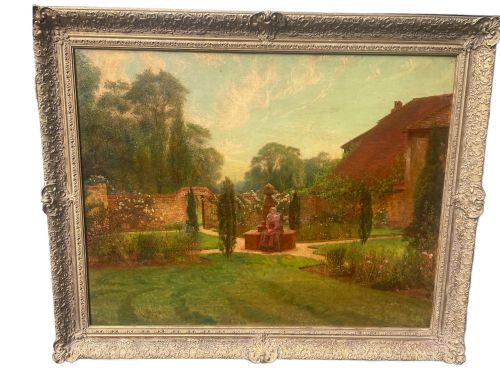
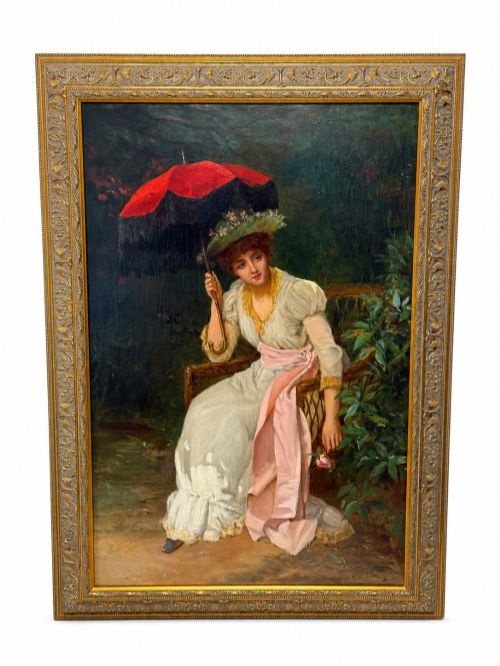
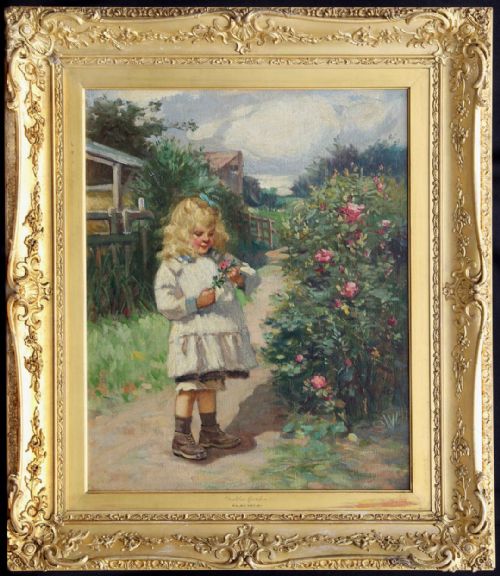
These victorian garden portrait pieces capture figures and animals in verdant outdoor settings using oil on canvas, watercolour, and mixed media.
Victorian Garden Portrait
When you search for victorian garden portrait, you are looking at nineteenth-century and early twentieth-century artworks depicting people, children, and animals in outdoor settings. The forms range from oil paintings and watercolours on paper to chrystoleum under glass and framed prints.
You are most likely to meet Victorian oil paintings and watercolours on this page, alongside mixed media and framed artwork. Subjects span from ladies with parasols and terrier dogs in walled gardens to family groups and individual portraits.
The selection extends from the nineteenth century into the early twentieth century, incorporating styles such as Victorian fine art, neoclassical elements, and early twentieth-century illustration. Works originate from British and continental makers.
How they were made
Makers utilised oil on canvas and watercolour on paper, applying pigments to capture light and detail in outdoor settings. Mixed media and chrystoleum under convex glass also appear among the techniques used to create these portraits.
Frames employ gilded wood, giltwood, and gold leaf to house the paper and canvas works. Sculptural counterparts utilise carved Carrara marble, cast iron, and terracotta.
Victorian Garden Portrait Retail Price Guide 2026
Typical asking prices for victorian garden portrait among the pieces listed under this phrase on Sellingantiques today, from the lower quarter to the upper quarter. They describe what is for sale here now, not the wider market.
One listed portrait stars a terrier dog standing proudly in a walled garden.
What varies in quality
The skill of the brushwork and the precision in capturing expression and botanical detail distinguish the finer examples from standard work. Masterly handling of light in an outdoor setting elevates a piece.
The preservation of the original medium, whether oil paint, watercolour, or chrystoleum under glass, influences the visual impact. The quality of the accompanying gilded wood or gold leaf frame also contributes to the overall character.
William Oliver·K & K Hof Atelier Pietzner·John Emms·Edmund Alphonse Andre·Ralph Hedley·Karl Feiertag
The Victorian Garden Portrait Glossary
- Chrystoleum
- A historic method of applying hand-colouring to a photograph or print placed under convex glass. This technique creates a luminous, three-dimensional effect popular in the nineteenth century.
- Giltwood
- Wood carved and coated with gold leaf or metallic powder to resemble solid gold. It provides an ornate, reflective border for paintings and prints.
- Neoclassical
- A style drawing inspiration from the classical art and culture of ancient Greece and Rome. It emphasises restraint, proportion, and classical motifs in sculpture and painting.
- Terracotta
- Baked red clay used for sculptural busts and figures. It offers a warm, earthy tone and allows for detailed modelling before firing.
- Watercolour
- A painting method where water-soluble pigments are suspended in a water-based solution. It produces transparent layers of colour on paper.
Victorian Garden Portrait: Frequently Asked Questions
What is a victorian garden portrait?
A victorian garden portrait is an artwork depicting people, children, or animals positioned outdoors amidst flora during the nineteenth or early twentieth century.
These pieces typically take the form of oil paintings, watercolours, or mixed media works housed in framed displays.
How do I display these portraits?
These framed works suit traditional wall spaces where proper lighting can highlight the canvas or watercolour details.
Keep them away from direct sunlight to protect the pigments on paper and canvas from fading over time.
What materials were used?
Artisans worked with oil on canvas, watercolour on paper, mixed media, and chrystoleum under convex glass.
Frames incorporate gilded wood, giltwood, and gold leaf, while related sculptures use Carrara marble, cast iron, and terracotta.
How do I identify the period?
Dating relies on stylistic markers from the nineteenth century, Victorian era, and early twentieth century.
Signatures, artist records, and framing techniques help place the work within specific decades like the 1880s or 1900.