



Victorian Garden Lantern Post
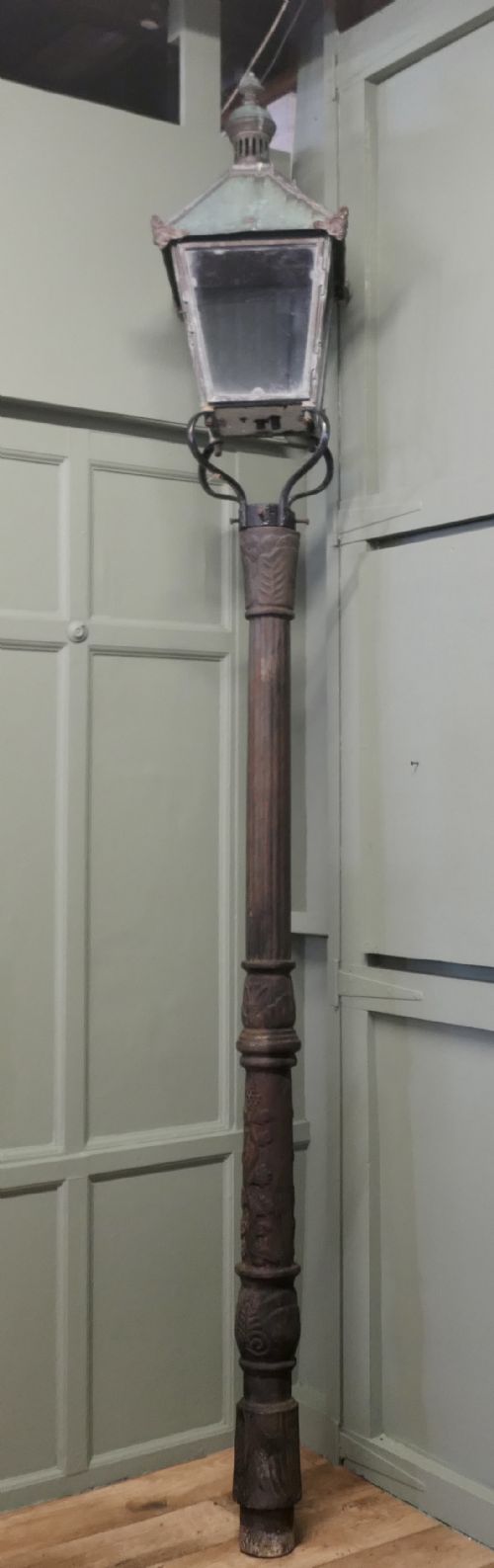
These original victorian garden lantern post examples bring authentic period illumination to outdoor spaces through heavy cast iron columns and copper glazing.
Victorian Garden Lantern Post
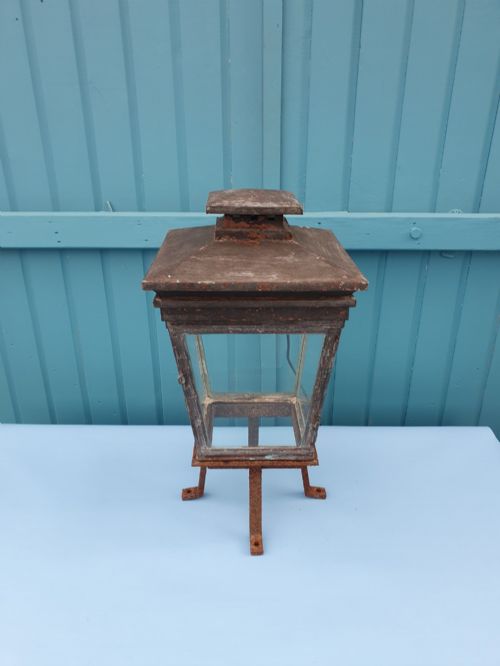
A victorian garden lantern post combines a sturdy structural column with an enclosed overhead light housing designed for exterior illumination. Buyers search for these items to anchor a pathway, drive or courtyard with genuine nineteenth-century character.
The selections on this page span the late nineteenth century and early twentieth century, incorporating industrial street lighting alongside domestic garden pieces. Most examples pair a metal post with a glazed copper lantern, reflecting the transition from gas to electrical lighting.
How they were made
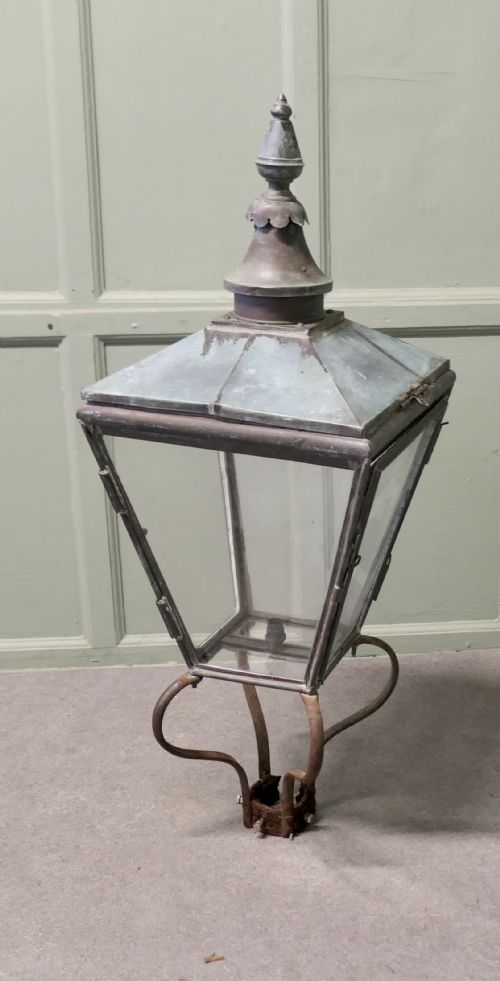
Foundries cast iron and wrought iron to form rigid lamp posts and mounting bases capable of withstanding outdoor weather. Copper sheets were hand-beaten and soldered to construct the overhead lanterns, housing clear or patterned glass panes.
Many survivors began as municipal gas street lights before conversion to electricity during later renovations. Makers joined the metal components using traditional riveting and threading techniques rather than modern welds.
Victorian Garden Lantern Post Retail Price Guide 2026
Typical asking prices for victorian garden lantern post among the pieces listed under this phrase on Sellingantiques today, from the lower quarter to the upper quarter. They describe what is for sale here now, not the wider market.
Industrial street lighting forms a core component alongside domestic garden lamp posts.
What varies in quality
Quality rests upon the integrity of the original metals and the proportion of the design. Heavy cast iron standards with crisp detailing and intact copper hoods command greater attention than heavily weathered or patched equivalents.
The presence of maker stamps and untouched gas conversion mechanisms elevates a piece beyond standard utility items. Complete assemblies retaining their original glass panels and matching mounting bases demonstrate superior craftsmanship.
A Foster & Pullen Bradford·Revo Tipton
The Victorian Garden Lantern Post Glossary
- Cast Iron
- An iron-carbon alloy poured into moulds to create rigid architectural shapes. This heavy material provides the structural foundation for antique lamp posts.
- Swan Neck
- A curved metal arm extending from a post to support an overhead lantern. This profile directs light outward while protecting the fitting from direct rainfall.
- Gas Conversion
- The historical adaptation of a lighting fixture from a town gas supply to electrical wiring. This process often leaves interior traces of the original burner assembly.
- Wrought Iron
- Iron heated and hammered by hand into durable architectural elements. It offers flexibility and strength compared to brittle cast variants.
Victorian Garden Lantern Post: Frequently Asked Questions
How do I install an antique lamp post?
Most heavy iron posts require a concrete foundation or a buried root base for stability. Electricians can run modern cabling through the hollow interior columns.
Ensure the weight is adequately secured against wind loads before final connection.
Are these lights wired for modern electricity?
Many retain older conversion wiring or empty interiors requiring rewiring to meet current standards. A qualified electrician should install modern lamp holders and test the earth continuity.
Original gas pipes are typically capped off and utilised as conduit channels.
How do I date a cast iron post?
Dating relies on foundry marks, patent numbers, and stylistic shifts in industrial ironwork. Simpler decorative motifs often point to late Victorian or Edwardian manufacturing.
Correlating bolt patterns and material thickness with regional street furniture catalogues confirms the era.
Can copper lanterns be left outdoors permanently?
Copper develops a natural protective verdigris patina when exposed to rain and air over decades. This weathered surface actually shields the underlying metal from further corrosion.
Glass panels require occasional inspection to ensure the putty or glazing bars remain weatherproof.