





Victorian Game Marker
A Victorian game marker brings the orderly competition of the nineteenth-century parlour or billiard room straight into a modern interior.
Victorian Game Marker
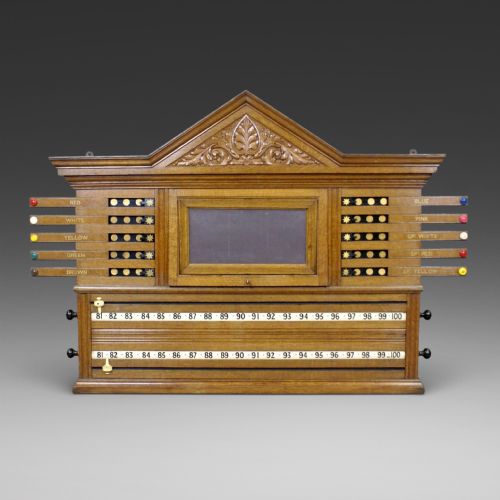
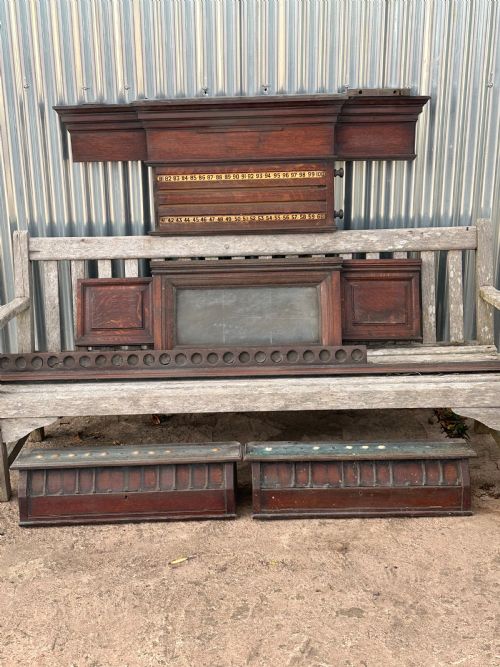
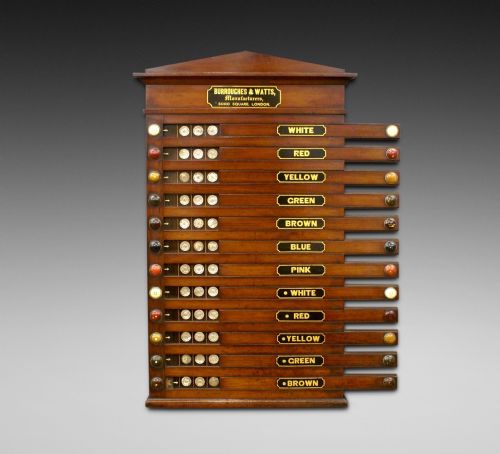
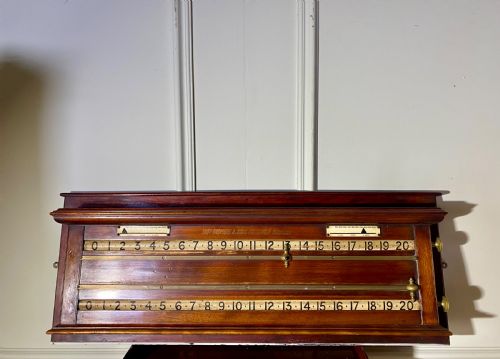
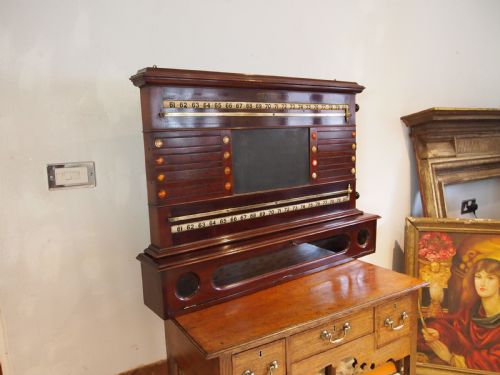
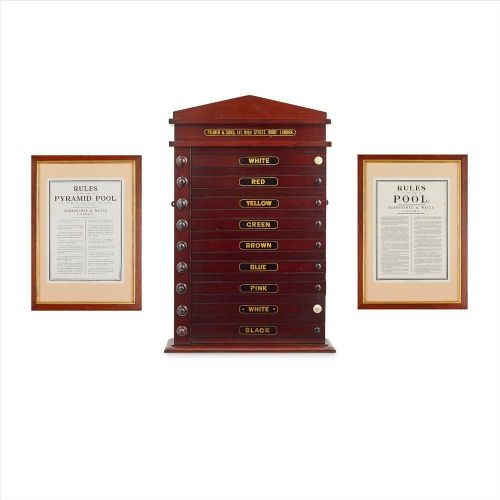
A Victorian game marker encompasses various scoreboards, counter boxes, and gaming accessories designed to track points during parlour and table sports. These pieces range from substantial wall-mounted snooker scoreboards to smaller desk and table markers for cards and shooting. The most common forms met here include mahogany and oak billiard scoreboards alongside compact boxes for whist and cribbage.
Originating primarily within the nineteenth century, these objects served both a utilitarian and social function in middle-class and country homes. The selection spans utilitarian scoring boards and decorative boxes housing tokens or cards. Collectors encounter everything from institutional pieces by well-known makers to domestic items fashioned from native timbers.
How they were made
Makers utilised solid hardwoods such as mahogany and oak for the primary carcasses of scoreboards and games boxes, often housing sliding markers or dials. Brass featured heavily for hinges, tracks, and numeric pointers, providing durable mechanics that still function smoothly today.
Internal components and detail work incorporated bone, porcelain, ceramic, and enamel for counters, dials, and indicator faces. Leather frequently lined fitted boxes, whilst glass protected sensitive dials or scoreboard faces where required.
Victorian Game Marker Retail Price Guide 2026
Typical asking prices for victorian game marker among the pieces listed under this phrase on Sellingantiques today, from the lower quarter to the upper quarter. They describe what is for sale here now, not the wider market.
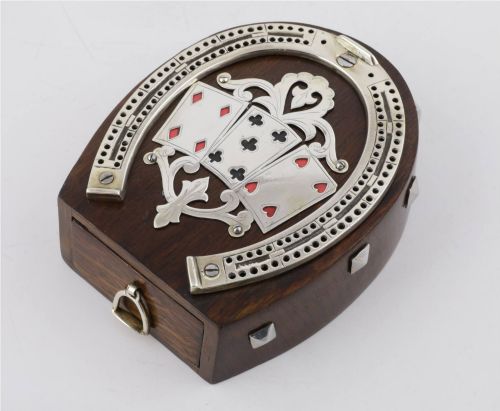
Some nineteenth-century card boxes double as horseshoe-shaped sanctuaries for your cribbage pegs.
What varies in quality
Quality rests upon the selection of timber, the crispness of the division markings, and the integrity of the mechanical action. Superior pieces display finely figured walnut or pale oak, alongside robust brass mechanisms that move with precision rather than slackness.
The sophistication of the internal fittings and the presence of signed maker plates elevate certain boards and boxes above standard domestic items. Finer examples retain their original porcelain or ceramic markers, undamaged leather linings, and crisp lettering.
Thurston and Co·George Betjemann·Cox and Yeman·Burroughes and Watts
The Victorian Game Marker Glossary
- Scoreboard
- A wall-mounted or freestanding apparatus featuring sliding markers or rotating dials to track scores for billiards, snooker, or pool.
- Cribbage board
- A dedicated board, often integrated into a games box, featuring drilled tracks with pegs to record points during a card game.
- Whist counters
- Small ceramic or porcelain tokens housed in fitted boxes, used historically to keep score during trick-taking card games.
- Figured walnut
- Timber possessing an attractive, rippled grain pattern prized by cabinetmakers for decorative games boxes.
- Shooting peg case
- A small container utilised during field sports to hold numbered pegs or markers for drawing shooting positions.
Victorian Game Marker: Frequently Asked Questions
How do you mount a heavy Victorian scoreboard?
Large wooden scoreboards require secure fixing to solid wall studs or masonry using appropriate brackets to support their substantial weight.
Most antique boards feature original hanging points, but modern wall anchors ensure safety when dealing with dense hardwoods like oak and mahogany.
Were these markers used in homes or pubs?
Victorian game markers saw use in both private residences and commercial establishments such as billiard halls and gentlemen's clubs.
Grand institutional boards often originated from public venues, whilst smaller card boxes and cribbage boards belonged to domestic drawing rooms.
How should I clean brass fittings on a game marker?
Brass components benefit from gentle dusting with a soft cloth to preserve any patination accumulated over the nineteenth century.
Harsh metal polishes should be avoided, as they strip the aged finish and can stain adjacent wood or porcelain surfaces.
Can missing bone or ceramic markers be replaced?
Sourcing exact period replacements for lost counters or indicator pins requires patience among specialist antique dealers and fairs.
Many collectors prefer keeping pieces in their found state rather than introducing mismatched modern substitutes.