




Victorian Fretwork Shelf
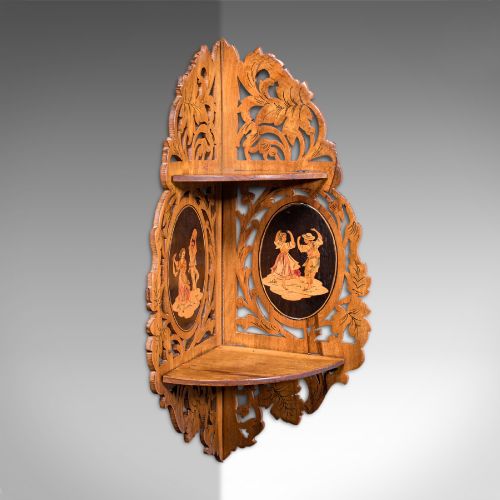
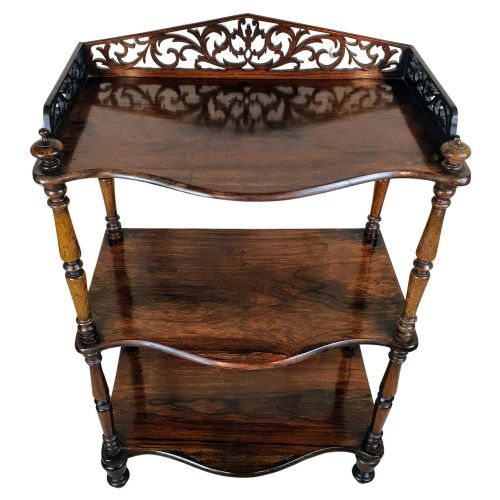
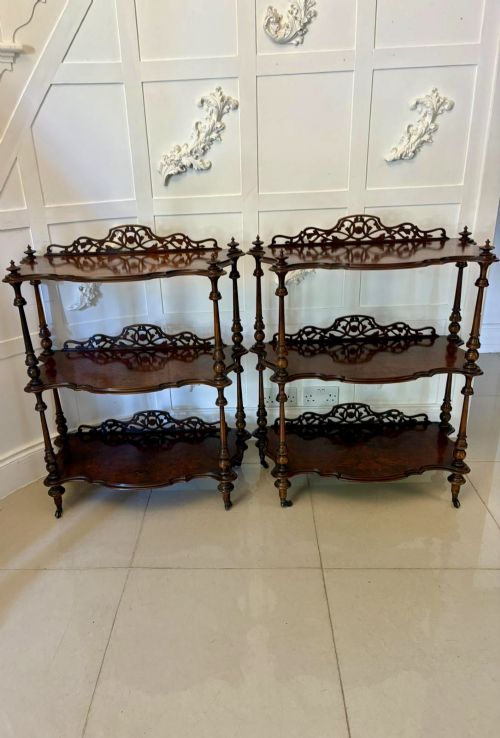
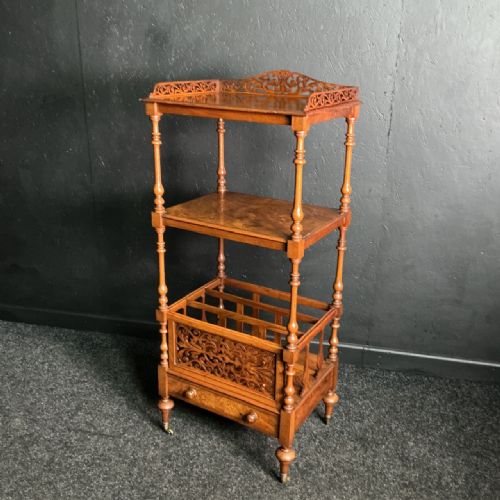
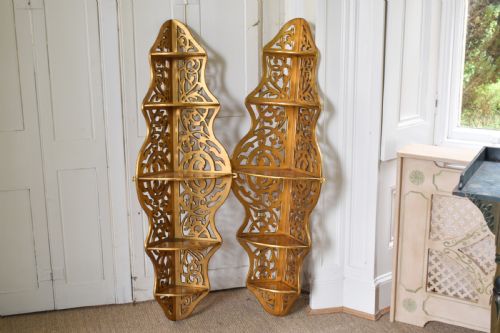
These Victorian fretwork shelf pieces are decorative timber display tiers and wall brackets designed to hold small ornaments, bringing pierced woodwork into period rooms.
Victorian Fretwork Shelf
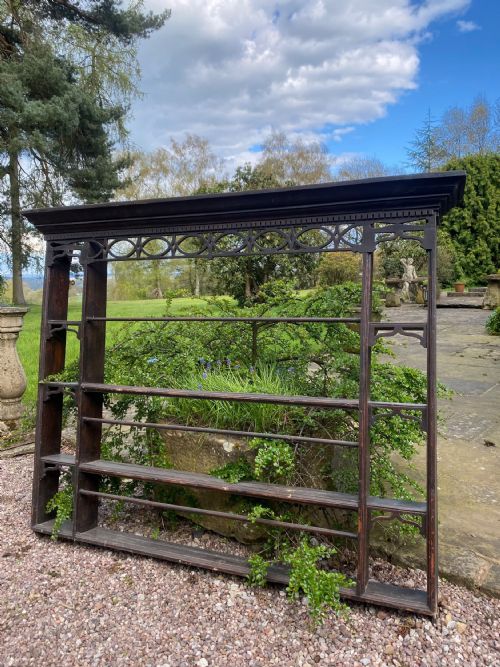
A victorian fretwork shelf typically takes the form of a multi-tiered whatnot, a corner bracket, or a wall-mounted display unit designed for parlours and drawing rooms. Walnut and burr walnut dominate these listings, alongside rosewood and mahogany, constructed to hold ceramics and books.
Most examples date from the nineteenth century, ranging from mid-Victorian burr walnut items to later inlaid pieces. Wall brackets, hanging shelves, and corner units supply vertical storage without claiming heavy floor space in smaller rooms.
Materials and construction
Cabinetmakers utilised walnut, burr walnut, mahogany, and rosewood, often enhancing surfaces with marquetry inlay or pierced fret-cutting. Grain selection mattered greatly, as burr timbers provided rich figuring for display surfaces.
Turned columns, brass galleries, and glazed elements appear alongside open fretwork panels, combining structural rigidity with intricate decorative joinery.
Victorian Fretwork Shelf Retail Price Guide 2026
Typical asking prices for victorian fretwork shelf among the pieces listed under this phrase on Sellingantiques today, from the lower quarter to the upper quarter. They describe what is for sale here now, not the wider market.
Listings feature walnut, burr walnut, mahogany, and rosewood across multiple nineteenth-century shelf forms.
Assessing quality
Quality rests in the crispness of the pierced fretwork and the selection of timber veneers, where burr walnut or figured rosewood displays superior depth of grain. Finer tiers feature robust structural joinery rather than purely glued ornament.
The integration of secondary details such as brass galleries, finely turned uprights, and precise marquetry inlay separates standard production items from workshop pieces.
Robert Strahan
The Victorian Fretwork Shelf Glossary
- Whatnot
- A movable set of open shelves used for displaying ornaments and small objects. These tiered stands gained popularity in the nineteenth century for drawing room use.
- Fretwork
- Ornamental perforated woodwork cut with a fretsaw to create intricate patterns. This technique defines the pierced decoration on brackets and shelf galleries.
- Burr Walnut
- Timber taken from a walnut tree growth, yielding complex, swirling grain patterns. Cabinetmakers prized this veneer for the top surfaces of display furniture.
- Marquetry
- The art of applying decorative veneer pieces to form geometric or pictorial designs. It appears frequently on Victorian and Edwardian cabinet furniture.
- Wall Bracket
- A projecting support fastened to a wall to carry a shelf or ornament. These fixtures provided decorative display space in tight corners.
Victorian Fretwork Shelf: Frequently Asked Questions
What is a Victorian fretwork shelf used for?
These pieces served primarily for displaying ornaments, ceramics, and small books in nineteenth-century reception rooms.
Their open tiers allowed homeowners to exhibit decorative items without darkening the corners of a parlour.
Where should I hang wall shelves?
Wall-mounted shelves and brackets suit spaces needing vertical display without floor furniture.
Fix them securely to structural wall studs, as hardwood tiers carrying books or heavy ceramics require robust support.
Are these shelves made of solid wood?
Most examples combine solid timber frames with decorative wood veneers such as burr walnut or mahogany.
Cabinetmakers applied these figured veneers over stable secondary woods to achieve rich surface patterns without warping.