




Victorian Foyer Seating
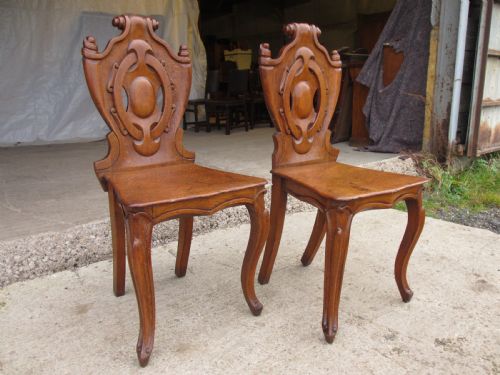
Victorian foyer seating brings striking architectural presence to an entrance, offering robust timber construction paired with formal, upright carved backs.
Victorian Foyer Seating
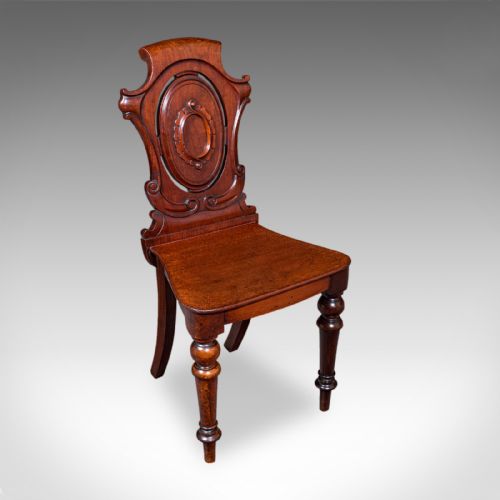
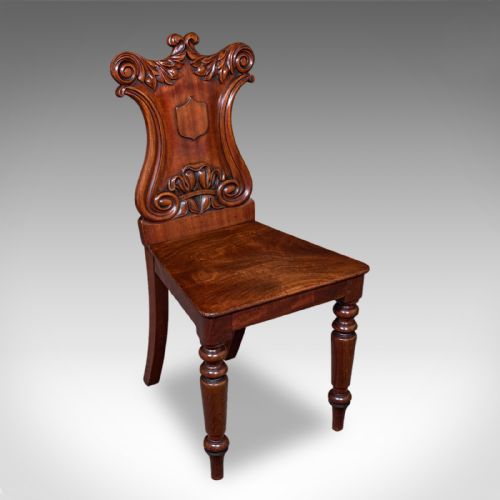
When you search for Victorian foyer seating, you are looking at sturdy reception and hallway chairs designed to make an immediate impression in a nineteenth-century entrance hall. These pieces are predominantly represented on this page by hall chairs, which stand upright with solid wooden seats and high, decorative backs.
The items found here span the broader Victorian era, including pieces specifically dated to the mid and late nineteenth century around eighteen fifty to eighteen ninety. Origin variants include Scottish pieces and nineteenth-century Irish sets alongside standard English forms.
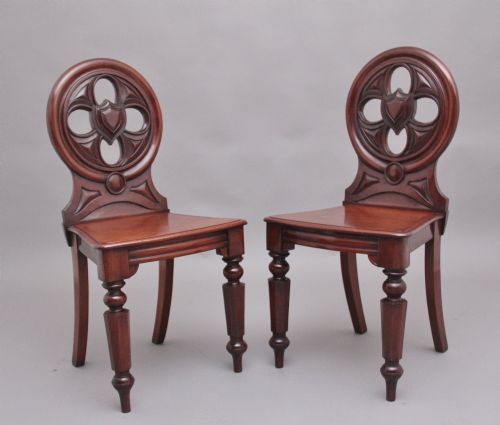
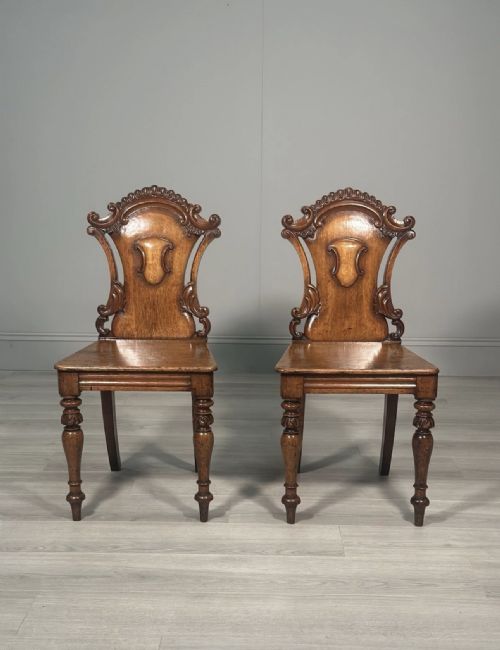
Makers and regional workshops produced these seats in variations such as shield backs, law chambers chairs, and deeply carved side chair formats. Buyers encounter single items, pairs, and occasionally sets of four suited to grander entrance spaces.
Materials and construction
These chairs rely heavily on dense hardwoods, utilising mahogany, walnut, and oak to withstand the heavy wear of an entrance hall. Golden oak and dark timbers provide both structural integrity and a heavy, formal appearance.
Makers applied intricate hand carving to the timber, particularly shaping shield backs, cabriole legs, and elaborate crests. Solid wood construction without upholstery was standard, focusing attention entirely on the joinery and carved surface detail.
Listings on this site feature mahogany, walnut, and oak timbers across Victorian and nineteenth-century periods.
Assessing quality and craftsmanship
Quality separates standard utility seating from high-end reception pieces through the depth and complexity of the timber carving. Highly carved crests and shaped shield backs indicate superior workshop output compared to plain, utilitarian designs.
The integrity of the timber and the completeness of matched pairs or sets elevate a piece significantly. Pieces originating from notable workshops or specific regional traditions carry distinct construction refinements that set them apart.
Holland & Sons
The Victorian Foyer Seating Glossary
- Hall Chair
- A rigid wooden seat with a high back, placed in an entrance hall for brief use rather than lounging. These items often feature carved family crests or shields.
- Shield Back
- A chair back shaped in the outline of a heraldic shield. This design became popular in the eighteenth century and saw revival through the Victorian period.
- Cabriole Leg
- A furniture leg that curves out and then in, resembling the leg of an animal. This form appears on select nineteenth-century oak seating.
- Gothic Revival
- An architectural and decorative style drawing inspiration from medieval forms. Pieces in this category utilise pointed arches and heavy, pointed ornamentation.
Victorian Foyer Seating: Frequently Asked Questions
What is Victorian foyer seating?
Victorian foyer seating primarily consists of wooden hall chairs designed for nineteenth-century entrance spaces and reception rooms. These pieces feature rigid, upright wooden seats and decorative carved backs.
They were intended for brief use by visitors waiting in a hallway rather than long periods of sitting. Their solid construction allowed them to endure heavy daily traffic near the front door.
Were these chairs upholstered?
Traditional Victorian hall chairs are almost exclusively made from solid timber with unpadded wooden seats. This design kept the furniture durable and easy to maintain in busy entranceways.
Carpentry and deep carving took the place of fabric, allowing makers to showcase the grain and colour of mahogany, walnut, or oak.
How do I spot a Scottish or Irish piece?
Regional attribution usually relies on dealer documentation, historical provenance, or specific stylistic quirks unique to regional cabinetmakers. Scottish and Irish pieces from the nineteenth century often exhibit distinct carving patterns and timber selections.
Comparing the specific proportions and crest details against known regional examples helps identify their origin.
How do I live with antique hall chairs?
Hall chairs work well in modern entrances, corridors, or as decorative accent pieces against a wall in living spaces. Because their seats are solid wood, adding cushions is optional depending on comfort preferences.
Keep them away from direct heat sources and sudden temperature shifts to protect the historical timber and carved details from splitting.