



Victorian Food Dome
These Victorian food dome pieces protect and present a roast or cheese at the table, bringing heavy silver plate and white ironstone into daily service.
Victorian Food Dome
A victorian food dome covers meat, poultry or cheese on the dining table, keeping heat in and dust out until carving commences. The form ranges from heavy ceramic cheese stands to monumental silver plated meat covers designed for joint platters.
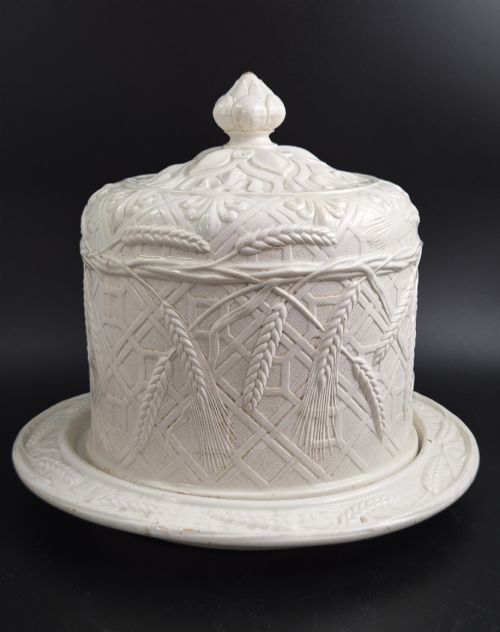
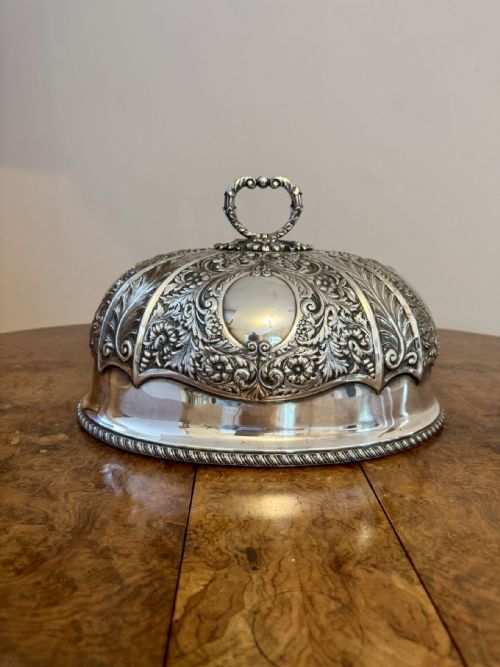
Ceramic examples usually comprise a domed cover resting on an associated stand, often decorated with moulded wheat, lattice work or classical motifs. Metal versions appear as single polished domes with loop handles or as part of revolving breakfast dishes.
Most pieces date from the nineteenth century into the Edwardian era, spanning ironstone bodies and silver plated base metal. Durand of Paris and Mappin and Webb represent the finer end of the metalwork scale.
Materials and construction
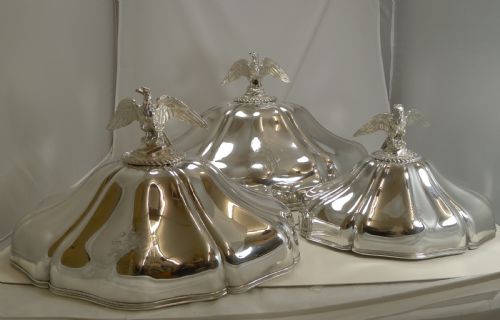
Metal covers start as base metal or Old Sheffield Plate, finished with thick silver plating or EPNS. Smiths hammered or spun the metal into deep domes before attaching cast handles, often shaped like leaves, scrolls or eagles.
Ceramic domes utilise white ironstone or earthenware, cast in multi-piece moulds to achieve heavy walls and crisp relief patterns. Potters fired these at high temperatures to ensure the dense, durable body required for heavy pantry and table use.
Victorian Food Dome Retail Price Guide 2026
Typical asking prices for victorian food dome among the pieces listed under this phrase on Sellingantiques today, from the lower quarter to the upper quarter. They describe what is for sale here now, not the wider market.
Listings span the nineteenth century and Edwardian period, covering both ceramic ironstone bodies and silver plated metal.
Judging quality and merit
Weight and gauge of metal set the standard for silver plated meat covers, where thick plating resists wear through generations of polishing. Crispness in cast handles and applied crests separates standard production from workshop pieces by makers such as Durand.
Ceramic cheese domes depend on the sharpness of moulded details like wheat and lattice borders. A clear, even glaze over a bright white ironstone body indicates superior clay preparation and firing control.
Mappin and Webb·Durand
The Victorian Food Dome Glossary
- Silver Plate
- A thin layer of silver fused or electroplated onto a base metal core. This technique provided the visual weight of solid silver without the prohibitive cost.
- EPNS
- Electroplated Nickel Silver. A common base metal composition for late nineteenth century tableware beneath a silver coating.
- Ironstone
- A dense, durable ceramic developed in the nineteenth century as a robust alternative to porcelain. It takes heavy white glazes particularly well.
- Cloche
- A bell-shaped cover used in food service. The term applies equally to ceramic cheese bells and metal meat covers.
- Old Sheffield Plate
- An early method of fusing a thin sheet of silver to a copper ingot before rolling. This predates standard electroplating.
Victorian Food Dome: Frequently Asked Questions
What is a victorian food dome used for?
These domes kept roasted meats warm on the sideboard or protected large cheeses on the dining table.
They allowed hosts to present food dramatically before removing the cover for carving or serving.
How do I clean silver plated covers?
Use a soft cloth and a gentle, non-abrasive silver polish formulated for plated items. Avoid harsh dips that can strip the silver layer from the base metal.
Wash ceramic domes in warm soapy water with a soft sponge, avoiding wire scouring pads on the glaze.
How can I tell ironstone from silver plate?
Ironstone is a heavy white ceramic material with a thick glaze, while silver plate uses a metal base coated in silver.
Ceramic domes usually feature moulded relief decoration like wheat or lattice, whereas metal domes rely on polished surfaces and cast handles.
Are these pieces safe for daily use?
Ceramic cheese domes and ironstone stands are generally sturdy enough for regular serving duties at the table.
Silver plated meat covers work well for presentation, though care must be taken with the vintage plating during washing.