





Victorian Floral Tapestry Seat
A victorian floral tapestry seat brings rich nineteenth-century needlework into a room, offering both decorative colour and practical comfort.
Victorian Floral Tapestry Seat
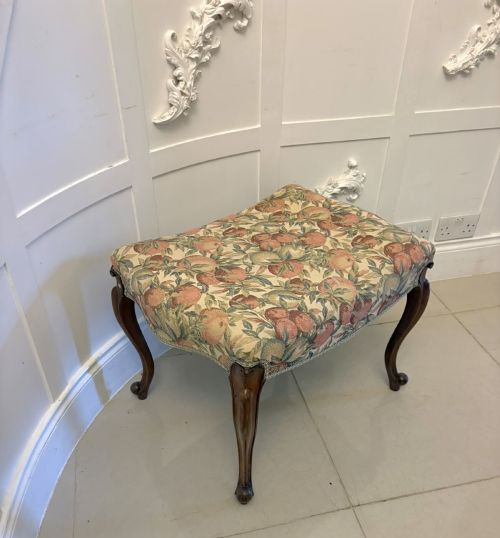
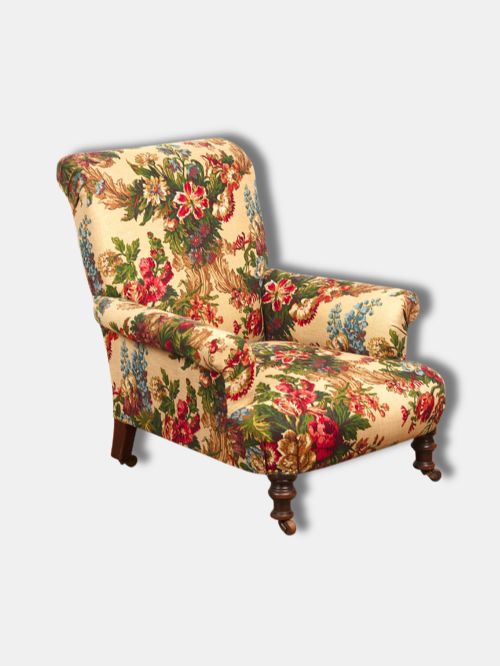
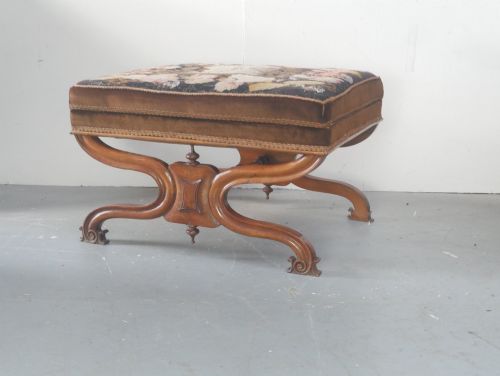
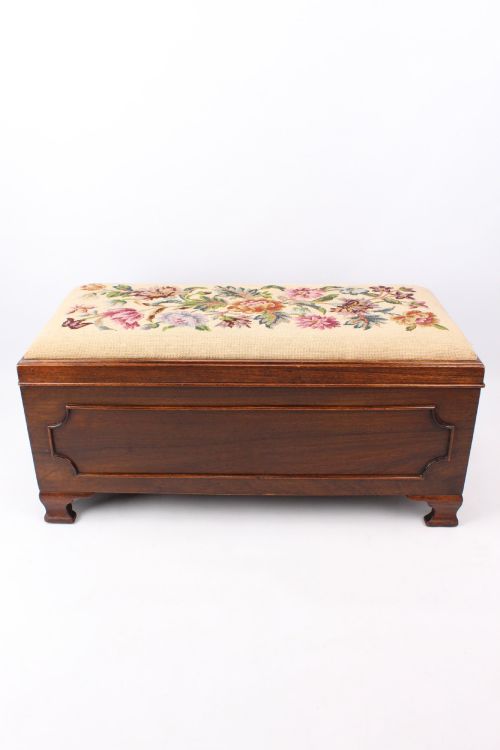
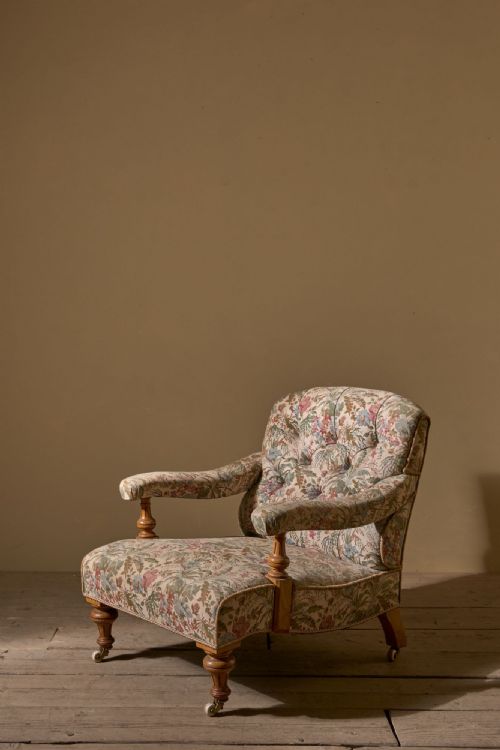
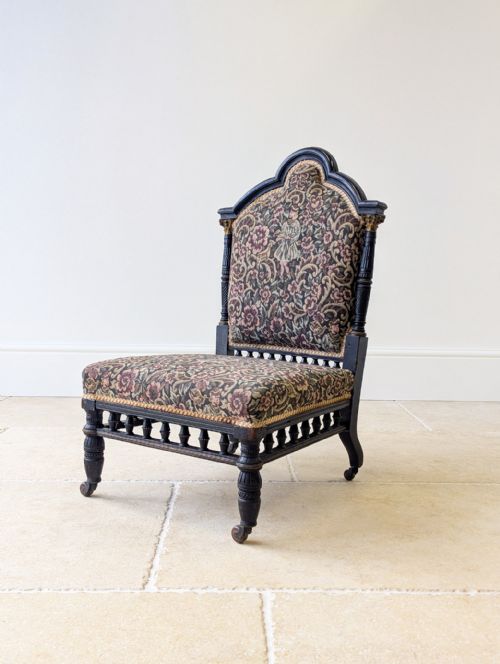
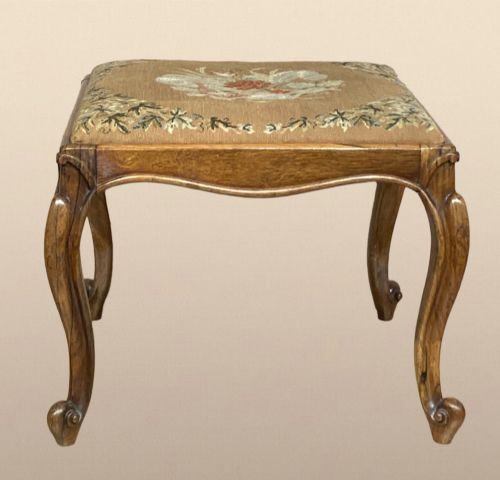
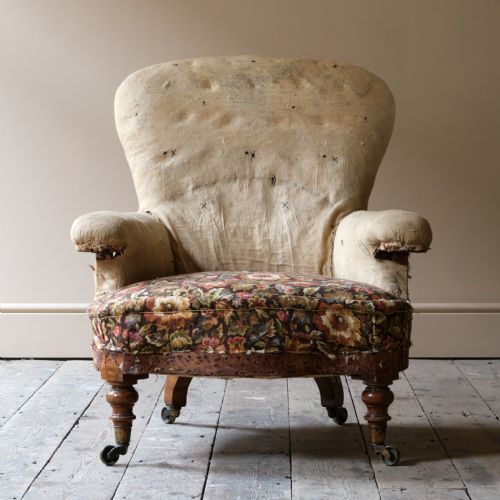
A victorian floral tapestry seat spans a variety of domestic forms from the nineteenth century, including nursing chairs, footstools, ottomans, and armchairs. These pieces primarily date from the Victorian era, alongside related examples from the Edwardian period and earlier William IV styles.
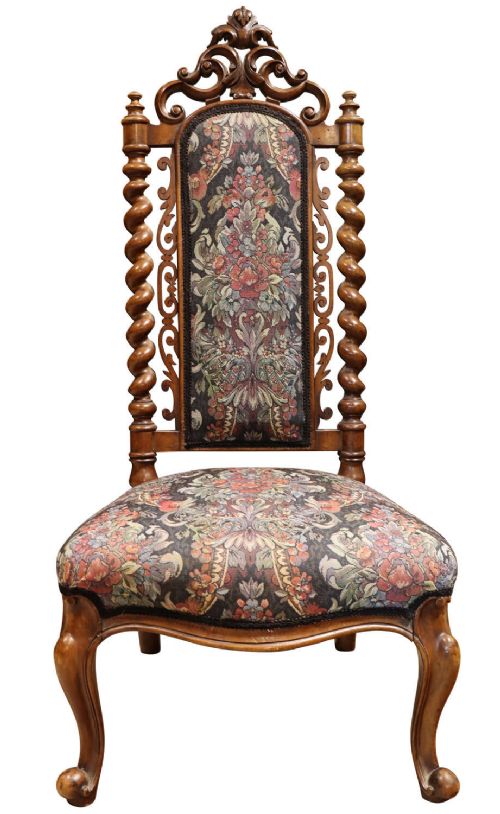
Most examples encountered here are smaller seating forms such as dressing stools and low salon chairs, often framed in walnut, mahogany, or rosewood. The textiles typically feature floral needlework or beadwork executed in wool, providing a distinct tactile finish to each piece.
Materials and Construction
Makers utilised dense hardwoods like walnut, mahogany, and rosewood for the structural frames, frequently employing carving, ebonising, or giltwood finishes. These timbers provide the rigid support necessary for heavy daily use.
The upholstery centres on wool tapestry, needlework, and beadwork textiles, often stretched over brass or wooden framing elements. This combination of sturdy timber and intricate textile work defines the physical construction of these items.
Victorian Floral Tapestry Seat Retail Price Guide 2026
Typical asking prices for victorian floral tapestry seat among the pieces listed under this phrase on Sellingantiques today, from the lower quarter to the upper quarter. They describe what is for sale here now, not the wider market.
Listings feature walnut, mahogany, rosewood, and beech frames paired with wool tapestry, velvet, and brass elements across Victorian and Edwardian periods.
Judging Quality and Execution
The sophistication of the timber carving and the complexity of the frame dictate the standing of a piece, with finely turned legs, X-frame structures, and elaborate walnut or rosewood mouldings marking superior examples. Simpler beech or mahogany frames represent more straightforward domestic production.
The tightness and detail of the floral tapestry or needlework execution further distinguish finer items from standard ones. Dense, neatly executed wool stitching retains its integrity and visual depth far better over decades of use.
Howard and Sons·R Whytock of Edinburgh·Holland and Sons·Gillows
The Victorian Floral Tapestry Seat Glossary
- Prie Dieu
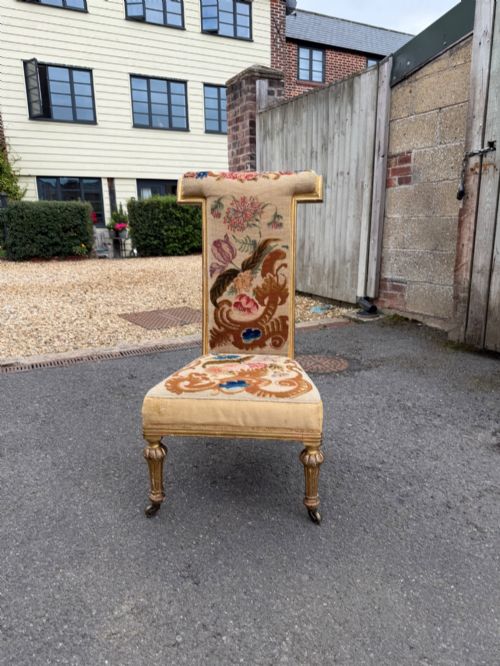
- A low devotional chair featuring a high back designed for kneeling or sitting in nineteenth-century homes. These pieces often display ornate woodwork and dedicated tapestry upholstery.
- Needlework
- Hand-stitched textile work utilising wool or other threads to create decorative patterns. It forms the primary surface decoration on these seats.
- Ottoman
- A low, upholstered seat without arms or a back, frequently utilised as a footrest or bench. They appear in walnut and mahogany frames with floral textile covers.
- Cabriole Leg
- A furniture leg that curves outward and then tapers inward, mimicking an animal's limb. This form appears frequently on Victorian rosewood and walnut seating.
- Ebonised
- Timber treated with a dark finish to imitate expensive ebony. It is commonly found on Aesthetic Movement and late Victorian salon chairs.
Victorian Floral Tapestry Seat: Frequently Asked Questions
What is a prie dieu chair?
A prie dieu is a low nineteenth-century chair featuring an upright back, originally intended for private prayer or comfortable dressing. They are compact in scale and frequently upholstered in floral tapestry.
These pieces sit well in modern bedrooms or quiet corners as accent seating, combining narrow proportions with decorative needlework.
How do I care for antique tapestry?
Antique wool tapestry requires gentle vacuuming with a low suction attachment through a protective mesh screen. Keep these textiles away from direct sunlight to prevent the coloured threads from fading.
Avoid using liquid cleaners on the wool surface, as moisture can damage both the historic fibres and the underlying padding.
Where were these seats used?
These seats served various domestic functions in nineteenth-century drawing rooms, boudoirs, and morning rooms. Smaller stools and nursing chairs were easily moved around the hearth or dressing area as needed.
Today, they function effectively as occasional chairs, dressing table seats, or decorative footstools in living spaces.
How do I distinguish Victorian from Edwardian pieces?
Victorian pieces generally feature heavier timber frames in walnut, mahogany, or rosewood with deep carving and dark finishes. The tapestry work often displays dense, rich floral patterns typical of mid to late nineteenth-century aesthetics.
Edwardian examples tend to be lighter in build and colour, reflecting a shift toward simpler decorative schemes in the early twentieth century.