




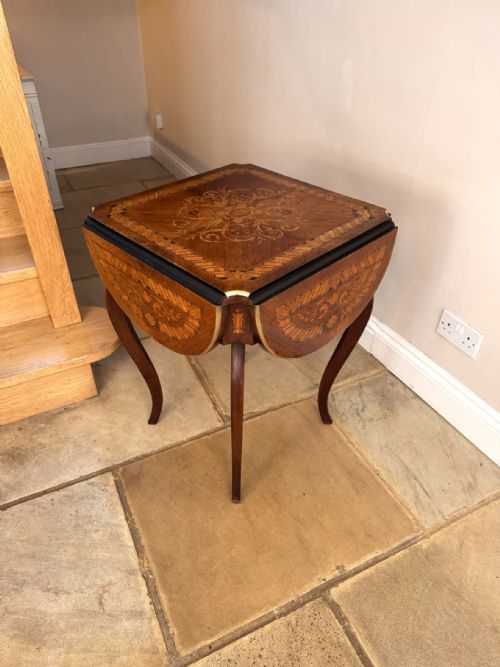
Victorian Floral Table
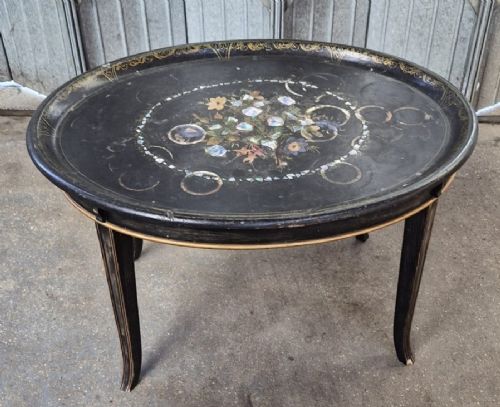
A victorian floral table brings botanical marquetry and delicate wood craft into a room, offering both a functional surface and a decorative botanical display.
Victorian Floral Table
A victorian floral table encompasses a range of small furniture forms built to display botanical motifs in wood and brass. The selection relies heavily on occasional, centre, wine, and lamp tables dating across the nineteenth century.
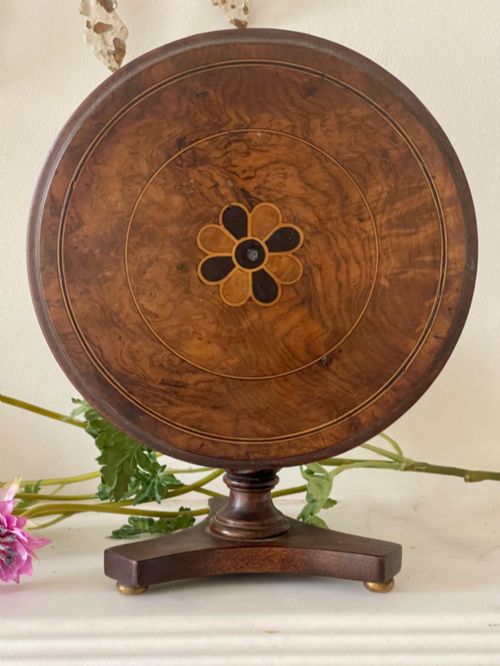
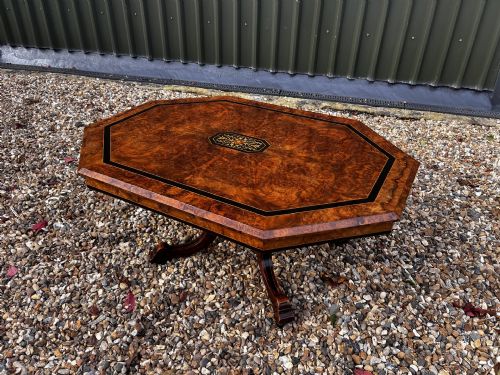
Makers utilised various timber surfaces to showcase inlaid floral sprays, leaf scrolls, and ribbon work. Buyers encounter circular tilt-top designs, kidney-shaped desks, and square card tables decorated with detailed plant ornament.
The objects stem from English and continental workshops, incorporating French revival influences alongside native cabinet-making traditions. Many pieces combine structural hardwoods with contrasting exotic veneers to emphasise the plant designs.
How they were made
Cabinet makers built the carcases using foundational timbers such as mahogany, walnut, and satinwood. They applied thin veneers of kingwood, tulipwood, and rosewood over these bases to create stable surfaces for intricate decoration.
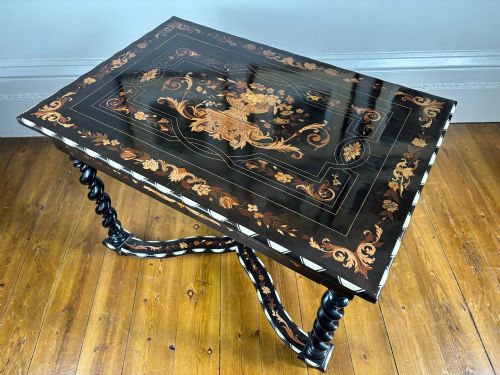
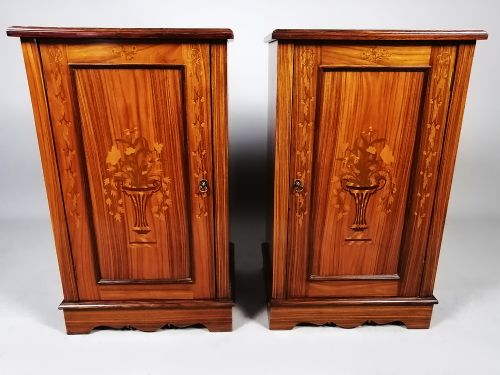
The characteristic floral motifs use marquetry techniques, cutting contrasting pieces of dyed wood, bone, and mother-of-pearl to fit together within a geometric background. Artisans secured these veneers with animal glues before hand-scraping and polishing the panels.
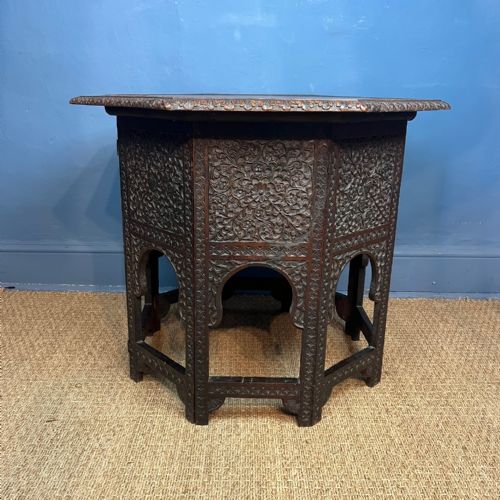
Metal mounts in ormolu, gilt bronze, and brass protect edges and highlight structural curves. Carved elements, including bobbin legs and hand-carved linden wood details, supplement the flat veneer work with three-dimensional plant forms.
Victorian Floral Table Retail Price Guide 2026
Typical asking prices for victorian floral table among the pieces listed under this phrase on Sellingantiques today, from the lower quarter to the upper quarter. They describe what is for sale here now, not the wider market.
Listings feature walnut, mahogany, kingwood, and satinwood timbers decorated with marquetry floral displays.
What varies in quality
The precision and depth of the marquetry dictate the upper tiers of craftsmanship. Finer examples display meticulous shading in the wooden petals and leaves, achieved by scorching veneer edges in hot sand.
Timber selection separates standard production from exhibition pieces. Superior items employ highly figured burr walnut, rich kingwood, and carefully matched grain patterns that frame the central floral composition.
The integration of mounts and secondary framing defines structural integrity. High-grade pieces feature crisply cast ormolu mounts and solid secondary woods that maintain stability across decades of domestic use.
Edward Holmes Baldock·Liberty And Co·Royal Doulton·Sitzendorf·Royal Vienna
The Victorian Floral Table Glossary
- Marquetry
- The art of forming decorative patterns by fitting together thin slices of wood, veneer, and other materials onto a structural carcase. This technique allows intricate floral and botanical scenes to cover table tops.
- Ormolu
- Gilt bronze ornamentation applied to furniture mounts and clock cases. The technique involves treating brass or bronze with a gold amalgam to produce a bright metallic finish.
- Kingwood
- A dense, richly figured timber native to Brazil, prized for its dark violet-brown colour and golden streaks. Cabinet makers used it extensively for contrasting borders on decorative tables.
- Tilt-top
- A mechanism allowing the table surface to pivot upright on its pedestal when not in use. This design saved space in nineteenth-century drawing rooms.
- Satinwood
- A pale, lustrous hardwood used for stringing and inlay. Its reflective grain provides a bright contrast against darker woods like rosewood and mahogany.
Victorian Floral Table: Frequently Asked Questions
What woods were used on these tables?
Makers constructed the primary frames using walnut, mahogany, and satinwood. They applied decorative veneers of rosewood, kingwood, and tulipwood to the tops and aprons.
Contrasting light and dark woods allowed craftsmen to delineate petals, stems, and leaves within the marquetry panels.
Where were these tables placed originally?
These pieces stood in Victorian drawing rooms, parlours, and boudoirs as decorative focal points. Smaller variants served near seating areas to hold oil lamps, books, or writing materials.
Centre tables occupied the middle of large reception rooms, while wine and occasional tables moved easily around the space.
How do I care for inlaid wood surfaces?
Keep the wood away from direct sunlight and heat sources to prevent the veneers from drying and lifting. Dust the surface regularly with a soft, dry cloth.
Apply a microcrystalline wax periodically to nourish the polish and protect the timber from atmospheric moisture.
How do I distinguish French styles from English ones?
French pieces often incorporate heavier ormolu mounts, serpentine curves, and Kingwood veneers influenced by Louis XV designs. English examples tend to favour straight lines, satinwood banding, and walnut carcases.
Both traditions embraced floral marquetry, though French workshops frequently integrated gilt bronze foliage directly into the wooden borders.