




Victorian Floral Necklace
A victorian floral necklace brings together precious metals and botanical motifs, offering the enduring appeal of nineteenth-century craftsmanship.
Victorian Floral Necklace
A victorian floral necklace encompasses gold and silver pendants, lockets, and chains created during the nineteenth century and into the early twentieth century. These pieces frequently feature botanical and foliate designs, incorporating flowers, leaves, and scrolls rendered in metal and gemstones.
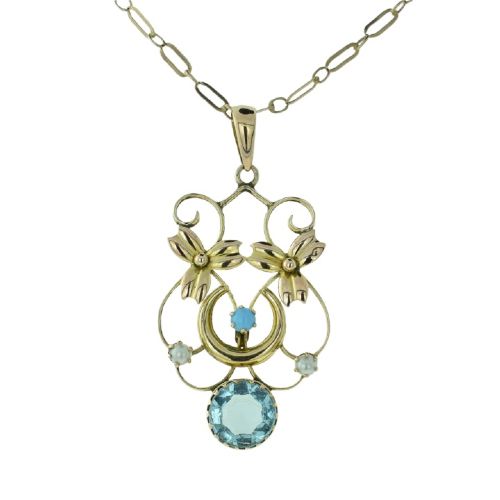
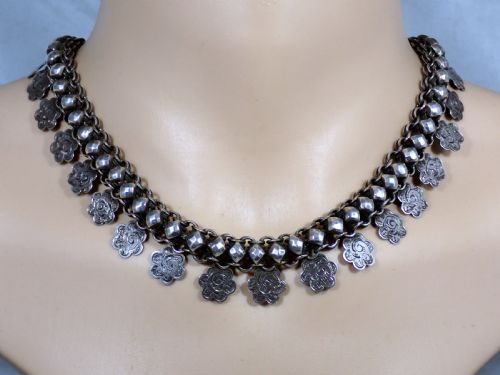
The most common versions encountered here span the Victorian era, late Victorian period, and Edwardian times, often combining varied gold carat weights with silver settings. Formats range from dedicated pendants and necklaces to convertible brooch-and-pendant pieces and substantial silver collar chains.
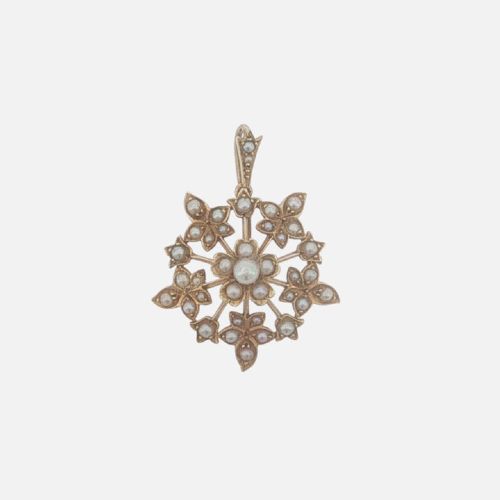
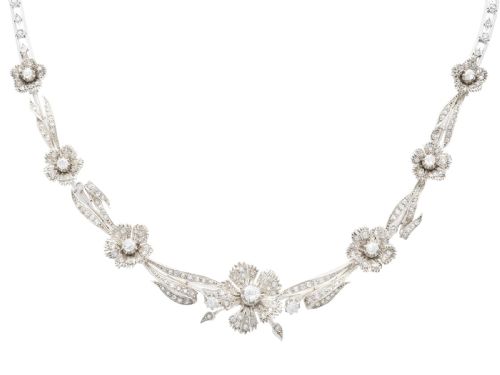
Origin points include British and French workshops, utilising distinct regional styles such as pietra dura mosaics alongside traditional stone settings. Buyers find both delicate seed pearl clusters and large diamond-set floral statement pieces.
Materials and Construction
Craftsmen utilised gold in 9ct, 14ct, 15ct, and 18ct purities, alongside silver and yellow or rose gold combinations to mount gemstones securely. Metalwork frequently involved chased floral motifs and pierced box link chains.
Gemstone selection included diamonds, seed pearls, pearls, turquoise, blue topaz, sapphire, garnet, amethyst, and citrine. Artisans also employed pietra dura technique to create inlaid stone floral mosaics.
Distinctions in Quality
The refinement of the botanical carving and the precision of the stone setting dictate the overall standard of a piece. Finer examples display meticulous attention to the foliage and flower petals, with stones closely matched in cut and colour.
The choice of materials also elevates a piece, distinguishing standard 9ct gold or silver mounts from substantial 15ct or 18ct gold settings combined with diamonds or fine seed pearls.
The Victorian Floral Necklace Glossary
- Pietra dura
- A method of inlaying cut and fitted polished coloured stones to form a pictorial image. This technique frequently depicts floral mosaics on nineteenth-century pendants.
- Seed pearl
- Very small, natural pearls often drilled and strung together or used in clustered arrangements. They form the delicate petals and centres of nineteenth-century floral designs.
- Rose cut
- An antique diamond cut featuring a flat base and a domed crown with triangular facets. This cut predates modern brilliant facets and appears frequently in nineteenth-century floral clusters.
- Chased
- A metalworking technique where a design is hammered into the front surface of the metal to sink it rather than remove it. This creates raised floral motifs without cutting away material.
- Collar chain
- A wide, substantial chain necklace designed to sit flat and close to the neck. These often incorporate pierced links or box chains.
Victorian Floral Necklace: Frequently Asked Questions
What is a victorian floral necklace?
A victorian floral necklace is a piece of antique jewellery featuring plant or flower motifs, created during the nineteenth century. These items typically combine gold or silver with gemstones or mosaic work.
They reflect the period's deep fascination with the language of flowers and botanical observation.
How were these necklaces worn?
Many of these pieces functioned as versatile items, serving as both pendants and brooches depending on the wearer's preference. They were suspended from matching chains, collars, or choker bands.
Shorter silver collar chains and long gold chains allowed the floral focal point to sit prominently on the chest.
How do I identify a period piece?
Period pieces are identified through their characteristic materials, such as 15ct gold, rose-cut diamonds, and natural seed pearls. Construction methods like hand-chased motifs and integrated brooch fittings also indicate age.
Stylistic cues include the specific foliate scrolls and naturalistic flower arrangements typical of nineteenth-century design.
How do I care for antique jewellery?
Antique jewellery requires gentle handling due to its age and delicate construction materials like seed pearls. These organic gems should be kept away from harsh chemicals, ultrasonic cleaners, and excessive moisture.
Storing pieces individually prevents metal friction and gemstone scratching.