

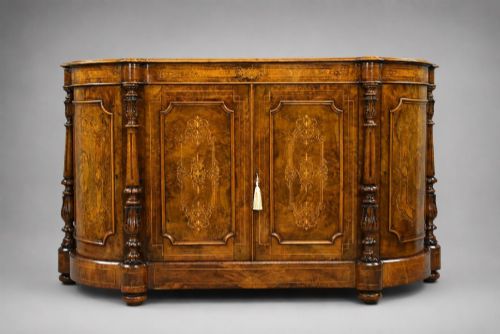


Victorian Floral Inlay Sideboard
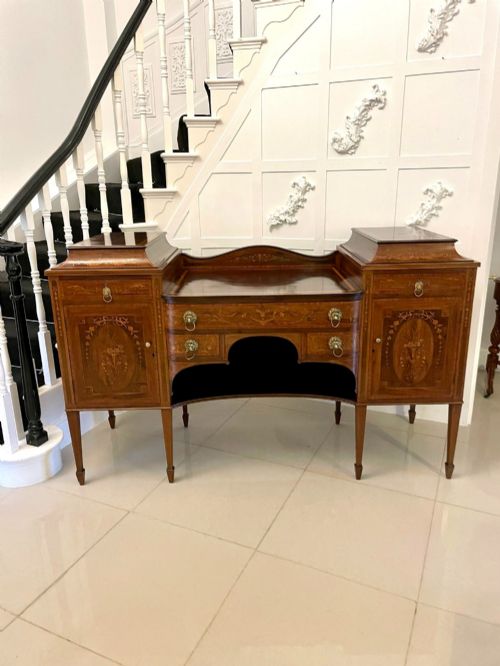
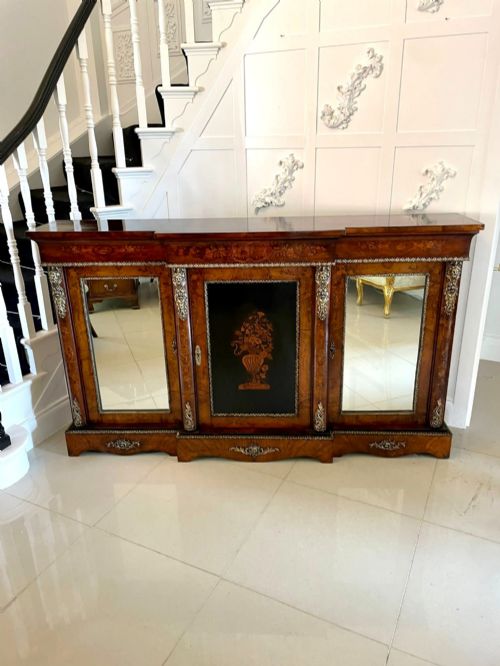
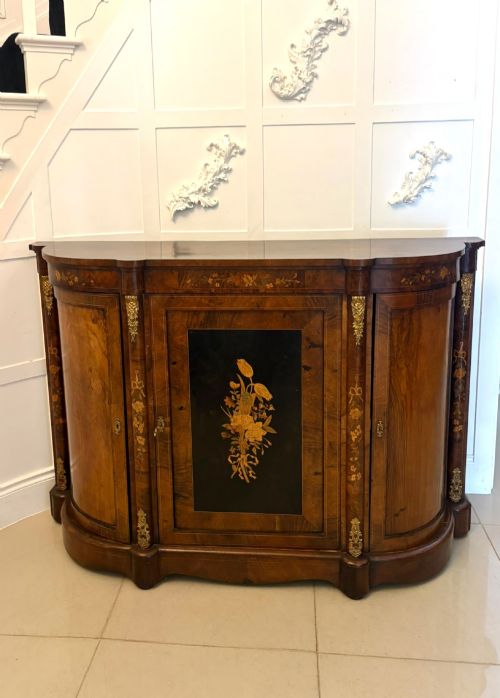
A victorian floral inlay sideboard brings together figured burr walnut, boxwood, and ormolu mounts to anchor a formal interior.
Victorian Floral Inlay Sideboard
When searching for a victorian floral inlay sideboard, collectors encounter a range of forms including credenzas, side cabinets, display cabinets, and bookcases dating from the nineteenth century, specifically between eighteen fifty and eighteen eighty.
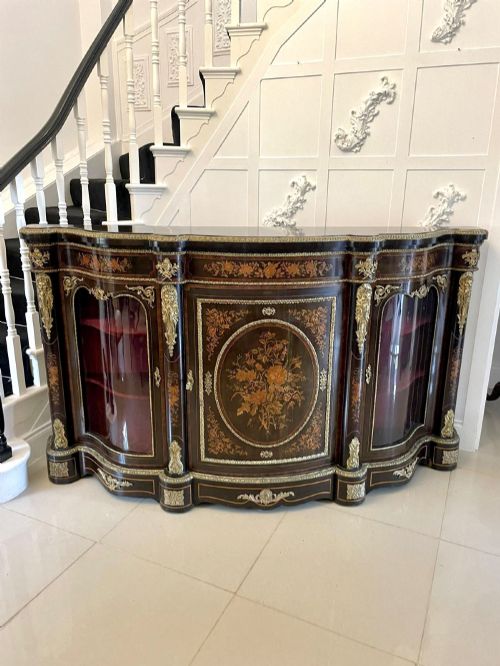
The most common version on this page is the credenza, often shaped with a serpentine front and executed in burr walnut with marquetry floral details.
Pieces span several stylistic revivals, taking inspiration from French neoclassical designs and Sheraton traditions, alongside simpler ebonised wood finishes.
Materials and construction
Cabinet makers built these pieces using solid and veneered timbers, predominantly burr walnut, mahogany, and satinwood, enhanced by boxwood inlay and marquetry foliage.
Mounts in cast ormolu accent the curves of serpentine forms, while glass doors feature in display cabinets and credenzas designed to showcase ceramics and books.
Floral marquetry panels often hide intricate secret compartments within the credenza interiors for storing family correspondence and small treasures.
Judging the standard
The degree of refinement in the floral marquetry and the choice of highly figured burr walnut separate standard production from exhibition pieces.
Quality shows in the weight and crispness of the ormolu mounts, the symmetry of the wood grains, and the execution of serpentine shaping across the front structure.
Hewetsons London
The Victorian Floral Inlay Sideboard Glossary
- Credenza
- A low cabinet or sideboard, frequently fitted with glass doors and central shelving, popular in the Victorian period for formal reception rooms.
- Marquetry
- The art of applying decorative veneer pieces in wood, boxwood, and other materials to form floral and geometric patterns on a surface.
- Ormolu
- Gilded bronze mounts applied to furniture edges and feet for ornamentation, common in French revival Victorian cabinet work.
- Burr Walnut
- A timber derived from walnut tree growths, valued for its swirling grain patterns that create rich visual texture on large surfaces.
- Serpentine
- A furniture front curving outward in the centre and inward at the sides, demanding high skill from the cabinet maker.
Victorian Floral Inlay Sideboard: Frequently Asked Questions
What is a credenza sideboard?
A credenza sideboard is a low nineteenth-century cabinet designed for principal reception rooms, combining cupboard space with central display sections.
These pieces often feature glass doors and elaborate marquetry surfaces intended to reflect candlelight in a formal interior.
Where were these cabinets placed?
Victorian households positioned these sideboards against main drawing room walls to display ornamental objects and store fine tablewares.
Their finished backs and detailed fronts allowed them to sit prominently within large reception spaces rather than against walls alone.
How do I care for burr walnut?
Burr walnut requires stable indoor humidity and protection from direct sunlight to prevent veneer lifting and timber fading.
Regular dusting with a dry cloth maintains the polished surface without the need for heavy modern chemical polishes.
How to date these pieces?
Dating relies on timber choices, stylistic markers, and construction methods characteristic of the mid to late nineteenth century.
Mid-century pieces favour burr walnut and ormolu mounts, while later items incorporate satinwood and Sheraton revival painted motifs.