

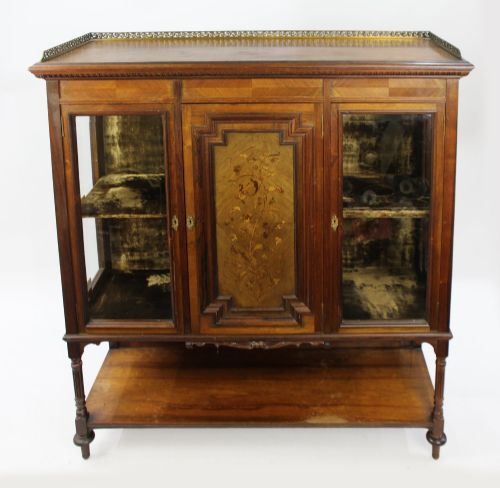
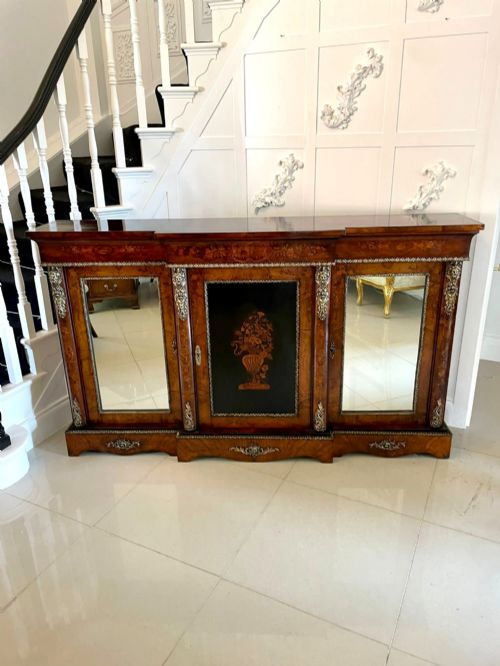

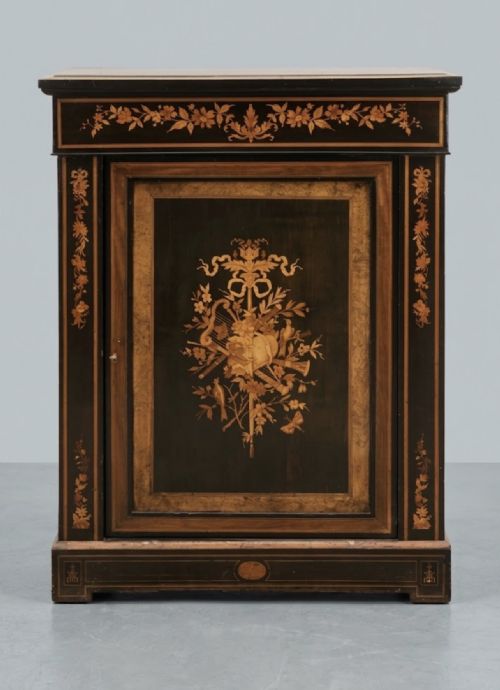
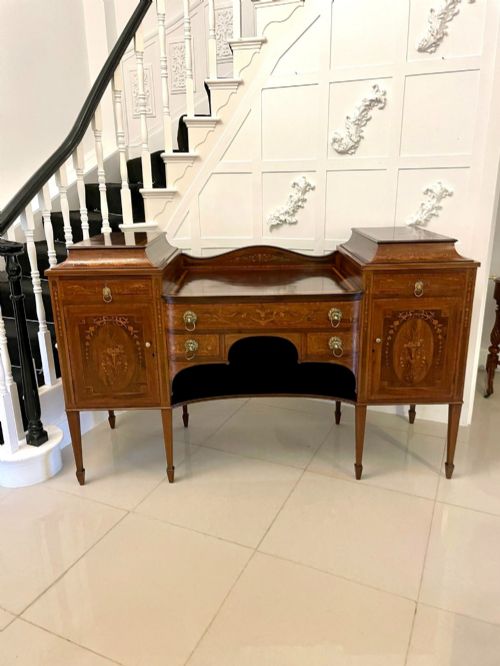
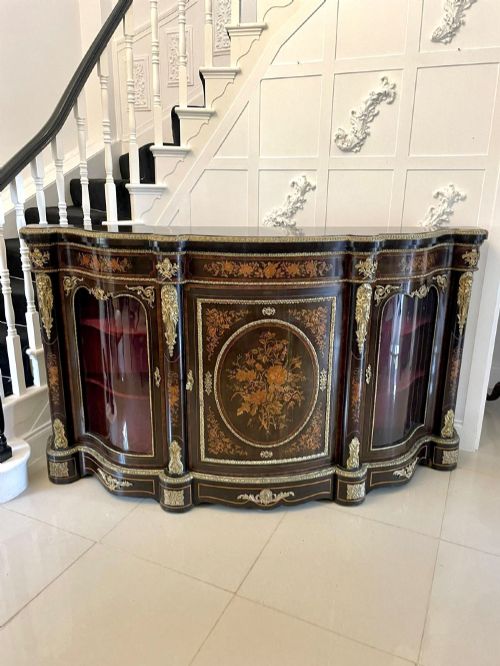
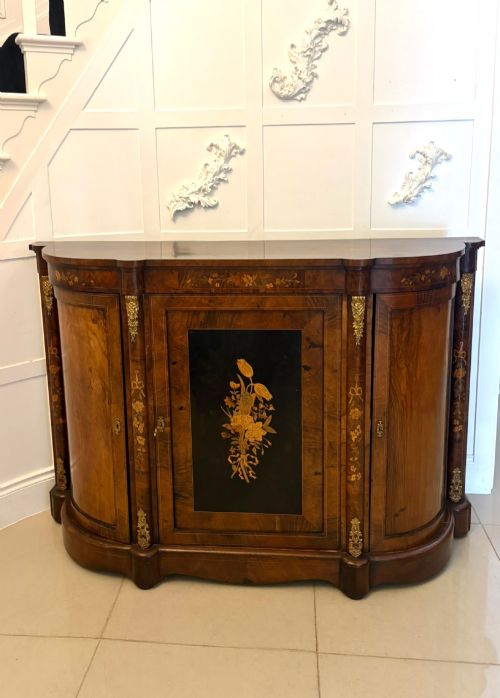
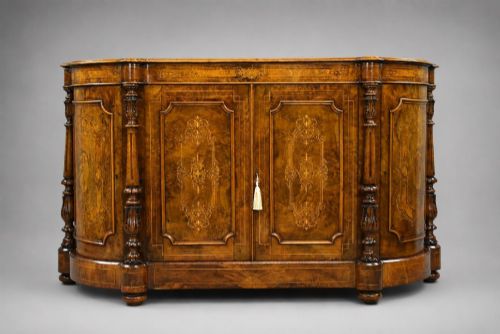


Victorian Floral Inlaid Credenza
These pieces are a victorian floral inlaid credenza, offering substantial display space and intricate marquetry for period interiors.
Victorian Floral Inlaid Credenza
A victorian floral inlaid credenza is a low, freestanding display cabinet designed for formal reception rooms during the nineteenth century. These items typically combine enclosed central cupboards with flanking curved glass doors to exhibit porcelain and silver.
Most examples found here date from the mid to late nineteenth century, spanning periods from the eighteen-fifties through the eighteen-eighties. Alongside standard credenzas, related forms include side cabinets, pier cabinets, and breakfront bookcases.
The aesthetic draws heavily on Victorian French Revival and Sheraton Revival vocabularies, often incorporating serpentine fronts and classical symmetry. Buyers encounter these primarily in figured timbers with contrasting lighter woods arranged in botanical motifs.
Materials and construction
Cabinet makers constructed the carcases predominantly using walnut and burr walnut, while select examples utilise ebonised wood, mahogany, rosewood, or satinwood. Veneers of highly figured timber were laid over solid foundations to create rich surface patterns.
Decoration relies on intricate marquetry using boxwood inlay and floral painted panels to depict botanical arrangements across doors and friezes. Ormolu mounts in cast brass are frequently applied to borders, feet, and pillars to accentuate the serpentine outlines.
Victorian Floral Inlaid Credenza Retail Price Guide 2026
Typical asking prices for victorian floral inlaid credenza among the pieces listed under this phrase on Sellingantiques today, from the lower quarter to the upper quarter. They describe what is for sale here now, not the wider market.
Cabinet makers occasionally hid secret compartments behind the floral marquetry to guard family letters.
Distinctions in craftsmanship
The standard of execution in the marquetry work separates ordinary output from exceptional examples, visible in the precision of the boxwood cutting and the naturalism of the floral details. Dense, highly figured burr walnut veneers selected for symmetry indicate superior workshop selection.
Ormolu mounts also vary significantly, ranging from sharply chased cast brass to simpler, unrefined metal elements. The weight of the timber and the fluency of the serpentine curved glass doors further distinguish the finer pieces.
Hewetsons London
The Victorian Floral Inlaid Credenza Glossary
- Marquetry
- A technique where pieces of contrasting wood veneer are assembled to form pictorial patterns, particularly floral designs on cabinet doors.
- Burr walnut
- Timber taken from a tree growth that yields highly swirled, mottled grain patterns, prized for veneering prominent surfaces.
- Ormolu
- Gilded bronze or brass mounts used decoratively on furniture corners, frames, and feet.
- Serpentine
- A cabinet front or shelf shaped with a central convex curve flanked by concave sections.
- Pier cabinet
- A narrow display cabinet designed to fit wall spaces between windows.
Victorian Floral Inlaid Credenza: Frequently Asked Questions
Where were credenzas placed in Victorian homes?
These cabinets stood against drawing room walls, often between tall windows or as a central focal point in the room.
Their low profile ensured they did not obstruct natural light while providing a surface for decorative objects.
How do I care for burr walnut veneer?
Keep the wood away from direct sunlight and heat sources to prevent the veneers from drying out or lifting over time.
Apply a traditional wax polish occasionally and buff gently with a soft cloth to maintain the lustre.
What is the difference between a credenza and a sideboard?
Credenzas are typically lower, more decorative cabinets featuring glass doors intended for display in formal reception rooms.
Sideboards generally serve dining rooms with solid doors and drawers designed for storing tableware.
Are the glass panels original to the cabinet?
Many pieces retain their original curved or flat glass panes, which often display minor surface bubbles and thickness variations consistent with nineteenth-century manufacture.
Close inspection of the putty or glazing beads helps determine if the glass has been replaced during repairs.