



Victorian Floral Diamond Jewellery
Victorian floral diamond jewellery combines botanical motifs with gold, silver and stones, offering enduring appeal for collectors of period pieces.
Victorian Floral Diamond Jewellery
Victorian floral diamond jewellery encompasses brooches, pendants, rings, earrings, necklaces, bracelets and bangles shaped as flowers, sprays, clusters and knot designs. These pieces draw on natural forms, capturing botanical details in precious metals and stones.
The selections encountered most frequently on this page date from the Victorian period through to the Edwardian era and 1900, spanning the mid-19th century into the early 20th century. Brooches, pendants and rings form the majority of the available items.
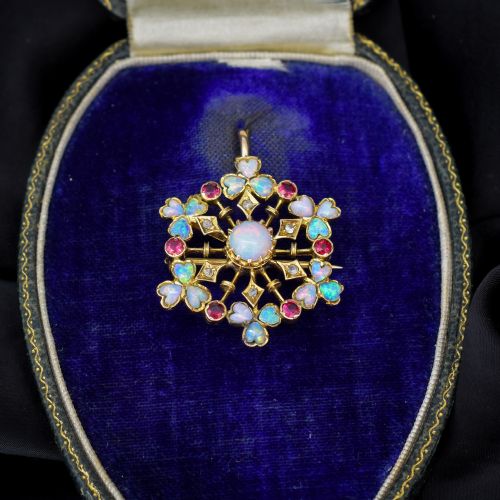
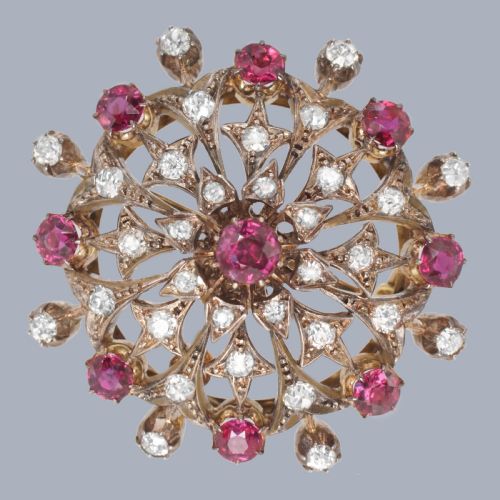
Makers and jewellers utilised natural motifs alongside geometric elements, incorporating coloured gems such as rubies, opals, sapphires, turquoise and pearls. French and English examples appear across the range of forms.
Materials and construction
Metals span yellow gold in 9ct, 14ct, 15ct, 18ct and 22ct purities, alongside silver, which was frequently used to set diamond clusters and highlights. Silver-topped gold techniques allowed jewellers to mount stones securely while maintaining a bright white metal face.
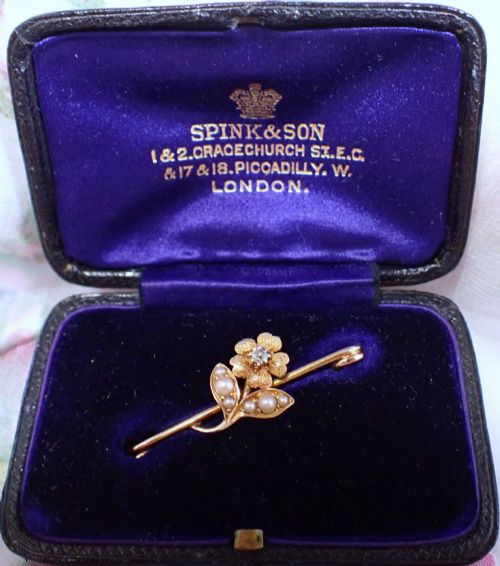
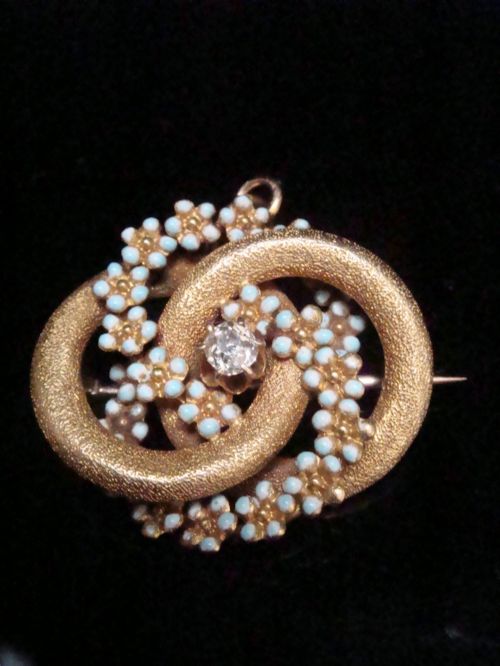
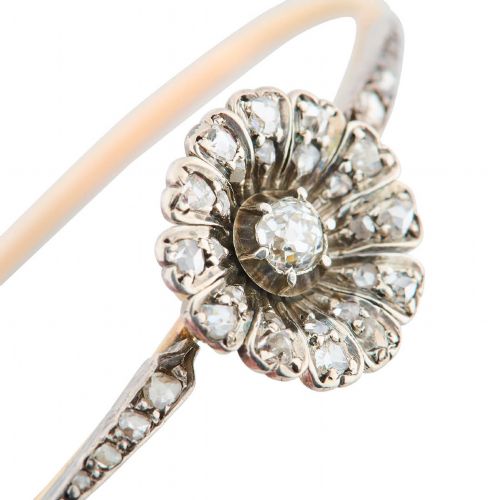
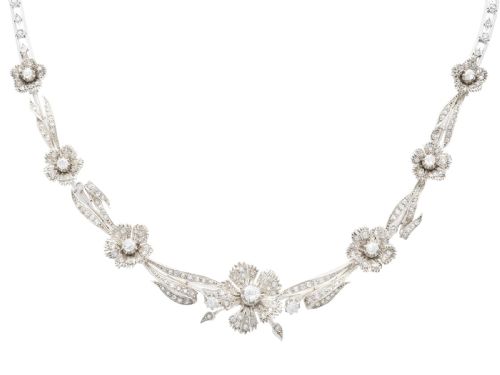
Diamonds appear as old-cut, rose-cut and old mine-cut stones, clustered to form petals and floral centres. Gemstones including natural pearls, opals, rubies, turquoise and enamel provide colour and textural contrast against the metalwork.
Listings span the Victorian, Edwardian, Art Nouveau and French Second Empire styles, incorporating diamonds, rubies, opals, enamel and pearls.
Distinctions in quality
Quality rests upon the proportion and naturalism of the floral design, the cut and matching of the diamonds, and the refinement of the metalwork. Hand-wrought settings and detailed chasing elevate an item above simpler production.
The integration of secondary stones, such as natural unheated rubies, opals or pearls, affects the character and complexity of each piece. Superior examples display harmonious composition and careful stone placement within the floral motif.
The Victorian Floral Diamond Jewellery Glossary
- Rose cut
- A diamond cut with a flat base and a domed crown faceted in triangles. This style produces a soft scintillation distinct from modern brilliant cuts.
- Old mine cut
- An early cushion-shaped diamond cut with a small table, high crown and large culet. It is typical of 19th-century jewellery.
- Plique-a-jour
- An enamelling technique where enamel is applied in cells without a backing, allowing light to pass through. It creates a translucent, stained-glass effect seen in Art Nouveau pieces.
- Guilloche enamel
- Enamel applied over a metal surface that has been mechanically engraved with repetitive patterns. This technique produces a shimmering, textured background beneath translucent colour.
- Cluster
- An arrangement of smaller gemstones set tightly around a central stone. In floral pieces, this configuration mimics the petals surrounding the heart of a flower.
Victorian Floral Diamond Jewellery: Frequently Asked Questions
How do I wear a Victorian floral brooch?
Victorian floral brooches adapt well to lapels, scarves, velvet bands and heavy winter coats. Their substantial pins secure firmly through thick fabrics.
Many brooches from this era double as pendants through hidden bails, allowing them to hang from chains or necklaces as well as pinning to garments.
Can I wear these rings every day?
Historic rings require consideration due to their age and delicate settings. Regular wear is possible with mindful care, particularly avoiding knocks during physical tasks.
Settings involving low-set diamonds and robust gold shanks handle daily use better than elevated cluster mounts or pieces incorporating soft gems like opals.
How do I tell Victorian from Edwardian pieces?
Victorian pieces often feature warmer yellow gold, heavier settings and romantic motifs like lovers' knots alongside floral sprays. Stones frequently utilise old mine and rose cuts.
Edwardian jewellery tends toward lighter structures, platinum or white metal integration, and brighter diamond groupings. Design lines often become airier and more lace-like.
What care do these pieces need?
Gentle cleaning with warm water, mild soap and a soft brush maintains the metal and stones without causing damage. Harsh chemical dips ruin pearls, opals and enamel.
Professional inspection of the claws and settings every few years prevents stone loss, as historic mountings can weaken through decades of wear.