

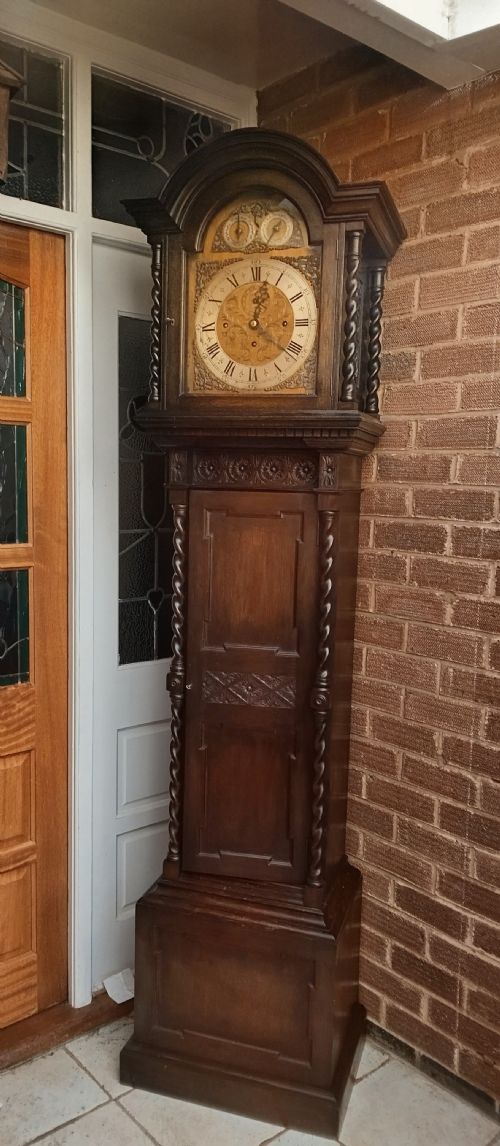
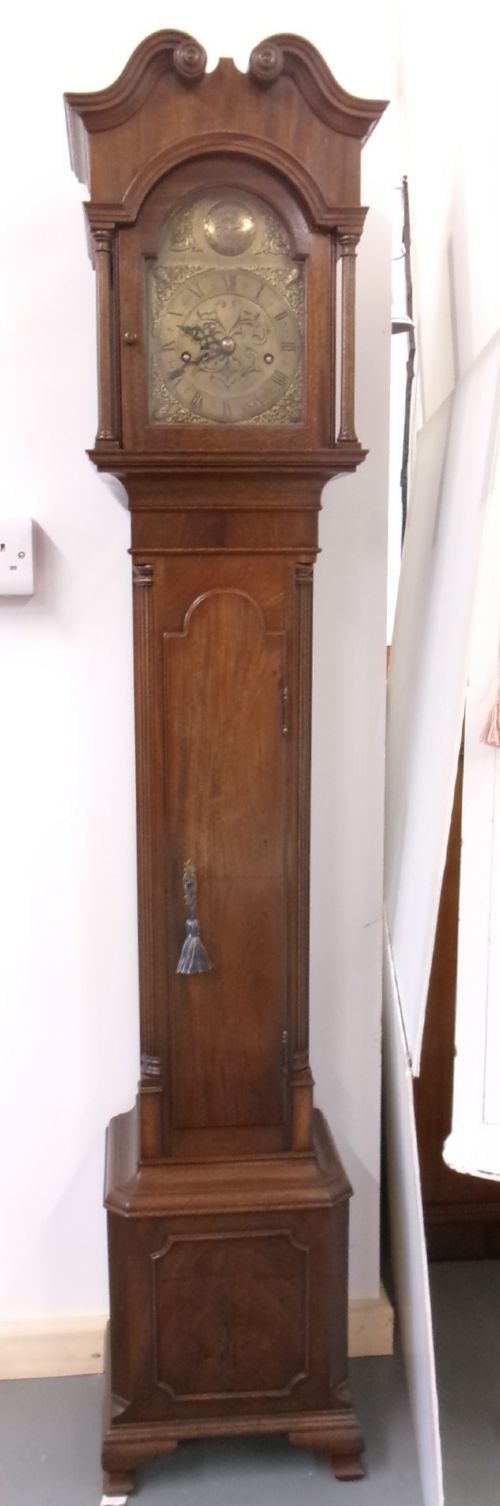
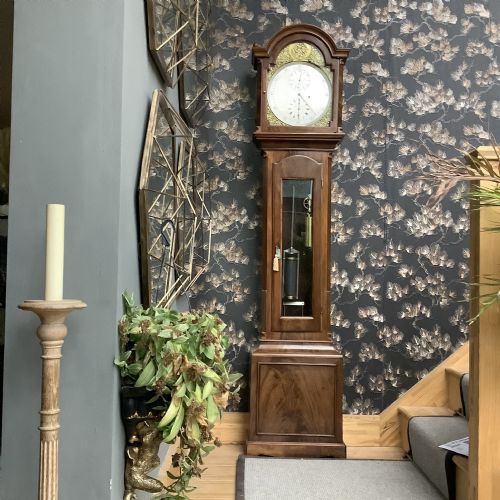


Victorian Floor Standing Clock
A victorian floor standing clock anchors a room with mechanical gravity, bringing nineteenth-century timekeeping and rich cabinetwork into a modern interior.
Victorian Floor Standing Clock
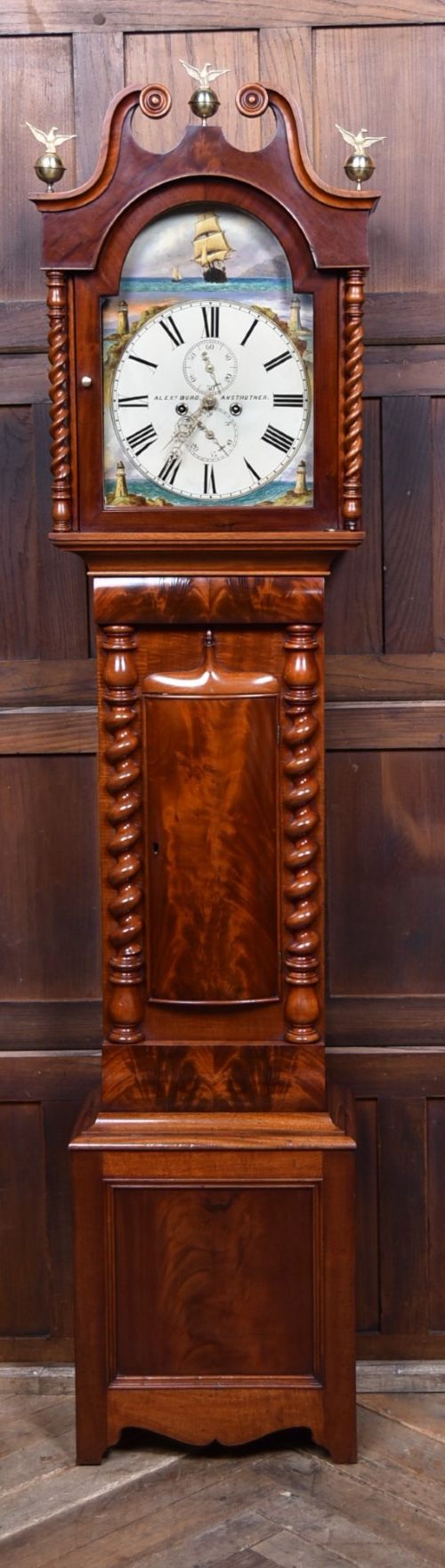
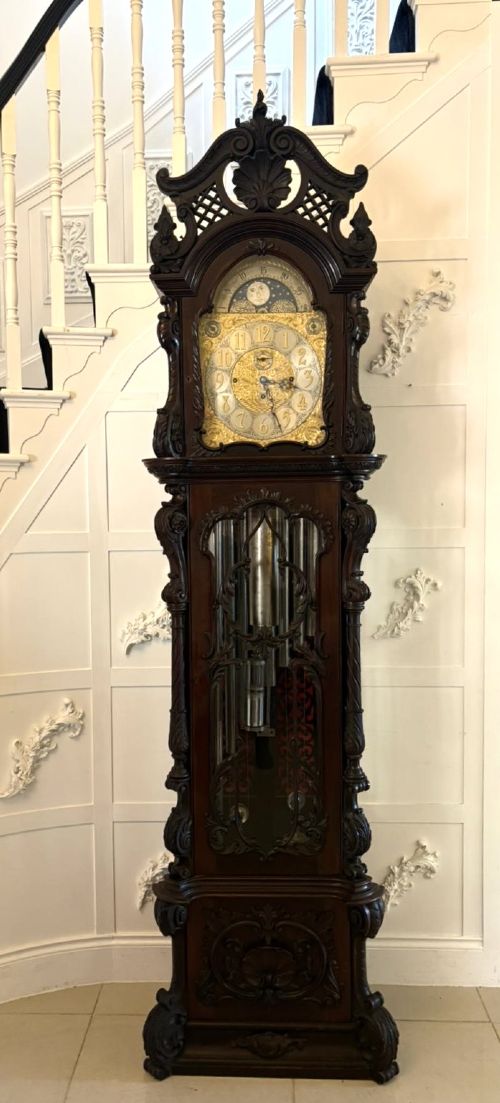
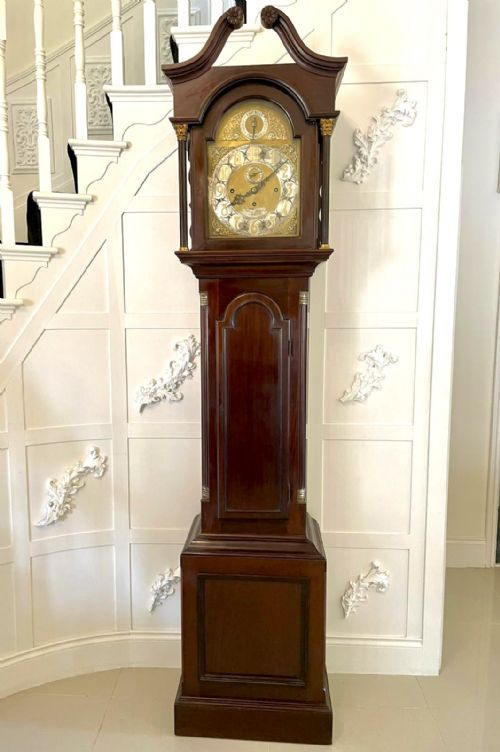
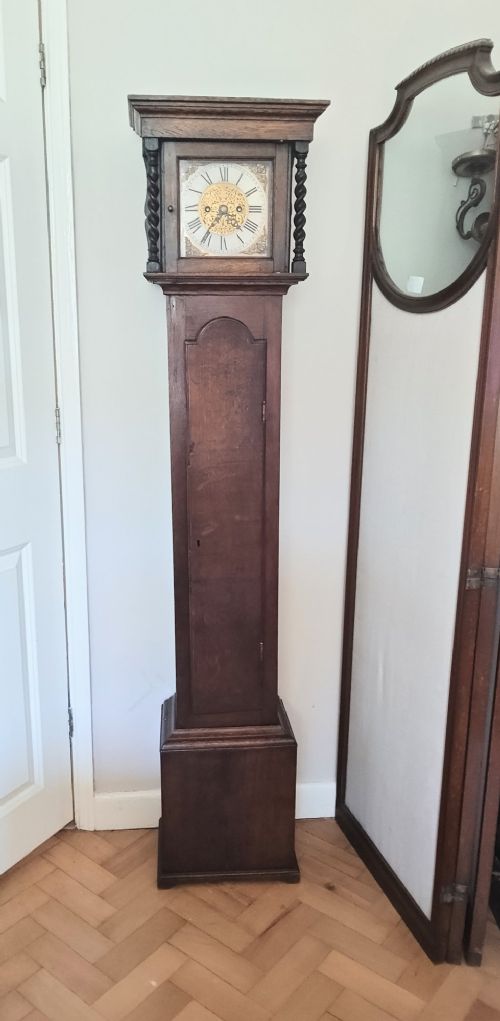
A victorian floor standing clock encompasses tall case timepieces made during the nineteenth century, most frequently encountered here as mahogany or oak longcase and grandfather clocks. These substantial pieces range from grand musical examples with multiple bells and tubes down to smaller grandmother clocks.
The selection includes regional Scottish variations alongside English pieces, spanning thirty-hour movements and eight-day striking mechanisms. Cabinets adopt styles from traditional mahogany cases to carved oak and revival designs.
Buyers look for a balance of dial artistry and cabinet proportion, often favouring painted arched faces with moon rollers or clean regulator dials. The domestic scale varies from towering musical instruments down to compact proportions suitable for modern ceiling heights.
Qualities of Distinction
Differentiation across the range rests on the complexity of the movement and the depth of the cabinet timber. Exhibition quality pieces feature multi-bell musical chimes, tubular gongs, moon rollers and deeply carved mahogany or oak casework.
Simpler thirty-hour clocks in pine or plain oak occupy the domestic end of the scale, relying on honest regional craftsmanship rather than elaborate mechanical complications. The crispness of the painted dial and the integration of the hood design further separate standard production from masterwork output.
Victorian Floor Standing Clock Retail Price Guide 2026
Typical asking prices for victorian floor standing clock among the pieces listed under this phrase on Sellingantiques today, from the lower quarter to the upper quarter. They describe what is for sale here now, not the wider market.
Winsor Bishop Norwich·David Craig Ford Path head·James Wood·Aitchison of Glasgow·Geo Tarratt of Leicester·Richard Rowell Oxford·Sam Robson
The Victorian Floor Standing Clock Glossary
- Longcase clock
- A tall, weight-driven pendulum clock housed in a protective wooden case, commonly known as a grandfather clock. These instruments measure time through falling weights suspended by cords or chains.
- Grandmother clock
- A smaller, more slender version of the traditional longcase clock, developed to fit domestic spaces with lower ceilings. They retain standard weight-driven or spring-driven movements in reduced proportions.
- Regulator
- A precision pendulum clock designed for extreme accuracy, often featuring a simplified dial layout with separate hands for hours, minutes and seconds. Horologists used these clocks as reference timepieces to set other watches and clocks.
- Fusee
- A conical pulley used in spring-driven clocks to equalise the diminishing power of the mainspring as it unwinds. This mechanism ensures an even force is delivered to the gear train throughout the running period.
- Moon roller
- A rotating disc behind an arched dial aperture that tracks the phases of the lunar cycle over a twenty-nine and a half day period. This decorative complication adds significant visual interest to the clock face.
Victorian Floor Standing Clock: Frequently Asked Questions
How do I wind a longcase clock?
Winding involves using a crank key to draw up the weights inside the trunk. Care must be taken not to overwind the movement.
Most eight-day clocks require winding once a week, while thirty-hour versions need attention daily or weekly depending on the weight drop.
Where should I place a grandfather clock?
Position the case against an interior wall away from direct sunlight, central heating vents and exterior doors. Fluctuating temperatures and humidity affect the wood and movement.
A stable floor surface is essential to ensure the pendulum swings evenly and the clock keeps accurate time.
What is the difference between a grandfather and a grandmother clock?
The primary distinction lies in height and overall proportion. Grandfather clocks stand tall and commanding, whereas grandmother clocks offer a much smaller stature.
Despite the size reduction, grandmother clocks often house quality mechanical movements comparable to their larger counterparts.
How do I read a regulator dial?
Regulator dials separate the hands to prevent visual obstruction and improve time reading precision. The minute hand usually dominates the central arbor.
Subsidiary dials display the hours and seconds independently, a layout favoured in observatories and railway stations for absolute accuracy.