

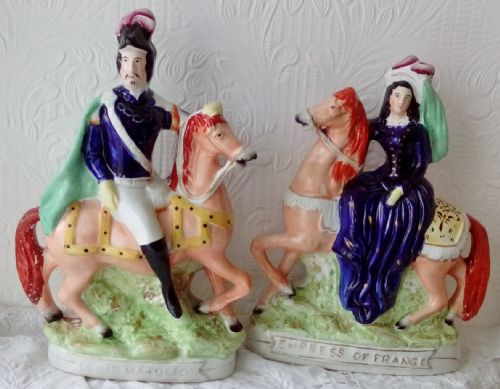


Victorian Flatback Horse Figures
Victorian flatback horse figures are Staffordshire ceramic sculptures made to be seen from the front on a mantelpiece.
Victorian Flatback Horse Figures
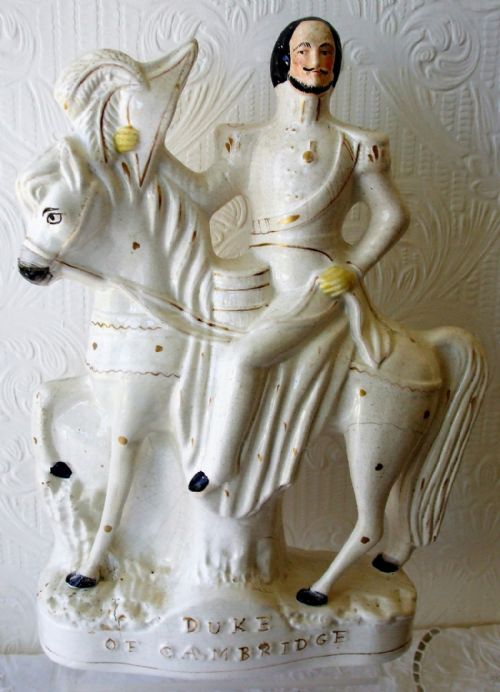
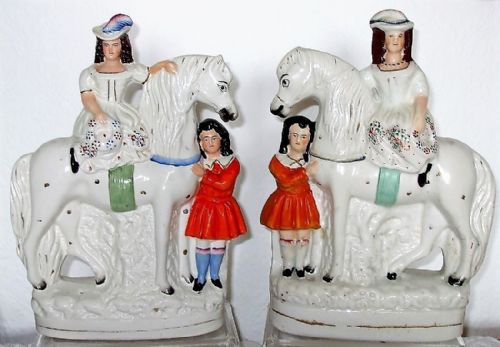
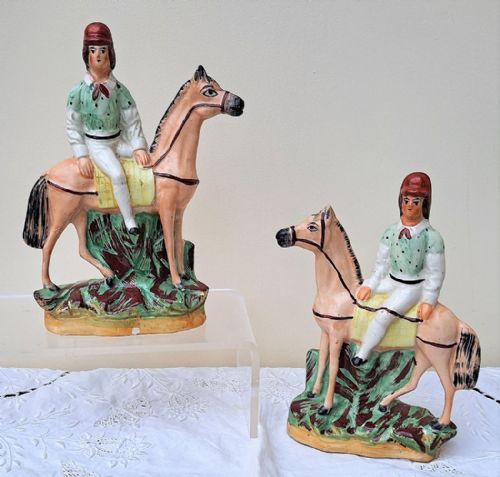
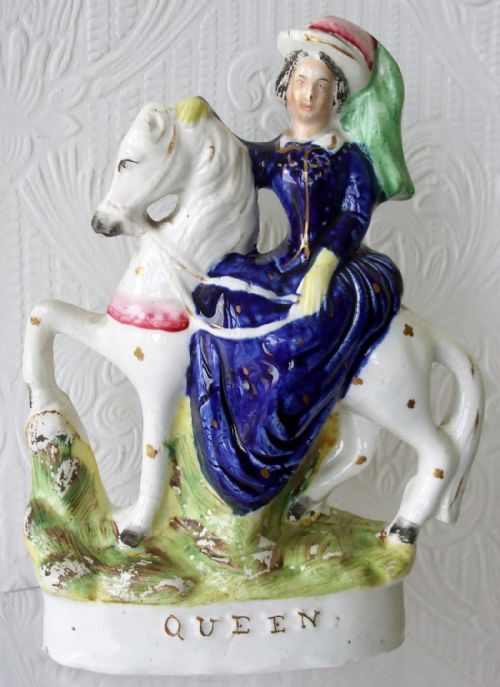
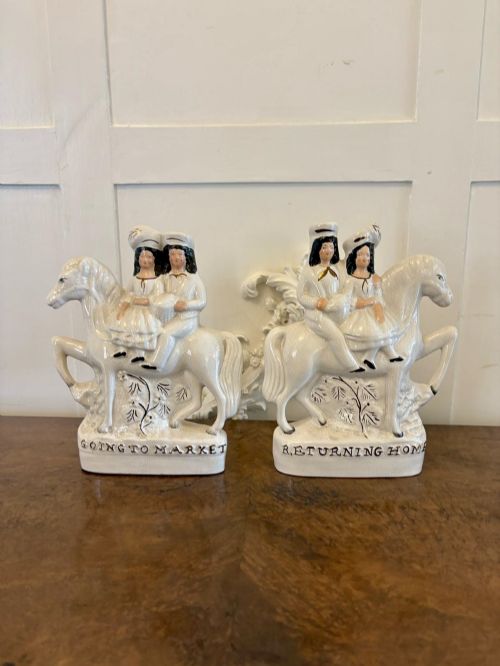
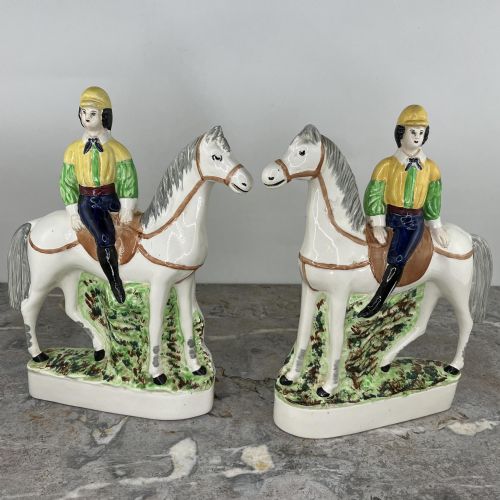
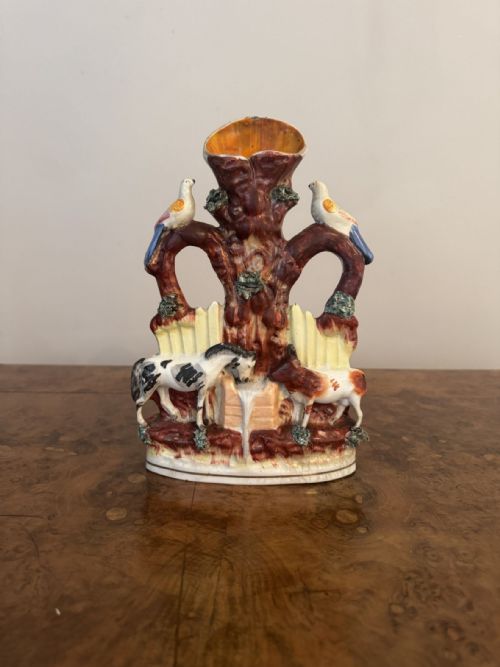
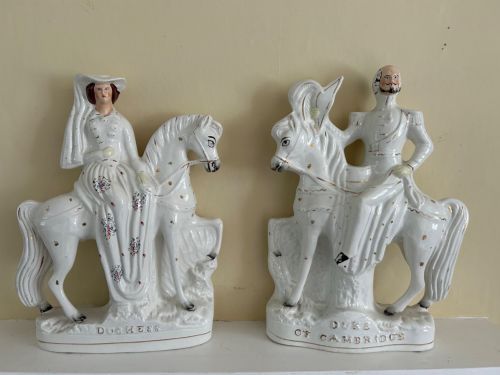
Victorian flatback horse figures comprise earthenware figurines and spill vases modelled with flat, unglazed backs for display against a wall. These decorative ceramics portray mounted jockeys, historical personages, and equestrian subjects in the Victorian Staffordshire pottery tradition.
The most common examples on this page are pairs of figures showing mounted riders, royal figures, and Scottish highlanders on horseback. Makers captured popular heroes, royalty, and literary characters such as Joan of Arc or highwayman Tom King.
Dating primarily from the nineteenth century, these objects range from mid-century pairs to later reproductions. They span portrait subjects, animal studies, and occupational figures made to adorn period interiors.
What varies in quality
The retention of bright enamel colours and original gilt detailing influences the visual presence of each figure. Pieces with minimal restoration and clean glaze surfaces sit at the upper end of the range.
Victorian Flatback Horse Figures Retail Price Guide 2026
Typical asking prices for victorian flatback horse figures among the pieces listed under this phrase on Sellingantiques today, from the lower quarter to the upper quarter. They describe what is for sale here now, not the wider market.
Nineteenth-century potters immortalised notorious highwaymen and leopard hunters alongside royalty on the mantelpiece.
Sampson Smith
The Victorian Flatback Horse Figures Glossary
- Flatback
- A ceramic figure modelled with a finished front and sides but a flat, undecorated reverse. This design was intended for display on shelves or mantelpieces against a wall.
- Staffordshire pottery
- Earthenware produced in the industrial towns of Staffordshire during the nineteenth century. The region specialised in decorative figures and utilitarian wares.
- Spill vase
- A hollow ceramic figure incorporating a cylindrical holder designed to store wooden spills used for lighting fires or pipes. These combine decorative modelling with domestic utility.
- Lead glaze
- A glossy coating containing lead oxide applied to earthenware before firing. It provides a smooth, waterproof surface that enhances the underlying enamel colours.
- Enamel
- Opaque glass-based colours applied over the fired glaze and fixed in a second, lower-temperature kiln firing. Enamels provide the bright palette seen on Victorian figures.
Victorian Flatback Horse Figures: Frequently Asked Questions
What are flatback figures?
Flatback figures are ceramic sculptures made with a finished front and a flat, unglazed back designed to sit flush against a wall.
Potters produced them in large numbers during the nineteenth century for domestic mantelpiece display.
How were these figures used?
They served as decorative ornaments in Victorian homes, often displayed in pairs on mantelpieces or side tables.
Some variants, such as spill vases, also held wooden spills for lighting candles or fires.
How do I spot a reproduction?
Reproductions often show modern casting marks, heavy artificial ageing, or twentieth-century ceramic bodies.
Genuine nineteenth-century pieces display appropriate crazing, wear to the enamel, and period earthenware characteristics.
Why are the backs unglazed?
Leaving the back flat and unglazed allowed the pieces to sit stably against a wall and reduced production costs in the kiln.
This method saved space during firing and suited the mantelpiece display style of the period.