
Victorian Flame Mahogany Bookcase
A victorian flame mahogany bookcase brings rich timber figures and substantial storage to a room, offering a functional centrepiece for any library.
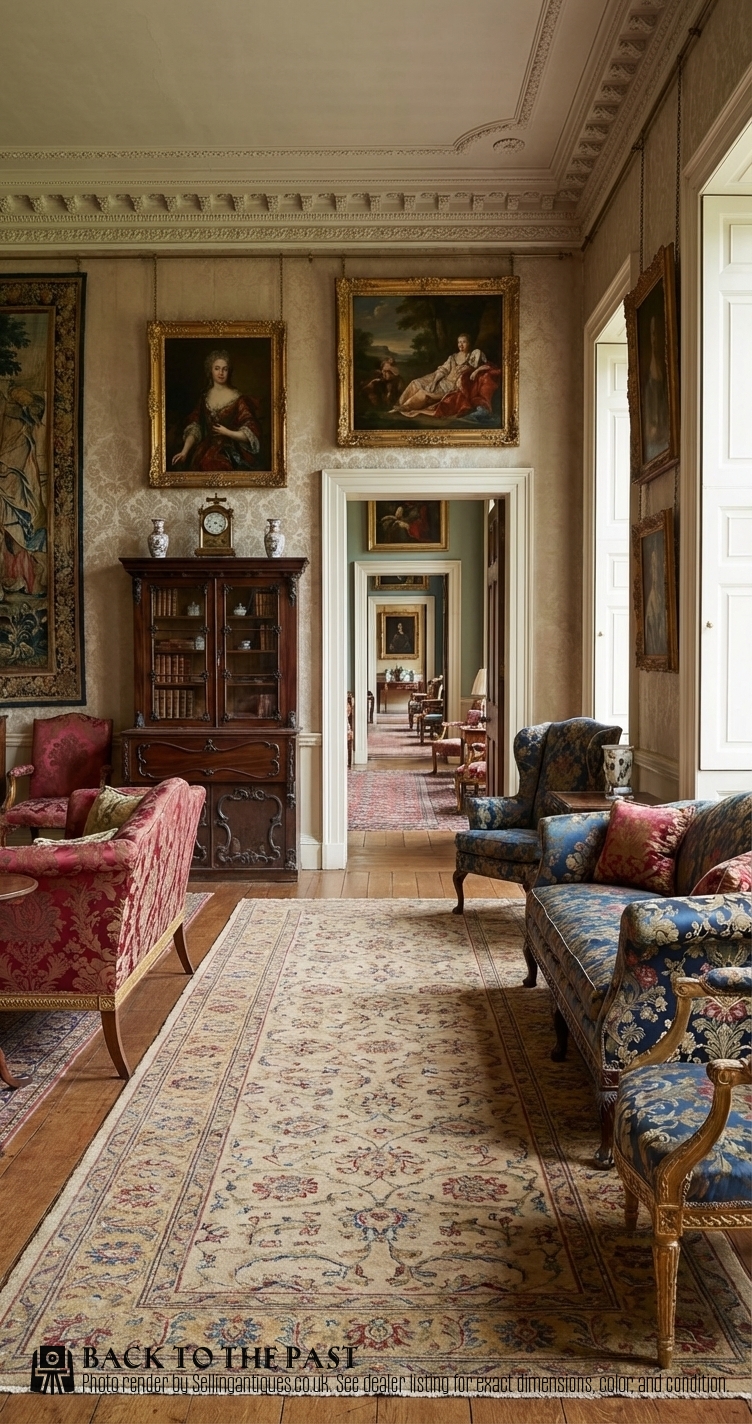
Victorian Flame Mahogany Bookcase
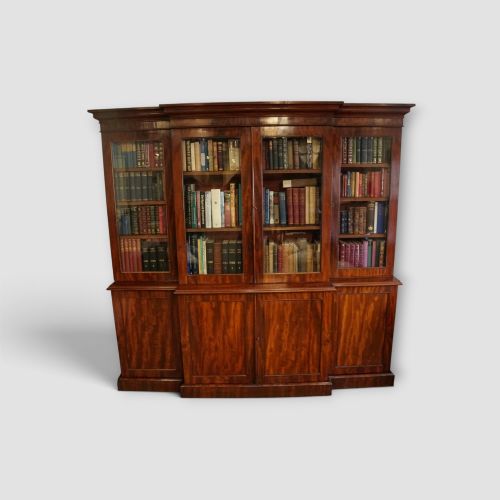
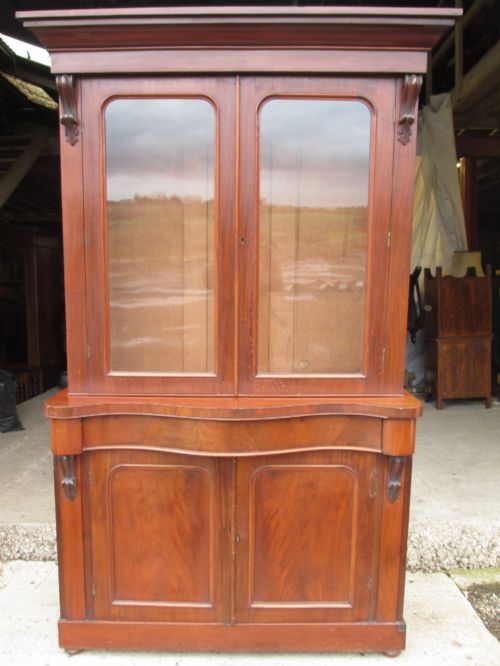
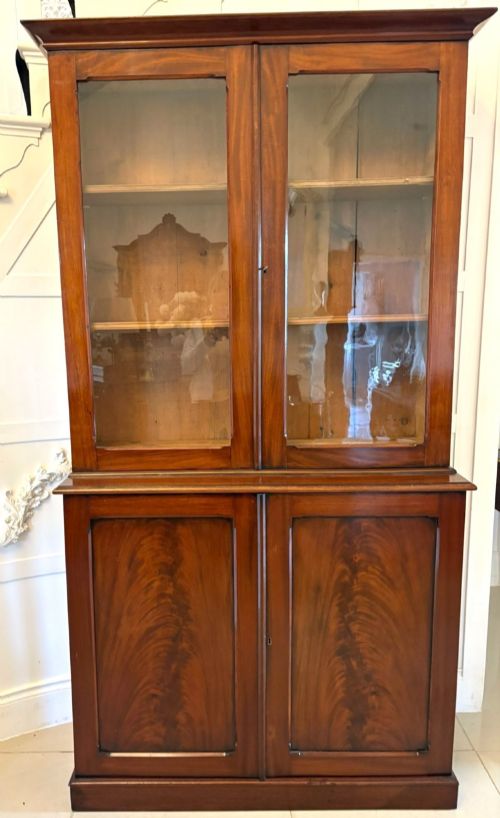
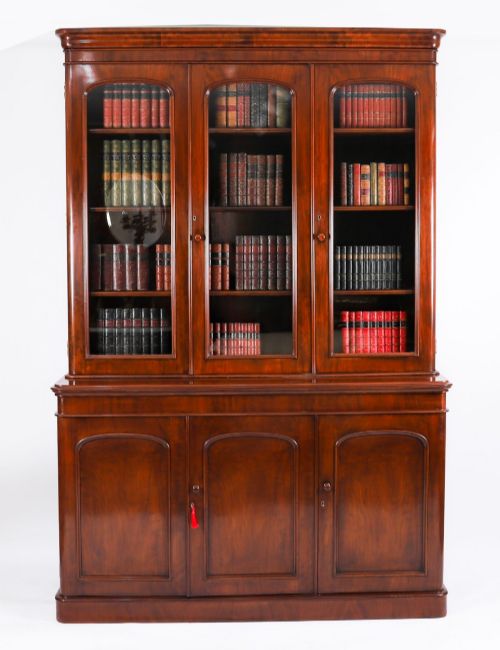
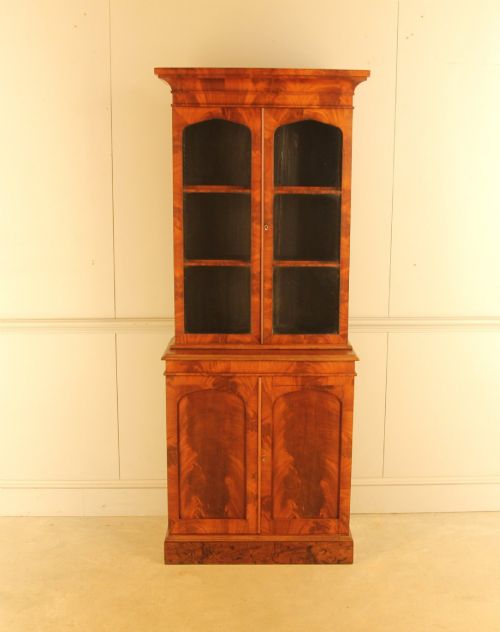
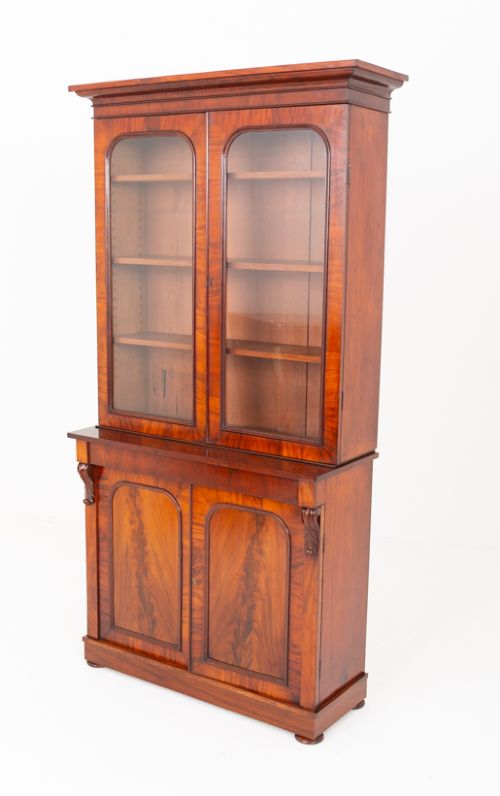
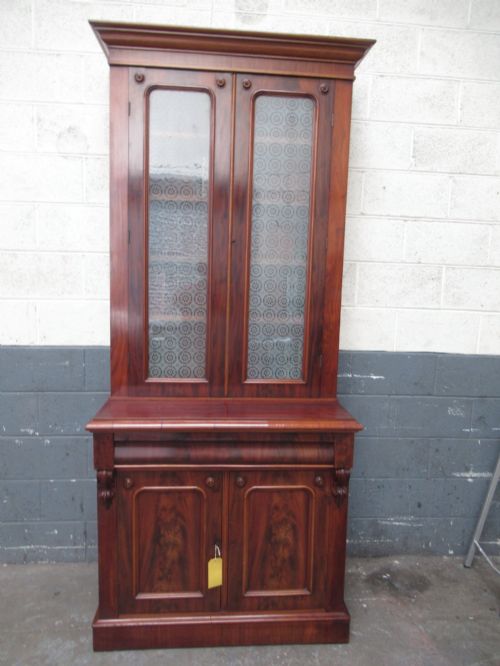
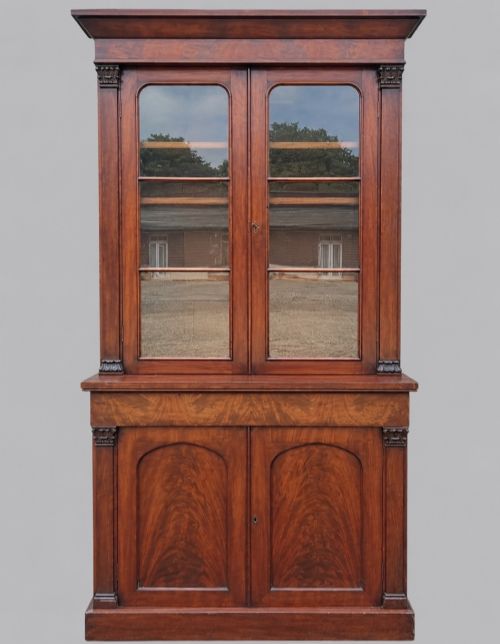
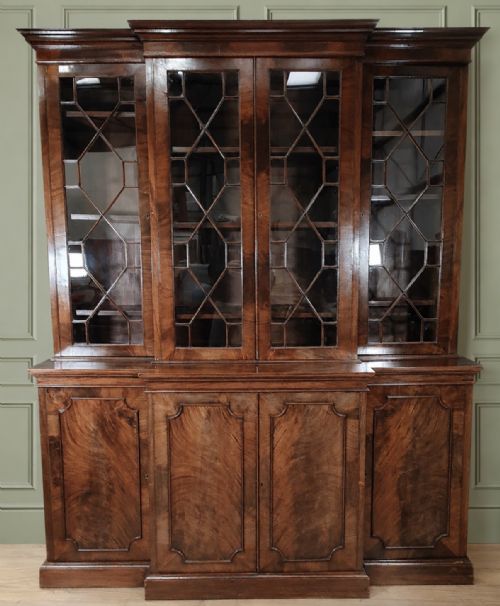
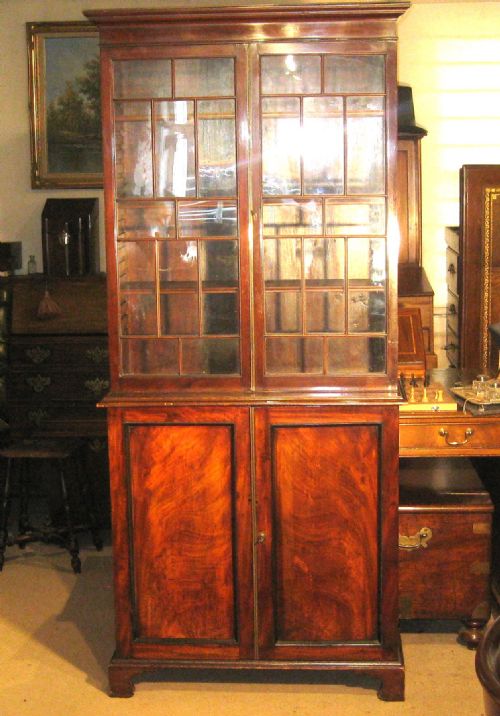
A victorian flame mahogany bookcase combines display space with enclosed lower cabinetry, serving as a prominent architectural piece in a study or drawing room. The most common format encountered here is the upright glazed cabinet, often featuring glazed upper doors above panelled lower cupboards.
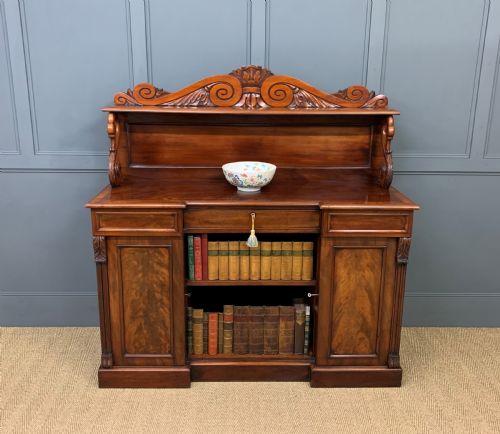
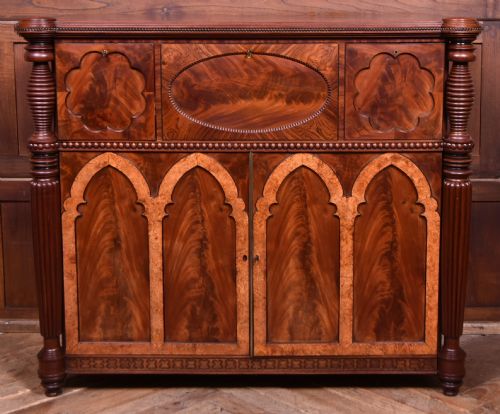
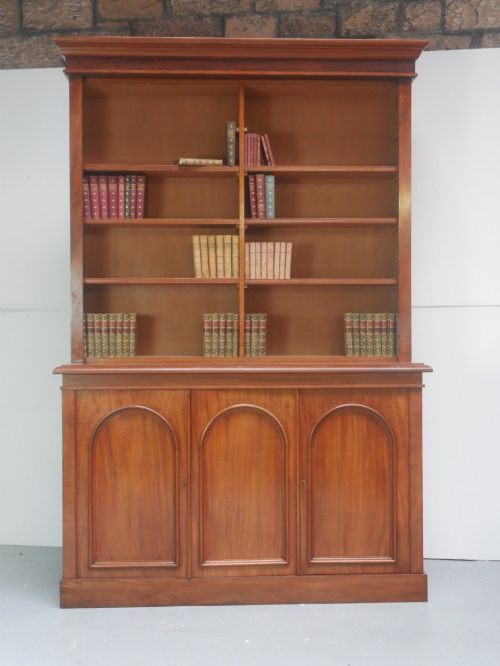
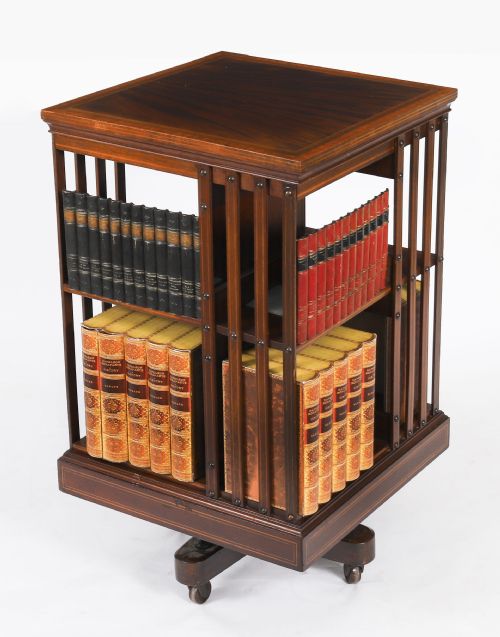
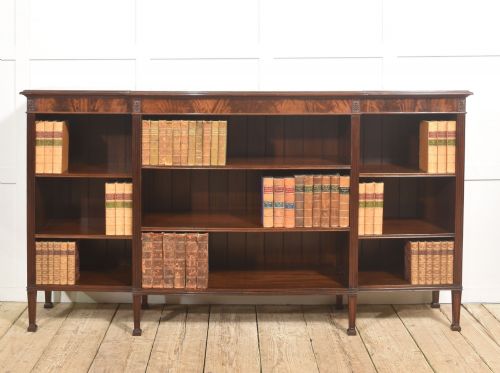
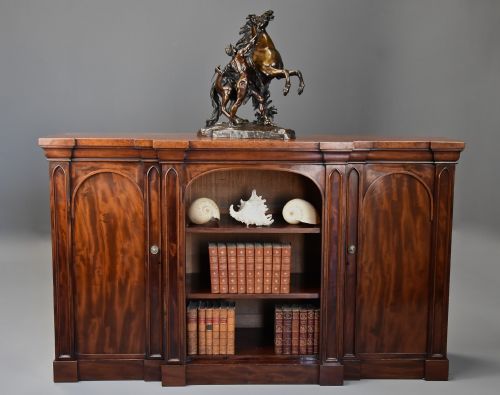
Makers utilised various configurations including breakfront facades, secretaire drop-front desks, and open shelving. Pieces span the nineteenth century, drawing on Regency, William IV, and Victorian Gothic Revival influences alongside standard Victorian cabinet-making.
How They Were Made
Cabinet-makers applied highly figured flame mahogany veneers over stable secondary timbers to create striking, rippling grain patterns across the primary surfaces. Glass panels were fitted into wooden door frames, while brass hardware secured doors and drawers.
Internal components incorporate adjustable wooden shelving and fitted secretaire drawers with small pigeonholes. Carved detailing and architectural cornices, such as crenelated designs, complete the construction.
Listings feature mahogany, flame mahogany veneer, burr walnut, satinwood, glass, brass, and iron across the nineteenth century.
What Varies in Quality
Quality rests upon the symmetry and boldness of the flame mahogany veneer selection across the entire facade. Superior examples display continuous, matched grain patterns that flow evenly across drawer fronts and door panels.
Construction depth dictates the standard, seen in the thickness of the timber, the precision of glazed door joinery, and the complexity of internal fittings like fitted secretaire drawers. Breakfront proportions and original brass hardware further elevate the standing of a piece.
Gillows·James Winter And Sons
The Victorian Flame Mahogany Bookcase Glossary
- Flame mahogany veneer
- A thin slice of timber cut from the fork of a mahogany tree to produce a dramatic, flame-like grain pattern. Cabinet-makers laid these veneers symmetrically to catch the light.
- Breakfront
- A cabinet design where the central section projects forward from the flanking wings. This layout adds architectural depth to large library furniture.
- Secretaire
- A desk component disguised as a drawer that pulls forward and folds down to reveal a writing surface and small pigeonholes. It combines storage with a compact writing space.
- Glazed bookcase
- A piece featuring glass-panelled doors that protect books from dust while keeping library contents visible. The framing timbers often carry simple glazing bars.
- Crenelated cornice
- A decorative top moulding shaped to resemble battlements. It appears on Gothic Revival pieces to impart a medieval architectural character.
Victorian Flame Mahogany Bookcase: Frequently Asked Questions
What is a secretaire bookcase?
A secretaire bookcase incorporates a pull-down desk drawer hidden behind a drawer front in the middle section. This lets the user write letters without needing a separate desk.
Inside, small drawers and pigeonholes organise correspondence and stationery while the upper shelves hold books.
How do I identify flame mahogany?
Flame mahogany shows a distinctive, rippling grain pattern that resembles flickering fire. It comes from the junction where branches meet the main trunk.
Cabinet-makers prized this veneer for front-facing doors and drawers to create visual impact.
Were these bookcases built in sections?
Large library bookcases and breakfront models were constructed in modular parts for transport and installation. The upper glazed section lifts off the lower cupboard base.
This division makes moving such heavy nineteenth-century furniture manageable.
What rooms suit a breakfront bookcase?
Breakfront bookcases require substantial wall space and high ceilings due to their grand proportions. They sit well in traditional studies, libraries, or spacious drawing rooms.
The projecting centrepiece provides a strong focal point for large interiors.