
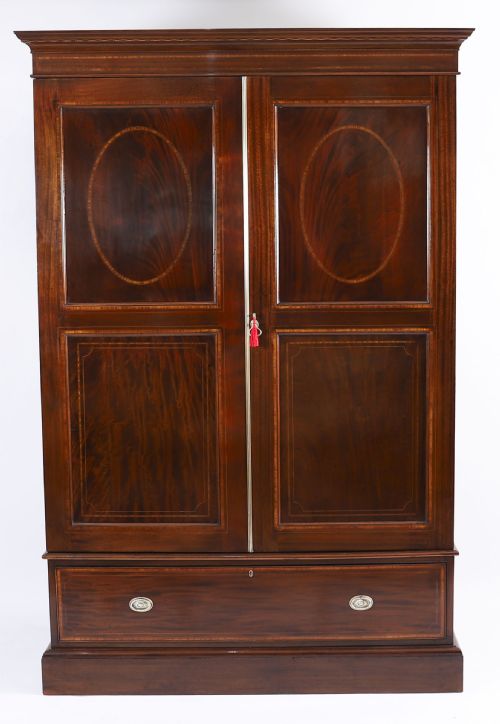
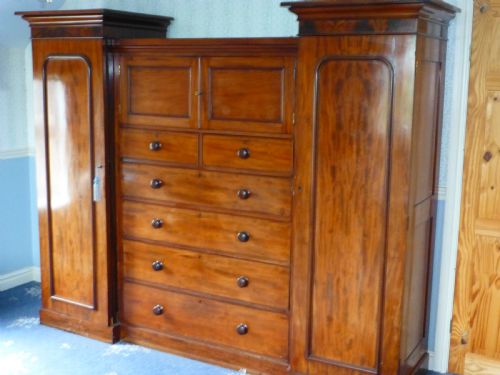
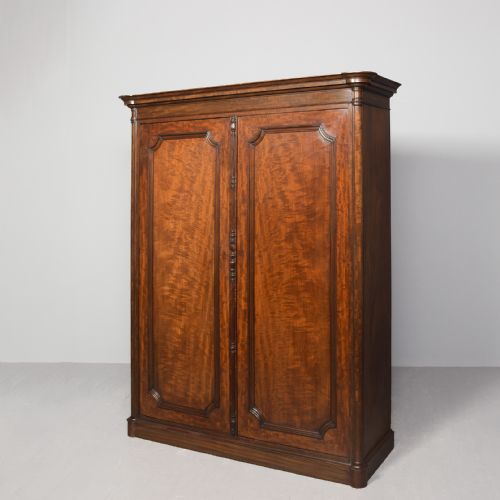
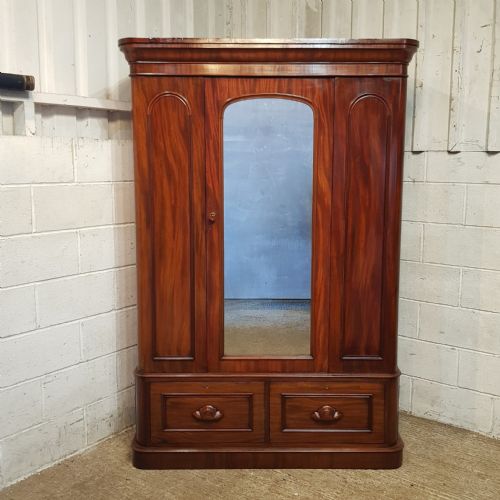

Victorian Flame Mahogany Armoire
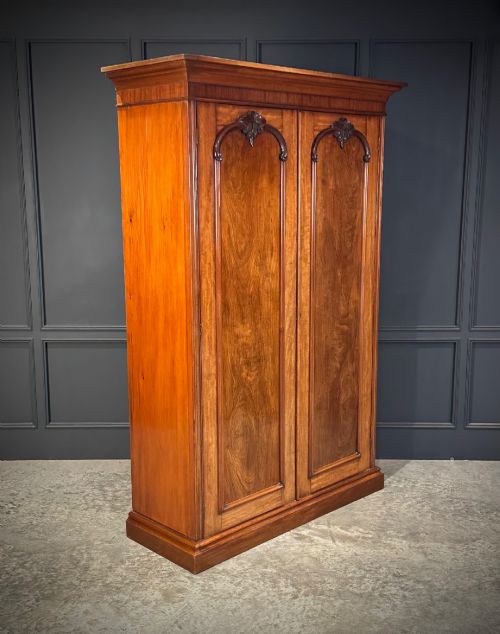
A victorian flame mahogany armoire is a grand timber storage piece built to anchor a bedroom with deep grain patterns and heavy presence.
Victorian Flame Mahogany Armoire
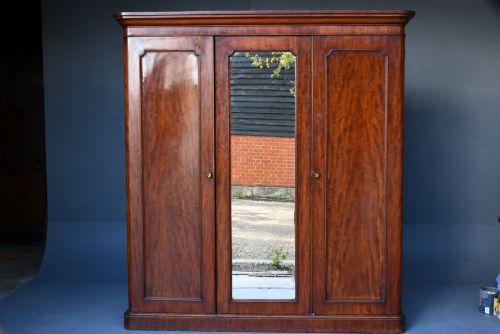
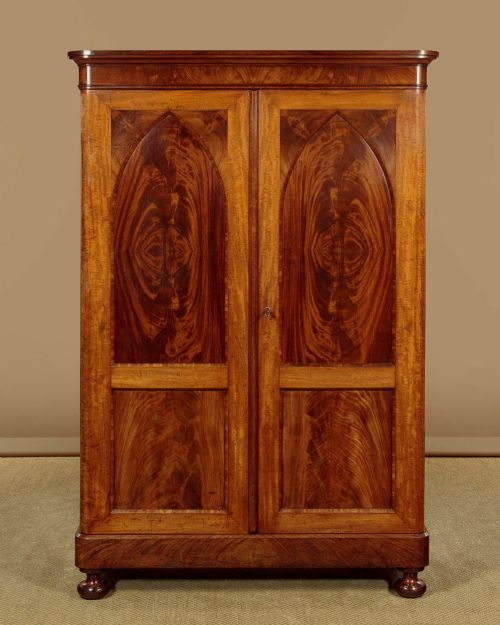
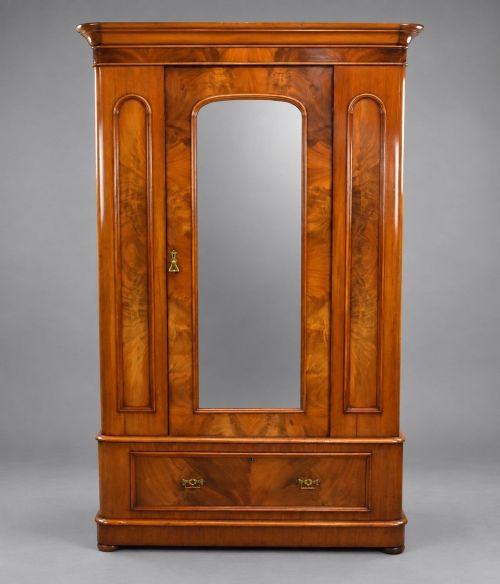
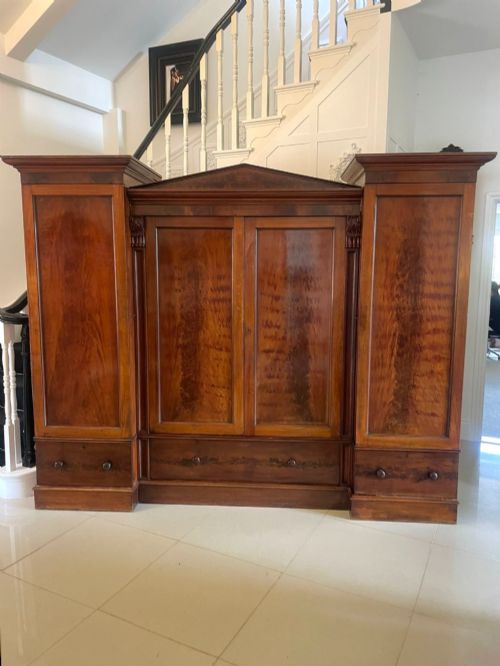
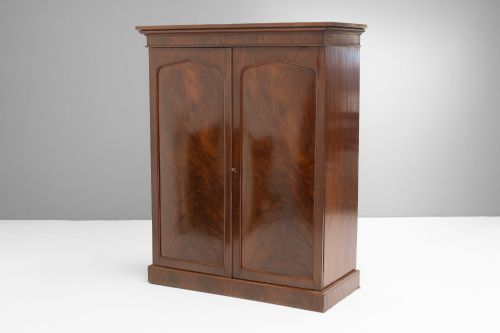
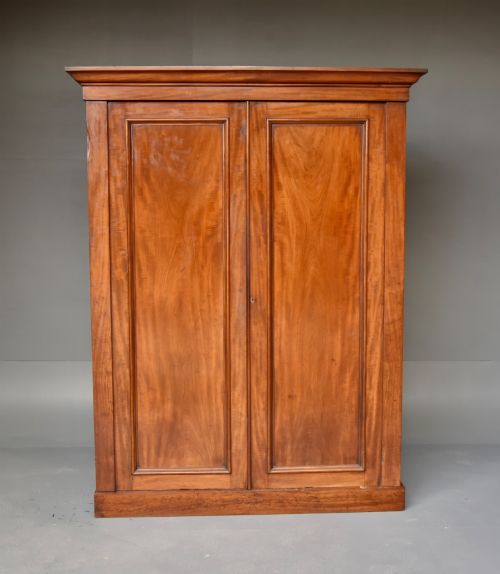
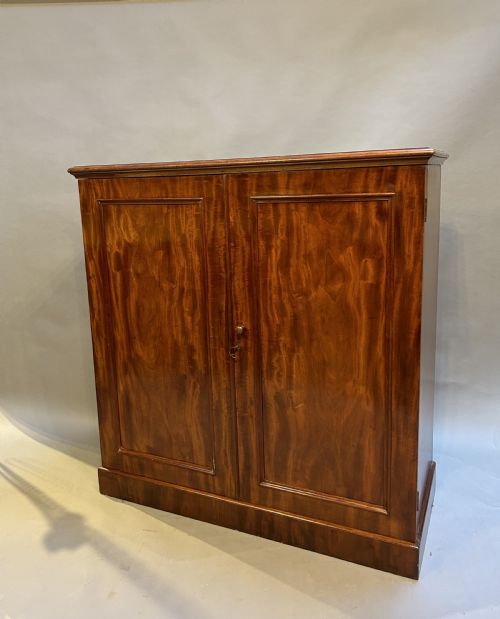
When you search for a victorian flame mahogany armoire, you encounter substantial bedroom furniture designed to hold garments and linens with architectural weight. The pieces on this page span the Victorian period alongside related items from the William IV, Edwardian, and Biedermeier eras.
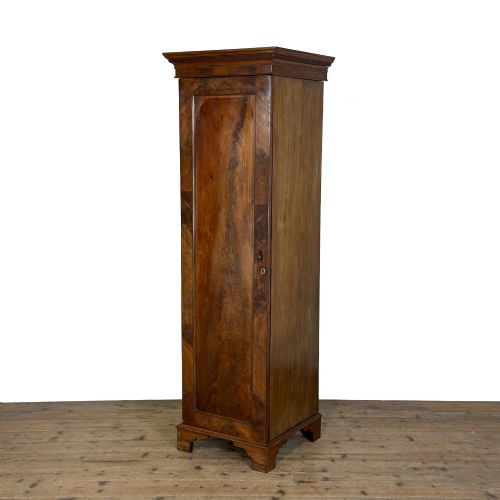
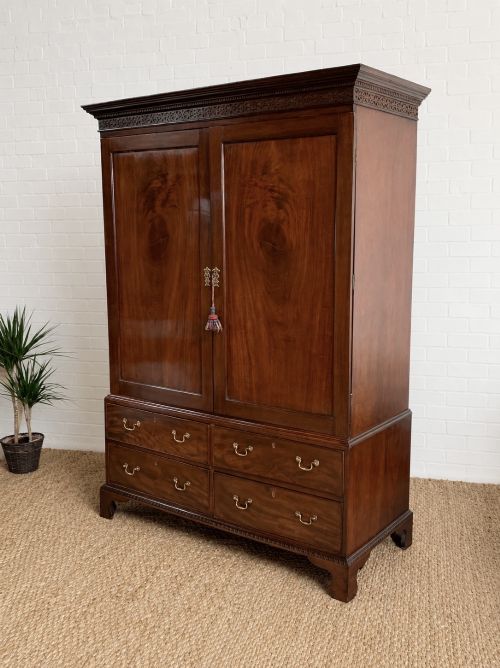
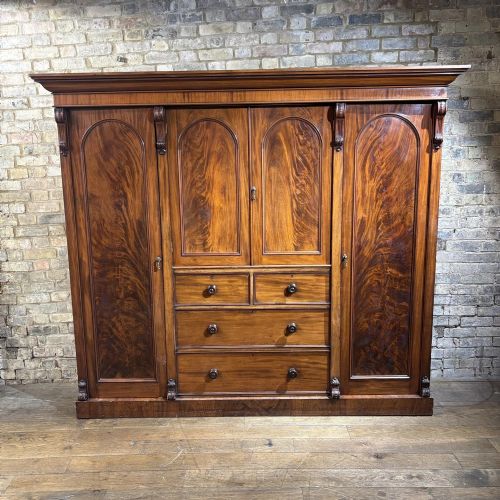
Forms range from simple single-door wardrobes and double wardrobes to expansive triple and four-door breakfront examples, combination compactums, and traditional linen presses. Many incorporate internal sliding trays, drawers, and hanging space behind panelled or glazed doors.
Origins stretch across English workshops, Scottish makers, and Irish cabinet makers, demonstrating regional preferences in cornices, mouldings, and internal compartmentalisation.
How They Were Made
Cabinets are constructed from solid timber carcases overlaid with figured and flame mahogany veneer, selected for its swirling grain patterns. Secondary woods such as pine appear on internal drawer linings and carcass backs.
Joinery relies on heavy framing, dovetailing for internal drawers, and applied mouldings such as blind fretwork on cornices. Brass hardware, locks, and hinges secure the large doors and internal compartments.
Listings feature mahogany, flame mahogany veneer, brass, glass, pine, and satinwood across Victorian, William IV, and Edwardian periods.
What Varies in Quality
The visual impact depends primarily on the selection and bookmatching of the flame mahogany veneer across the large expanse of the doors. Symmetrical grain patterns and rich, warm colouration distinguish the finest examples from plainer timber surfaces.
Construction scale and internal complexity separate standard wardrobes from high-end compactums and breakfront pieces. The inclusion of fitted drawers, sliding linen trays, and well-executed architectural cornices or blind fretwork denotes superior workshop output.
maples & co·Gillows·S & H Jewell·Heals·Robert Strahan
The Victorian Flame Mahogany Armoire Glossary
- Flame mahogany
- A timber veneer cut from forks or branches of the mahogany tree to create a distinctive flickering, flame-like grain pattern. This veneer forms the visual centrepiece of the grandest cabinet doors.
- Compactum
- A large multi-compartment wardrobe combining hanging space, drawers, and linen shelves within a single unified piece. These versatile units were designed for comprehensive gentleman's or household storage.
- Linen press
- A traditional piece featuring upper sliding trays for folded textiles above a chest of lower drawers. Many examples evolved to incorporate hanging space alongside the traditional trays.
- Breakfront
- A cabinet design where the central section projects forward from the flanking wings. This architectural arrangement adds depth and shadow play to large triple and four-door wardrobes.
- Blind fretwork
- Carved decorative patterning applied to a solid flat background without piercing right through the wood. It often appears along the cornices of superior nineteenth-century linen presses.
Victorian Flame Mahogany Armoire: Frequently Asked Questions
How do I use an armoire today?
These large cabinets provide substantial hanging space and internal shelving suitable for modern bedroom storage. Many pieces separate into modular sections for easier transport and positioning in contemporary homes.
Smaller single or double wardrobes function effectively in guest rooms or hallways for coats and household linens.
What is a compactum wardrobe?
A compactum is a multi-purpose storage unit that integrates hanging sections, small drawers, and sliding trays into one frame. They offered complete wardrobe organisation for Victorian households.
Their varied internal layout makes them particularly practical for organising folded clothing alongside full-length garments.
How do I tell Victorian from Edwardian?
Victorian pieces generally display heavier proportions, deeper mahogany tones, and rich flame veneers with architectural cornices. Edwardian furniture often shows lighter timber handling and more restrained decorative detailing.
Construction methods inside the carcase also help differentiate the earlier nineteenth-century workshops from the turn of the twentieth century.
Are these wardrobes easy to move?
Due to their solid timber construction and large scale, these pieces are heavy and require careful dismantling where original knock-down bolts permit. Most large wardrobes separate into a cornice, base, and major side or door sections.
Professional antique transport is recommended to protect the flame mahogany veneer and structural joints during relocation.