

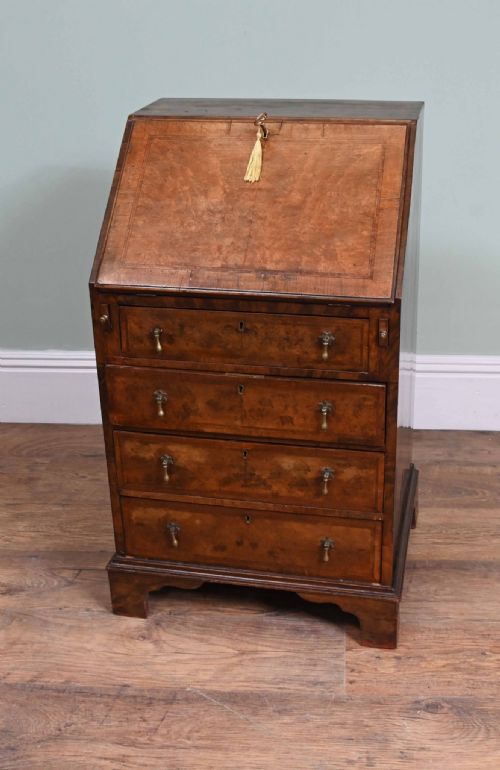


Victorian Fall Front Bureau
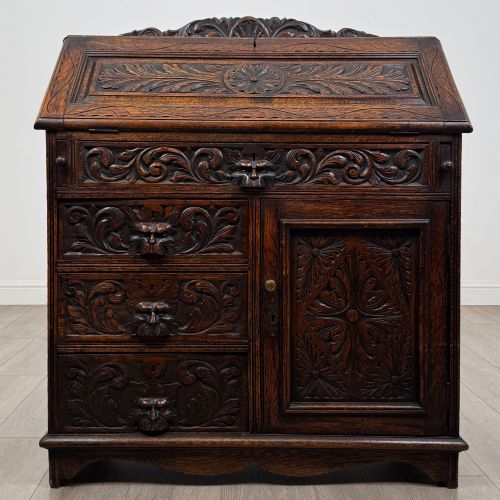
A Victorian fall front bureau offers a hinged writing flap that conceals fitted compartments, bringing disciplined writing storage into a Victorian interior.
Victorian Fall Front Bureau
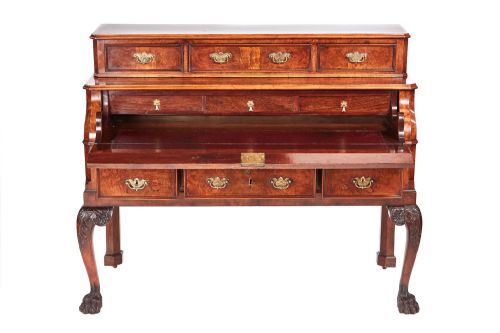
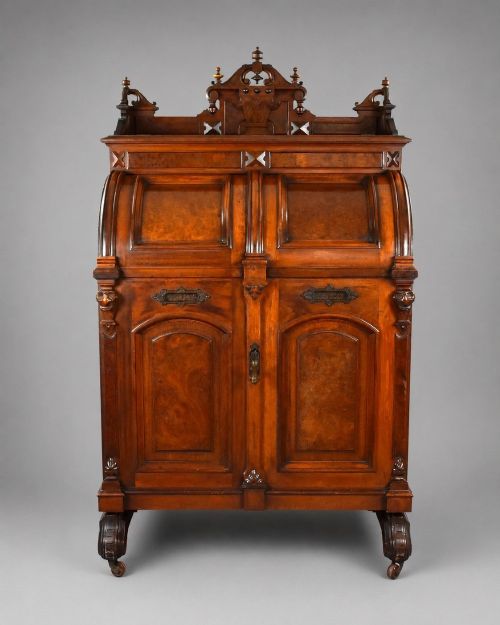
A victorian fall front bureau combines a upright chest format with a drop-down writing surface, serving as a compact workstation for correspondence and document storage. The pieces encountered here span compact ladies writing desks, bureau bookcases with upper shelving, and freestanding cabinets.
Makers and workshops constructed these desks across the nineteenth century, utilising periods ranging from Georgian influences through Arts and Crafts designs to Late Victorian interpretations. The form frequently integrates internal pigeonholes and secret drawers behind the fall flap.
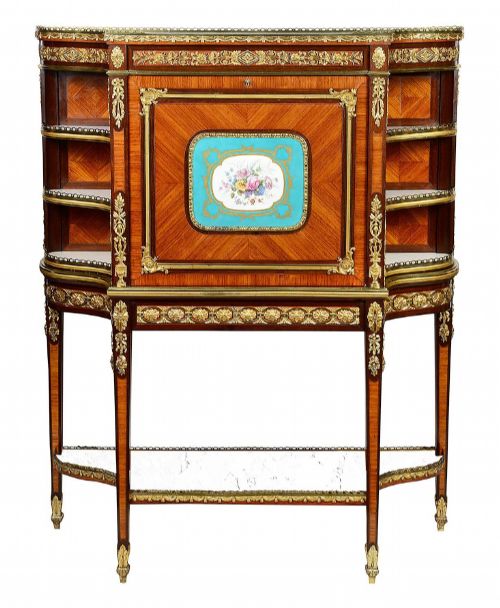
Cabinetmakers adapted the bureau format into specialist forms such as the bureau du dame, escritoire, and secretaire abattant. These variations accommodate smaller domestic spaces while retaining the core function of concealed writing storage.
Factors determining quality
Quality rests upon the selection and matching of timber veneers, where highly figured burr walnut, rosewood, or amboyna command attention over plain mahogany or pine. The precision of internal joinery, including secret drawers and dovetailed drawer construction, separates standard production from exhibition pieces.
The integration of decorative elements such as brass inlay, marquetry work, and carved architectural details dictates the distinction between utilitarian furniture and fine cabinetmaking.
One piece doubles as a metamorphic drink cabinet for secret cocktails.
Blake London·Harris Lebus·Liberty of London·Gregory And Co·Morison of Edinburgh·Gillows
The Victorian Fall Front Bureau Glossary
- Fall front
- A hinged writing flap that drops down to form a horizontal desk surface. It conceals internal drawers and pigeonholes when closed.
- Secretaire abattant
- An upright cabinet featuring a drop-front writing desk compartment. This tall form often includes lower drawers or shelving above.
- Bureau bookcase
- A combination furniture piece uniting a fall front writing desk base with an upper glazed or panelled bookcase section. It provides dual functions for writing and library storage.
- Escritoire
- An alternative term for a writing desk or bureau. The designation typically applies to refined upright writing cabinets from the nineteenth century.
- Pigeonhole
- A small, open compartment situated inside the bureau interior. These slots organise letters, papers, and writing materials.
Victorian Fall Front Bureau: Frequently Asked Questions
What is a fall front bureau?
A fall front bureau is an upright desk with a hinged writing flap that pulls down for correspondence.
When closed, the flap conceals a fitted interior of small drawers and pigeonholes.
How do I date a Victorian bureau?
Dating relies on timber choices, construction methods, and stylistic details recorded in the piece.
Earlier nineteenth-century examples favour mahogany and rosewood, whilst later decades introduce burr walnut, oak, and Arts and Crafts influences.
Where were bureau bookcases used?
Bureau bookcases served primarily in studies, libraries, and withdrawing rooms of nineteenth-century homes.
They provided dual storage for both writing equipment and bound books within a single footprint.
What is a secretaire abattant?
A secretaire abattant is a tall, vertical writing cabinet with a drop front.
Originating from French-influenced designs, this form presents a clean architectural facade when shut.