
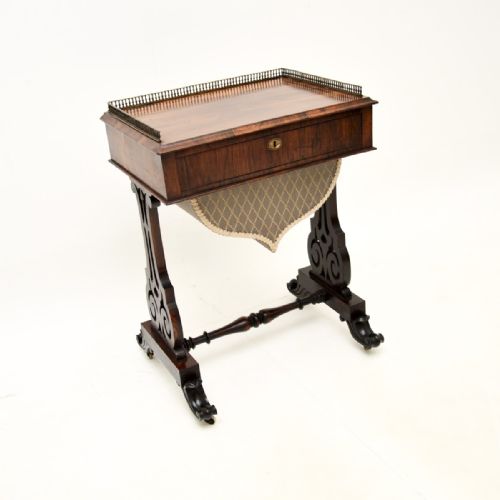


Victorian Fabric Basket Table
A victorian fabric basket table is a versatile nineteenth-century piece designed for needlework and small domestic tasks, offering collectors practical storage paired with rich timber frames.
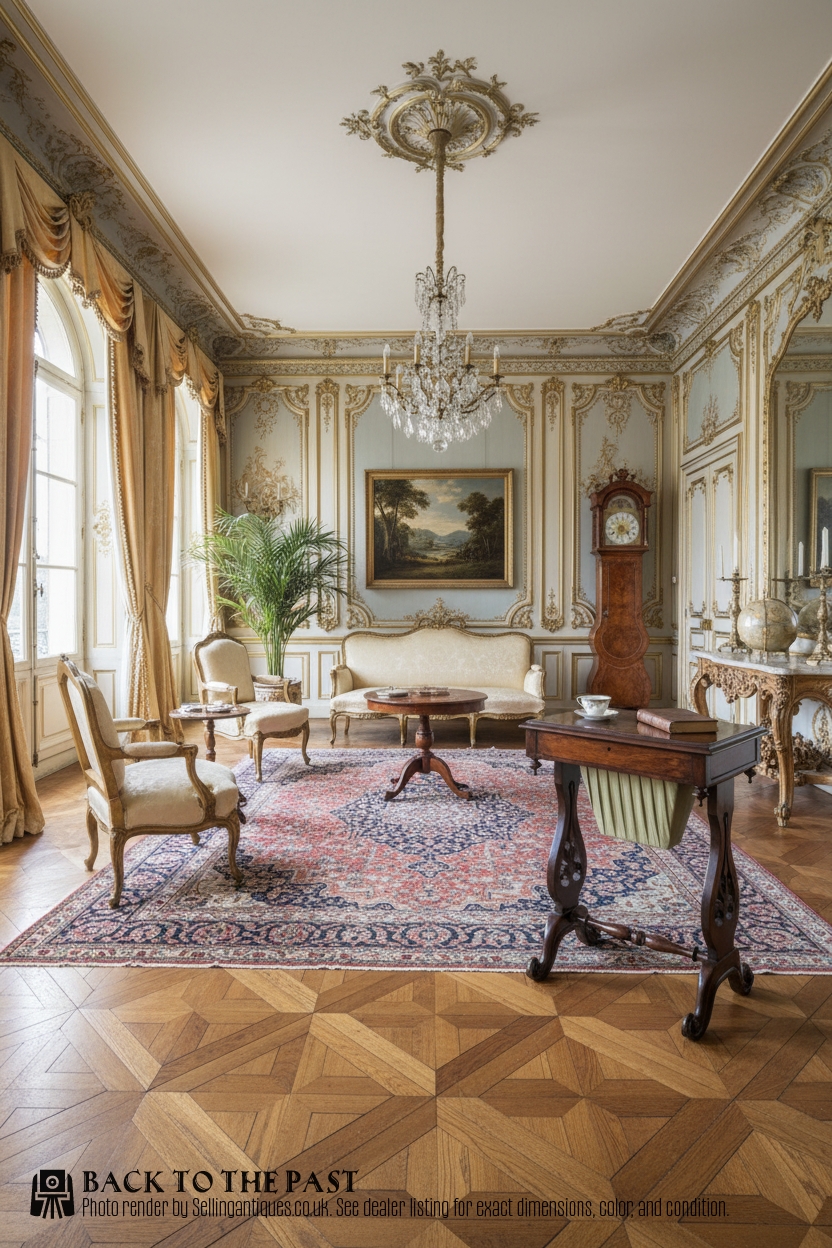
Victorian Fabric Basket Table
A victorian fabric basket table combines a sturdy timber frame with an integrated storage bag, designed primarily for sewing, mending, and small crafts. The pieces encountered on this page belong to the nineteenth century, including specific dates such as eighteen-fifty and eighteen-sixty alongside broader Victorian and William IV eras.
The form appears under several functional descriptions in the evidence, most commonly as work tables, sewing tables, or occasional side tables. Many incorporate drop-leaf designs or circular tops, and certain examples double as games tables alongside their traditional sewing functions.
How they were made
Cabinet makers constructed the frames predominantly from dense hardwoods, utilising rosewood, mahogany, burr walnut, and plain walnut. These timbers provided the necessary structural stability for daily domestic use while displaying rich natural grain patterns.
Makers integrated fabric components and brass fittings to complete the functional work boxes and hanging baskets beneath the wooden tops. Silk frequently appears as a textile element, paired with brass hardware to secure moving flaps and drop-leaves.
The listings here draw entirely from the nineteenth century, spanning specific years like eighteen-fifty and eighteen-sixty alongside the broader Victorian and William IV periods.
What varies in quality
The distinction between standard examples and superior pieces rests on the choice of timber figure, such as highly decorative burr walnut or select rosewood veneers. Finer items demonstrate superior joinery in the turning of legs and the careful fitting of internal compartment boxes.
Design complexity also separates pieces, with multifunction examples like combined sewing and games tables requiring more intricate woodworking than simple single-purpose side tables.
The Victorian Fabric Basket Table Glossary
- Work table
- A nineteenth-century piece of furniture designed to hold sewing equipment, yarn, and needlework supplies. These tables often feature an attached fabric bag or wooden box beneath the main surface.
- Drop-leaf
- A table top configuration featuring hinged flaps that fold down to save space or lift up to extend the usable surface area. This mechanism appears frequently on nineteenth-century sewing tables.
- Burr walnut
- A highly prized wood veneer showing knotted growths and swirling grain patterns. Cabinet makers utilised this material on decorative Victorian furniture tops to create visual depth.
- William IV
- A British design period spanning the early decades of the nineteenth century, bridging Regency styles and full Victorian heavyism. Pieces from this era often display robust proportions and classical motifs.
Victorian Fabric Basket Table: Frequently Asked Questions
What is a victorian fabric basket table used for?
These pieces served nineteenth-century households as dedicated stations for needlework, sewing, and mending. The integrated fabric basket held yarns and cloths while the top surface provided a stable area for detailed handwork.
Today, collectors utilise them as compact side or lamp tables in living spaces. The internal compartments remain practical for storing small modern accessories.
How do I identify a William IV table?
William IV furniture dates from the transitional period before the main Victorian era proper. These pieces typically display heavier proportions and bold classical architectural influences.
Examining the rosewood or mahogany timbers alongside the turning style helps separate them from later nineteenth-century examples.
Are these tables suitable for small rooms?
Many of these tables feature compact circular tops or drop-leaf mechanisms designed to minimise floor space. Their dual role as occasional side surfaces makes them adaptable for modern rooms.
The suspended fabric basket adds storage without increasing the physical footprint of the furniture.
What woods were used for these tables?
Nineteenth-century cabinet makers relied heavily on dense hardwoods such as rosewood and mahogany. Burr walnut and standard walnut also appear across the surviving pieces.
These rich timbers were polished to highlight natural grain patterns and provide durable frames for daily use.