


Victorian Etagere with Drawer
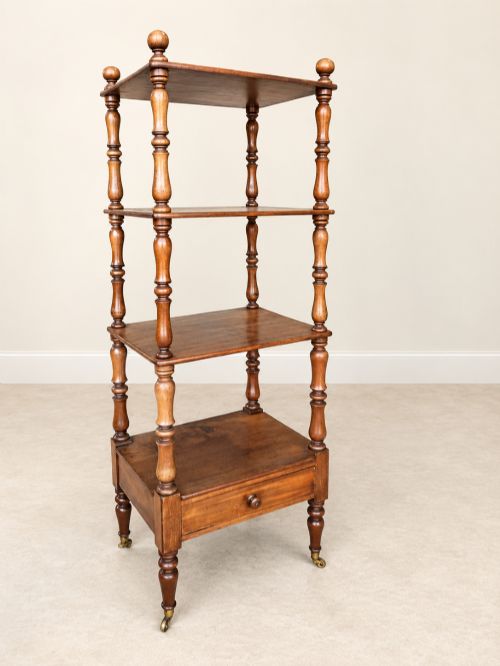
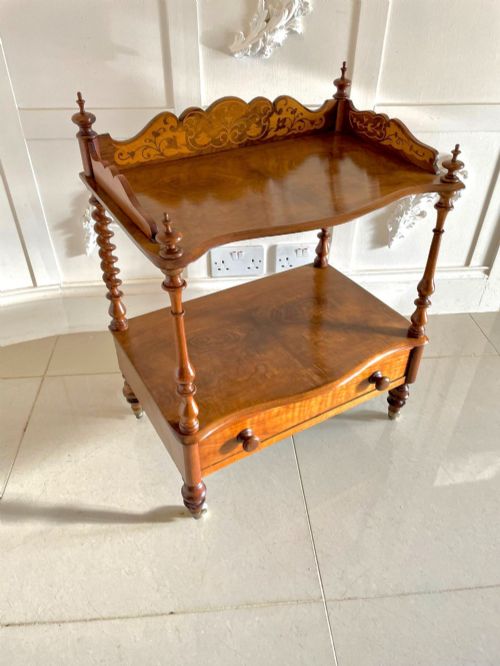
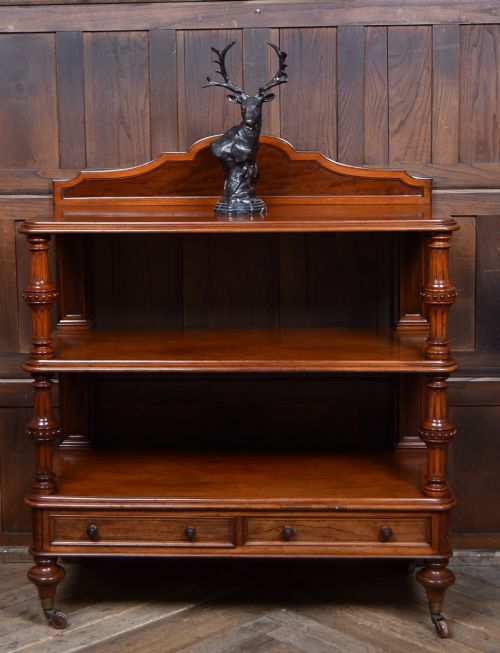
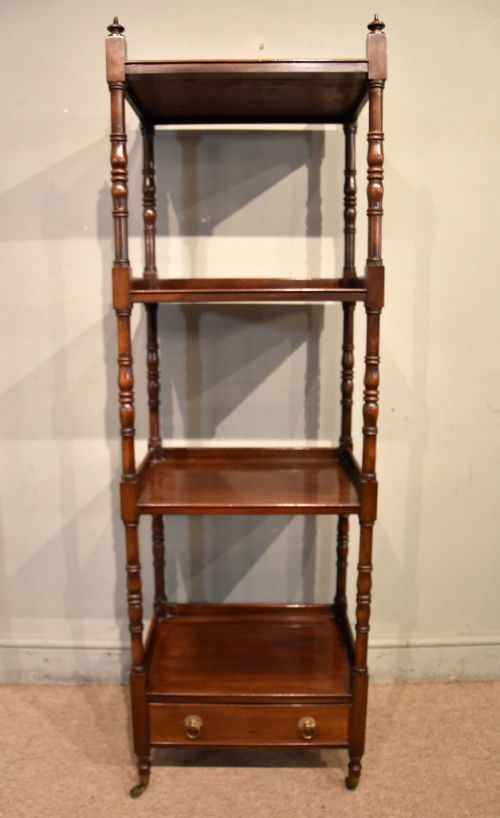
These victorian etagere with drawer items offer tiered display and concealed storage, bringing nineteenth-century utility and craftsmanship to a room.
Victorian Etagere with Drawer
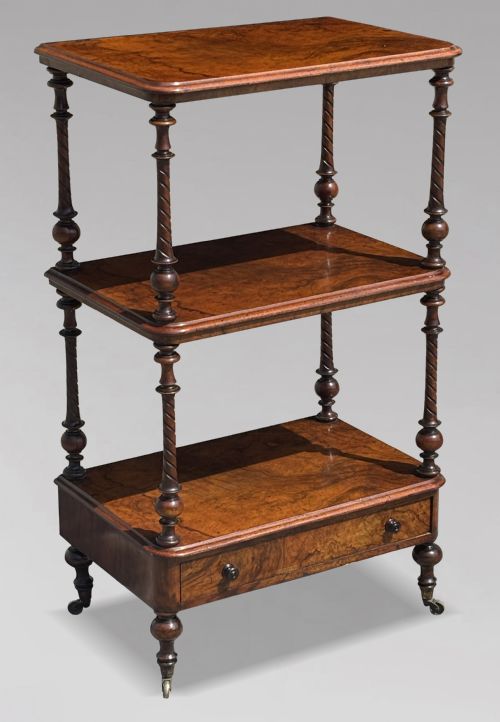
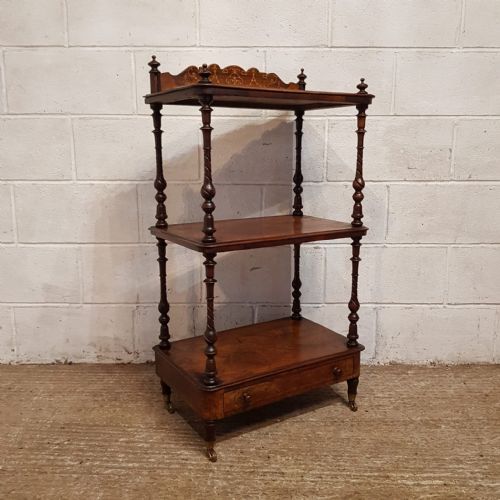
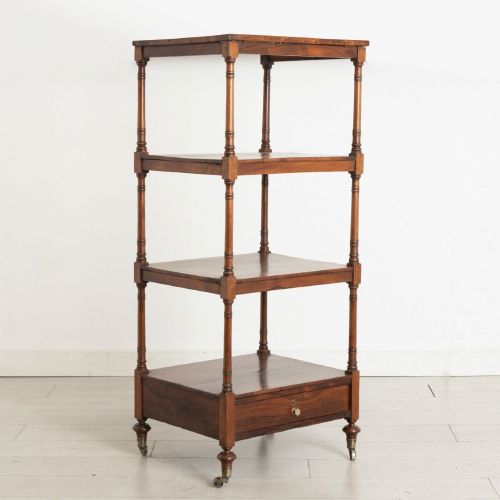
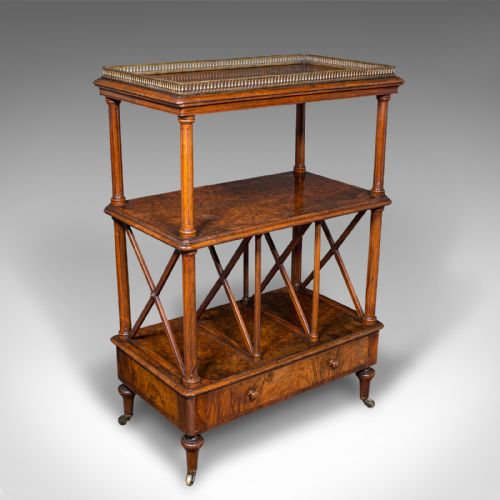
A victorian etagere with drawer combines open tiered shelving with a small integrated compartment, serving as both a display surface and a practical storage piece. Buyers searching for a victorian etagere with drawer encounter multi-tiered furniture designed to hold books, ornaments, or tea wares while keeping smaller items tucked away safely.
The pieces appearing on this page span the nineteenth century, including Victorian, Regency, and William IV eras. Most examples take the form of whatnots and etageres with three or four tiers, sometimes incorporating mirrors or side elements alongside the single drawer.
Mahogany and rosewood dominate the material record, complemented by walnut, brass, and glass. These timbers give the multi-tier structures their characteristic dark grain and sturdy vertical support.
Materials and construction
Cabinet makers utilised dense hardwoods such as mahogany, rosewood, and walnut to build the vertical framing and shelves of each etagere. These timbers were selected for their ability to support multiple tiers without sagging while presenting a polished grain to the room.
Makers integrated small drawers beneath the display shelves using traditional joinery, fitting brass elements where appropriate to secure the structure or adorn the corners. The tiers themselves were often tiered in graduated heights, supported by turned columns or uprights.
Listings feature nineteenth-century items built from mahogany, rosewood, walnut, and brass, spanning the Victorian, Regency, and William IV periods.
Quality differences
Finer examples distinguish themselves through the selection of figured timbers, such as golden mahogany or rich rosewood, matched across the tiers and drawer fronts. The crispness of the turned supports and the precision with which the drawer fits into its housing separate standard utility pieces from workshop-marked productions.
Structural integrity across multiple tiers dictates the standing of an etagere. Pieces that retain rigid uprights and sound joints without excessive timber replacement hold their form and presence better over time.
Samson and Son London
The Victorian Etagere with Drawer Glossary
- Etagere
- A piece of furniture consisting of a set of open shelves for displaying small objects. It typically stands upright with multiple tiers supported by slender columns.
- Whatnot
- A multi-shelved open cabinet used for displaying ornaments or holding books. This term appears frequently alongside etagere in nineteenth-century British furniture.
- Tier
- An individual level of shelving placed one above another in a vertical structure. These graduated levels allow objects of varying heights to be shown clearly.
- Mahogany
- A durable tropical hardwood with a reddish-brown colour used extensively in nineteenth-century cabinet making. It takes a high polish and resists warping.
Victorian Etagere with Drawer: Frequently Asked Questions
What is a victorian etagere with drawer used for?
These pieces served historically to display decorative objects, porcelain, or books on their open shelves while storing smaller documents or sewing accessories within the drawer.
Today they function effectively in sitting rooms or hallways as versatile display furniture that adds vertical storage without dominating the floor plan.
How do I identify a Victorian etagere?
Look for characteristic nineteenth-century timber choices such as mahogany, rosewood, or walnut combined with multiple open tiers and turned wooden supports. The presence of a single fitted drawer beneath one of the shelves is a common feature of this specific form.
Examine the construction methods and timber grain to determine if the piece aligns with nineteenth-century workshop practices.
Where should I place an etagere in a room?
An etagere works well against an empty wall or in a corner where its vertical tiers can draw the eye upward without obstructing walkways. Because the shelves are open on multiple sides, positioning it away from heavy foot traffic protects the displayed items.
Ensure the floor surface is level so the multi-tiered structure remains stable and secure.
How do I care for mahogany and rosewood furniture?
Dust the tiers regularly with a soft, dry cloth to prevent dirt accumulation in the grain and around the turned supports. Avoid placing the furniture in direct sunlight or near heat sources to protect the polished timber finish from drying out.
Applying a traditional beeswax polish occasionally helps maintain the lustre of the nineteenth-century wood.