


Victorian Entryway Chair
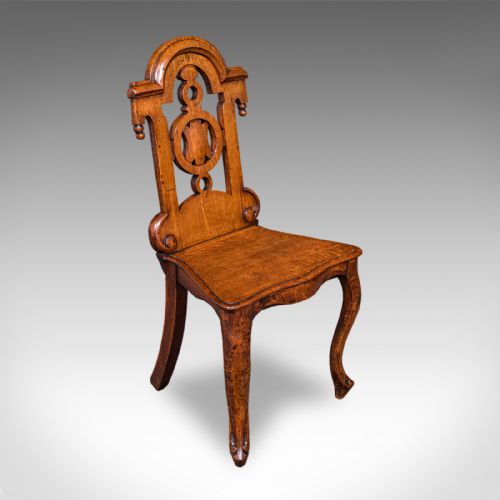
A victorian entryway chair brings rigid purpose and striking timber grain to a hallway, offering a sturdy perch for pulling on boots.
Victorian Entryway Chair
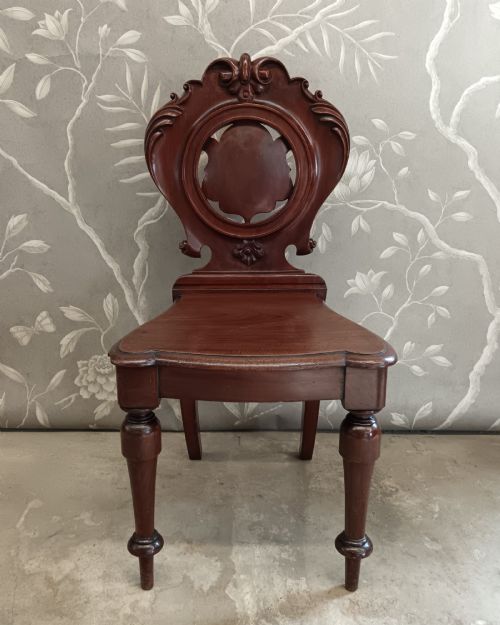
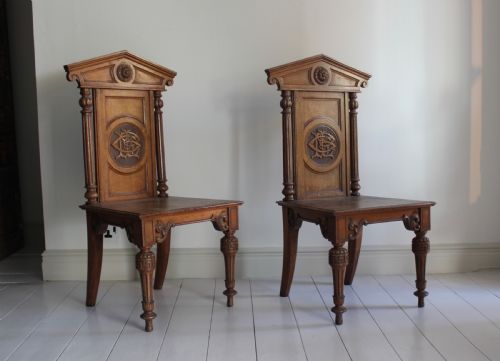
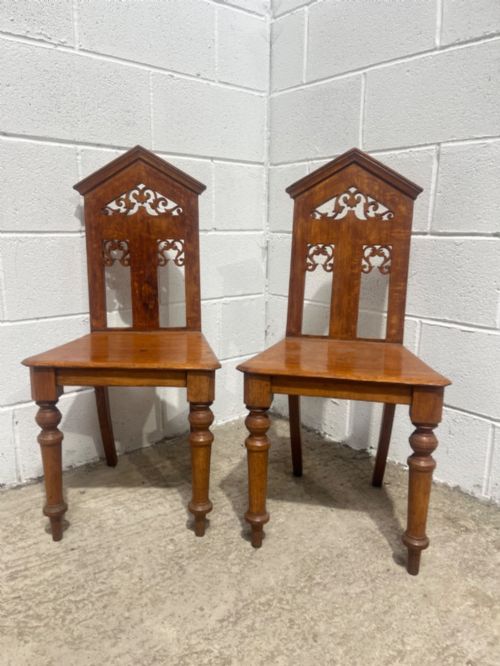
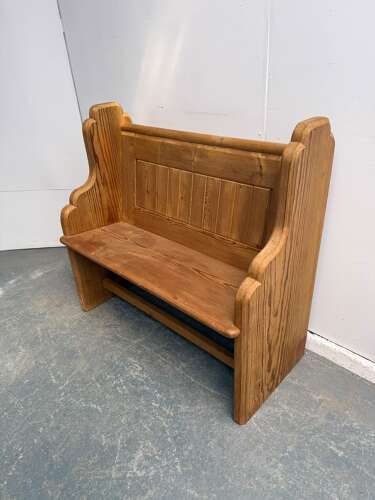
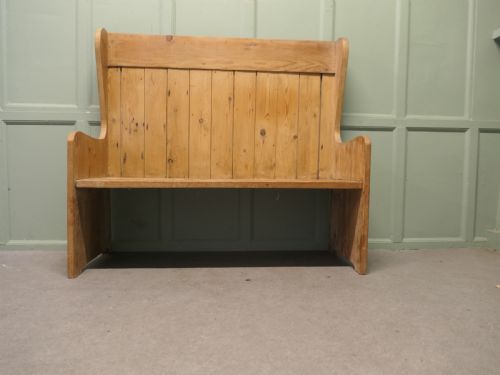
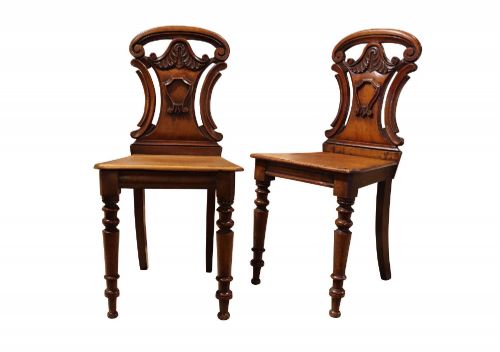
When you search for a victorian entryway chair, you uncover firm wooden seating designed to occupy hallways, receptions, and passages rather than domestic living spaces. These items include upright hall chairs, high-backed settles, benches, and church pews built to withstand heavy daily use.
Materials and technique
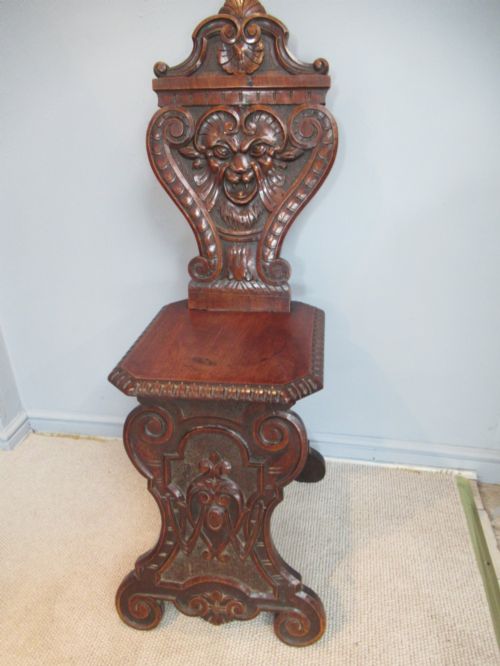
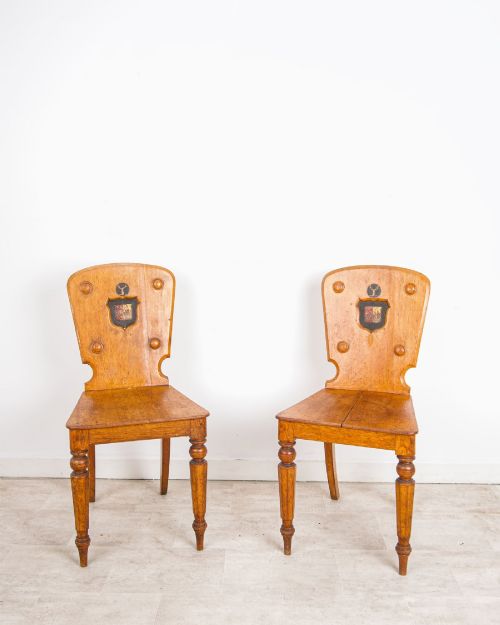
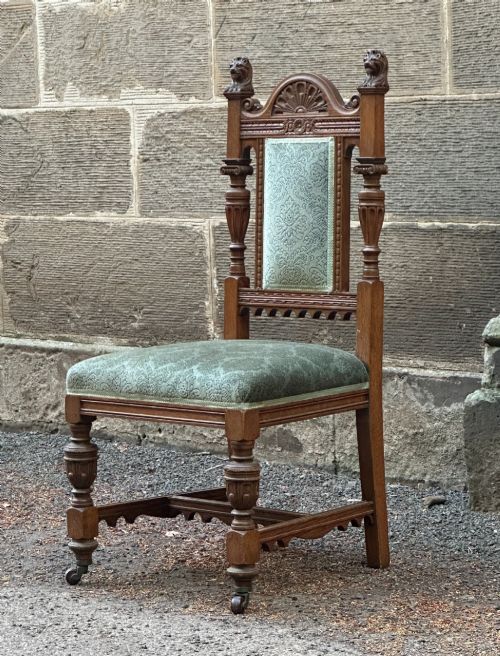
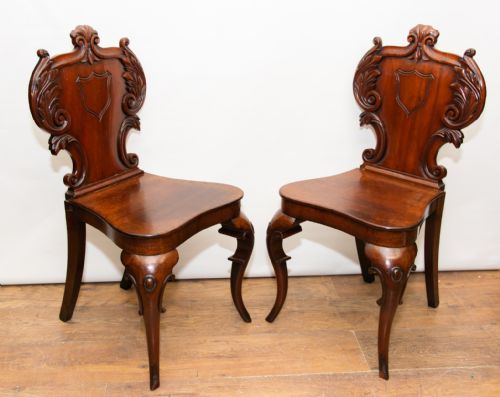
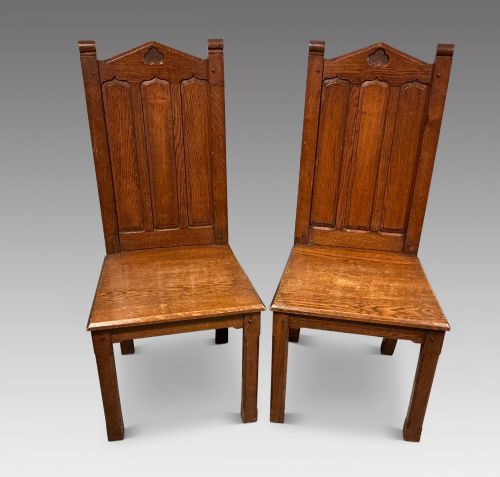
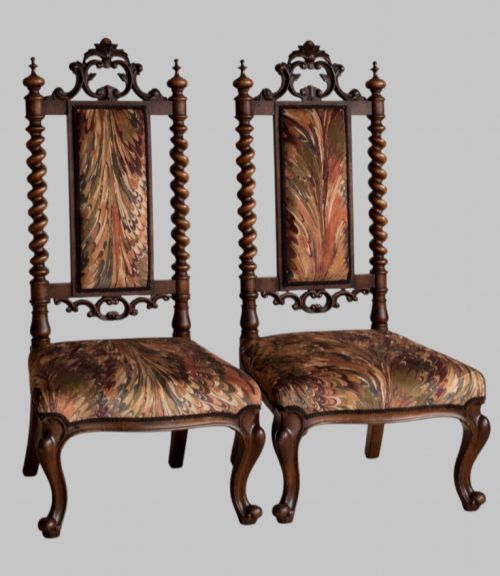
Cabinetmakers relied heavily on dense hardwoods like mahogany, oak, and walnut, alongside resilient pine and pitch pine for country and ecclesiastical examples. Timber selection dictated the structural integrity of the piece, often featuring solid plank seats and sturdy turned or barley twist supports.
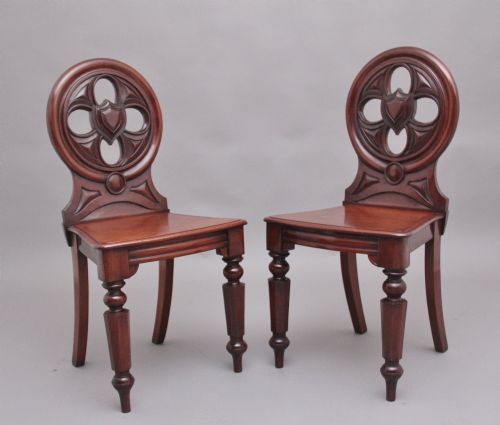
Decoration relied on deep carving, heraldic shield backs, and Gothic revival detailing executed directly into the wood. Brass fittings appeared occasionally for structural reinforcement or storage mechanisms on benches with built-in compartments.
Church pews found a second life in Victorian hallways, proving that even pious timber appreciated a good coat of wax.
Variations in quality
The standard of a hall chair rests upon the crispness of its carved ornament and the thickness of its timber. Pieces featuring heavily sculpted shield backs and substantial mahogany or oak show superior ambition from the workshop.
Proportion and stability separate standard utility seating from finer reception furniture. Pieces bearing specific stylistic traits like Gothic revival motifs or attributed designs display greater sculptural confidence.
Bruce Talbert·Gillows
The Victorian Entryway Chair Glossary
- Hall chair
- An upright wooden seat designed for a hallway or entryway, typically featuring a solid wooden seat and an ornamental back. These pieces were built for minimal comfort and maximum visual impact.
- Settle
- A wooden bench with a high back, solid arms, and often an enclosed base used for storage. They originated to block drafts in large, cold rooms.
- Gothic revival
- An architectural and decorative style popular during the nineteenth century that revived medieval forms. It manifests in pointed arches, trefoils, and heavy carved tracery.
- Barley twist
- A type of furniture turning resembling a twisted rope or barley sugar stick. This technique added decorative relief to chair legs and structural supports during the Victorian period.
Victorian Entryway Chair: Frequently Asked Questions
Where did people put these chairs?
These chairs stood in entrance halls, corridors, and reception areas to serve visitors waiting briefly before entering the main rooms of a house.
Their upright posture discouraged lingering, keeping hallways clear for household traffic.
Are they comfortable to sit on?
Most pieces feature unpadded wooden seats and straight, carved backs intended for brief periods of rest rather than lounging.
They function best as occasional seating or sculptural accents in entryways.
How do I date a hall chair?
Dating relies on identifying timber choices, joinery methods, and prevailing decorative styles recorded across the nineteenth century.
Heavy Gothic revival carving and specific turnings like barley twists point to distinct decades within the Victorian era.
Why do they often come in pairs?
Entryways traditionally required symmetrical furniture placed against opposing walls or flanking a front door.
Pairs and sets allowed homeowners to create a balanced, formal impression for arriving guests.