




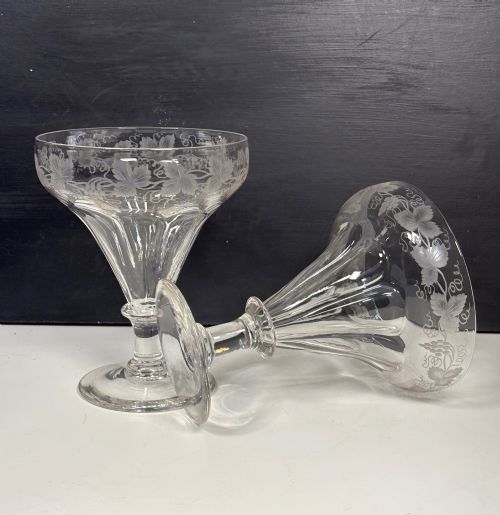


Victorian Engraved Goblets
Victorian engraved goblets combine crisp wheel-cut ornamentation with substantial nineteenth-century forms, offering tactile drinking vessels and ceremonial display pieces for the collector.
Victorian Engraved Goblets
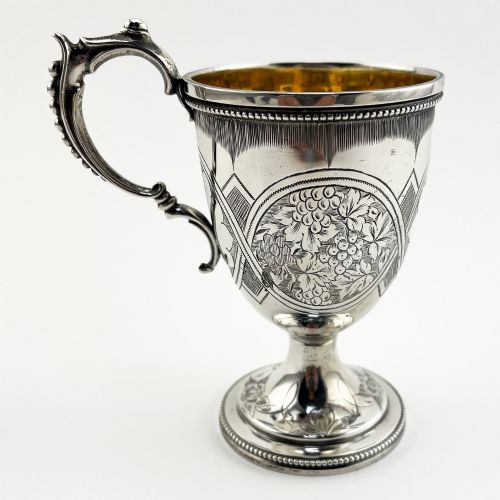
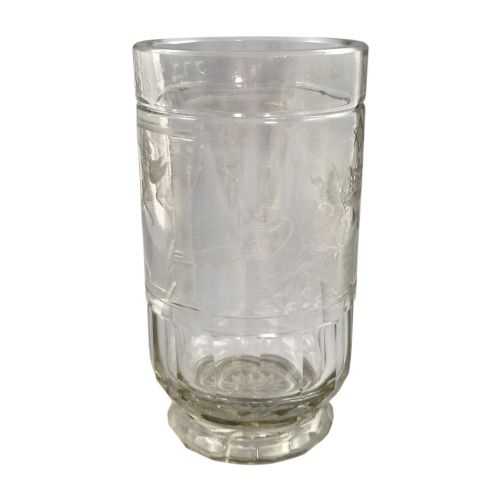
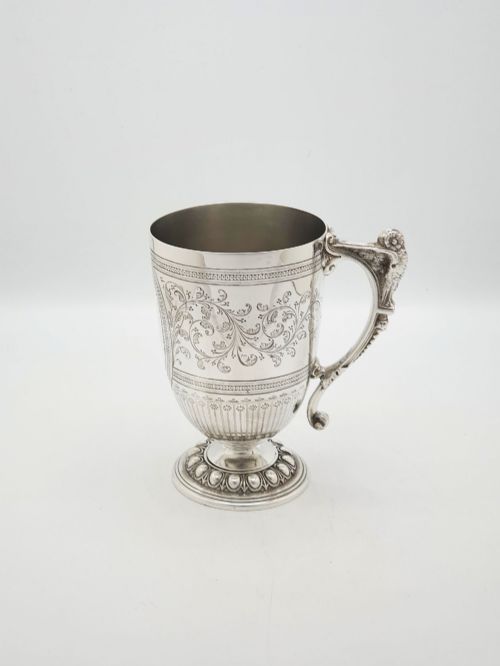
Victorian engraved goblets encompass a varied assortment of nineteenth-century drinking vessels, ceremonial cups, and presentation pieces spanning from the mid-Victorian decade through to the turn of the twentieth century. These items manifest in diverse forms including heavy glass rummers, communion chalices, sterling silver christening mugs, and grand presentation trophies.
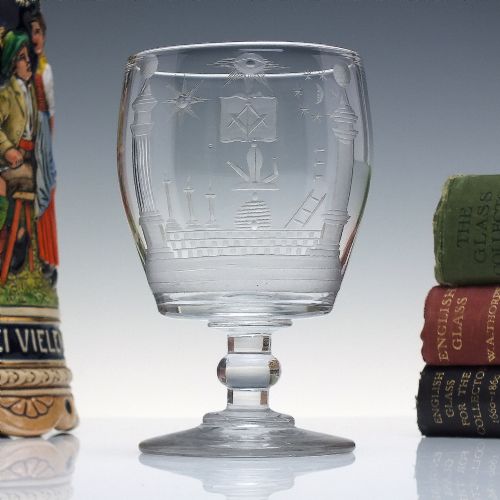
The material selection ranges widely across clear and coloured lead crystal, silver plate, Old Sheffield Plate, and solid sterling silver. Pieces frequently display elaborate wheel-engraving, intaglio work, or etching, often incorporating floral motifs, Masonic symbols, or armorial crests.
Most examples originate from British workshops, though Bohemian and continental European glassmakers also contribute significantly to the available selection. Collectors encounter individual stemware pieces alongside substantial matched sets intended for formal dining or ceremonial use.
Assessing quality
Quality rests upon the depth, clarity, and precision of the engraved or cut decoration upon the surface. Crisp lines and balanced proportions distinguish finer artistic output from mass-produced commercial wares.
The weight and purity of the material, whether heavy lead crystal or solid sterling silver, dictate the structural integrity and tactile feel of the piece. Master silver smithing or expert glass cutting elevates individual examples above standard utility items.
Victorian Engraved Goblets Retail Price Guide 2026
Typical asking prices for victorian engraved goblets among the pieces listed under this phrase on Sellingantiques today, from the lower quarter to the upper quarter. They describe what is for sale here now, not the wider market.
Listings feature items from the 1840s to 1900, spanning clear glass, lead crystal, silver plate, and sterling silver forms.
Moser·George Unite·John Hunt and Robert Roskell·Elkington Mason·Henry Tatton and Son·Richardsons of Stourbridge
The Victorian Engraved Goblets Glossary
- Rummer
- A large, heavy drinking glass with a short stem and wide bowl, common throughout the nineteenth century for serving wine, ale, or punch. These sturdy vessels often feature engraved floral or Masonic patterns.
- Intaglio
- A technique where the design is sunk below the surface of the glass rather than raised, creating a three-dimensional effect when viewed from the front. Skilled artisans achieved this using small rotating wheels.
- Parcel Gilt
- Silverware or metalwork partially coated with a thin layer of gold on specific interior or exterior details to create visual contrast. This finish frequently appears on Victorian presentation chalices and christening mugs.
- Roemer
- A traditional continental European stemmed drinking glass, usually made of green, amber, or clear glass with a large spherical bowl and a ribbed stem. Bohemian makers produced notable engraved examples during the Victorian era.
Victorian Engraved Goblets: Frequently Asked Questions
How do I identify a Victorian goblet?
Examine the weight, material composition, and engraving style to determine the manufacturing period. Nineteenth-century pieces typically exhibit characteristic pontil marks on glass bases or traditional hallmarks on silver items.
Stylistic cues such as heavy lead crystal proportions, Victorian gothic motifs, or specific maker stamps help confirm the date of origin.
Were these goblets used for drinking?
Many examples served practical functions for wine, ale, or festive toasts during formal nineteenth-century dining. Heavier rummers and wine glasses accommodated daily hospitality.
Other variants, including communion chalices and presentation cups, served strictly ceremonial or decorative purposes rather than everyday dining use.
How should I clean antique glass?
Wash glass items gently by hand using warm water and mild detergent without abrasive sponges. Avoid sudden temperature changes to prevent thermal shock and potential cracking.
Dry the pieces promptly with a lint-free cloth to maintain the clarity of the engraved crystal surface.
What is the difference between crystal and glass?
Lead crystal contains a percentage of lead oxide that increases the weight, refractive index, and acoustic resonance of the material. This composition allows artisans to cut deeper, sharper facets.
Standard glass lacks lead content, resulting in a lighter feel and less brilliant light dispersion when wheel-engraved.