


Victorian Enamelled Glass Vase
A victorian enamelled glass vase brings intense colour and detailed hand-painting into a room, capturing the decorative spirit of the nineteenth century.
Victorian Enamelled Glass Vase
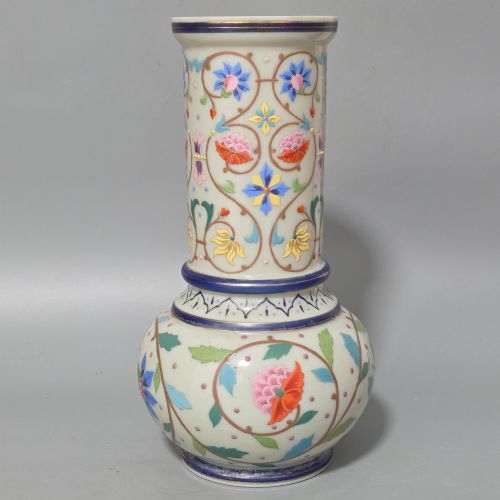
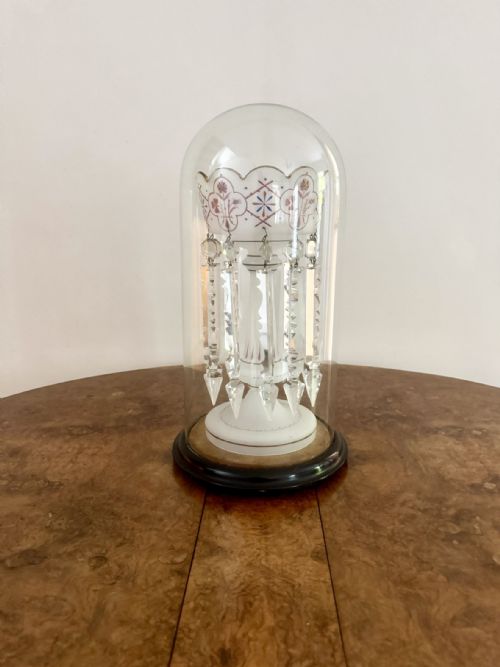
When you search for a victorian enamelled glass vase, you encounter a range of nineteenth-century decorative vessels designed to catch the light on mantelpieces and parlour tables. These pieces emerge from periods spanning the middle and late decades of that century, adopting forms such as bulbous table vases, tall display stems, and mantel lustres hung with glass drops.
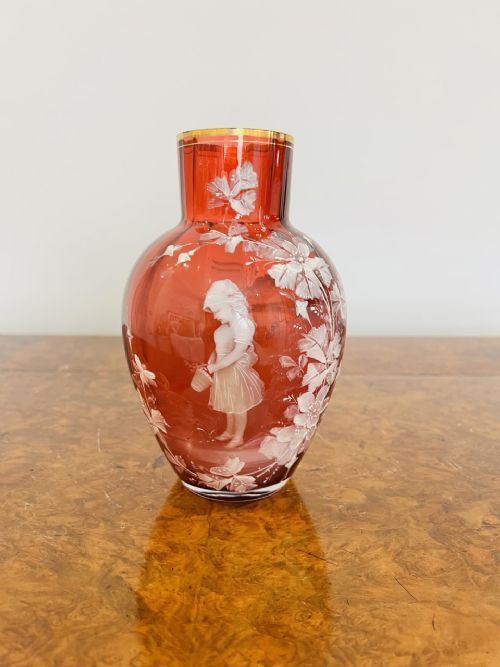
The objects on this page reflect diverse regional origins, including English workshops, Bohemian glasshouses, and German manufacturers. Makers utilised various tinted body colours like ruby, cranberry, green, amethyst, and opaque white as a ground for painted decoration.
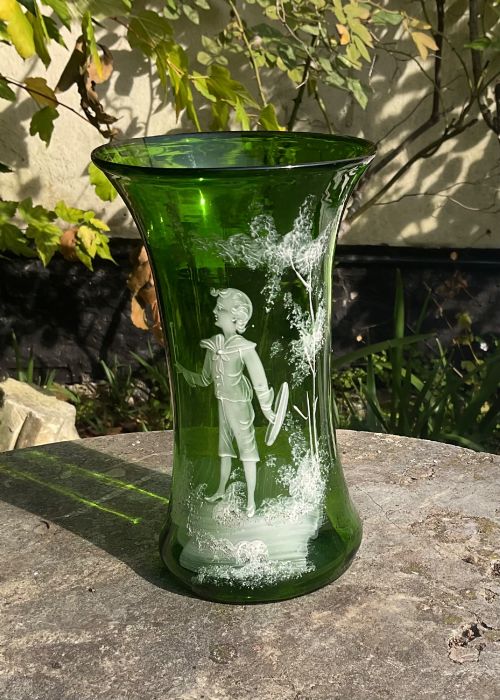
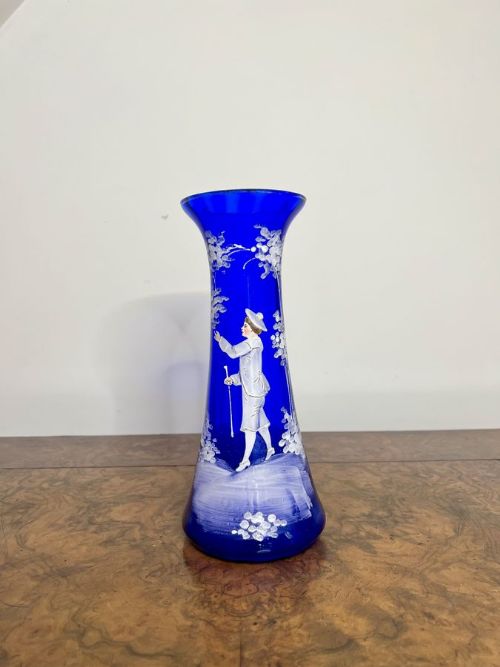
Common decorative motifs include hand-painted floral sprays, whimsical figures in the style associated with Mary Gregory, and heraldic or hunting scenes executed in opaque enamels and gold leaf. Buyers find single display pieces, paired garnitures, and complex centrepieces designed to anchor a room scheme.
Materials and methods
Glassmakers produced these vessels using hand-blowing and mould-blowing techniques, shaping lead crystal, coloured glass, or opaque opaline while hot. The resulting body received surface embellishment through the application of vitreous enamels fired in a kiln to fuse the pigments permanently to the glass.
Many workshops enhanced their decorated surfaces with applied gold leaf details and hand-painted scenes depicting foliage, birds, or human figures. Overlay techniques, particularly favoured in Bohemian production, involved casing one colour of glass over another and cutting through the outer layer to reveal a contrasting base colour.
The listings on this page span the Victorian era, the Aesthetic Movement, and the early twentieth century, incorporating ruby glass, crystal, and opaque opaline.
Judging quality in enamelled glass
Quality depends heavily upon the crispness of the glass-blowing and the precision of the hand-painted enamel work. Superior pieces display finely rendered details with steady brushwork and secure gilding that resists rubbing.
The weight of the glass, the depth of the body colour, and the sophistication of the decorative subject matter distinguish ordinary production from the output of premier makers such as Thomas Webb or Moser. Intact original lustre drops and undamaged enamel surfaces elevate the standing of any surviving vessel.
Thomas Webb·Moser·George Tye
The Victorian Enamelled Glass Vase Glossary
- Enamel
- An opaque or translucent glassy substance fused to the surface of glass by firing in a kiln. It provides the medium for the colourful painted motifs found across these vessels.
- Mantel lustre
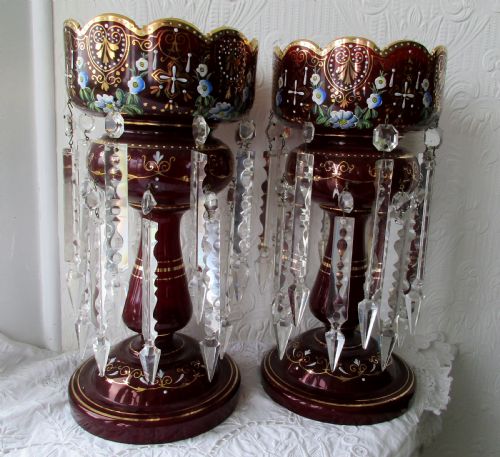
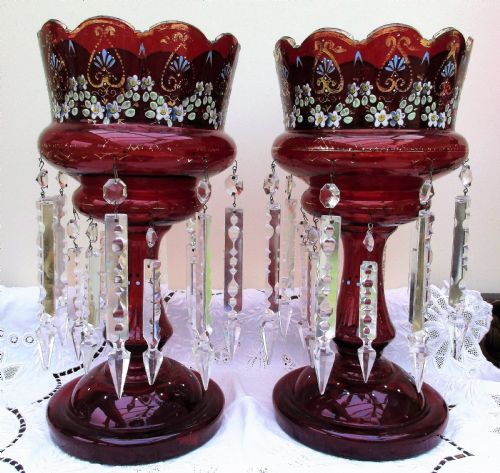
- A decorative vase fitted with a rim hung with cut glass pendants or prisms. These pieces stood on fireplace mantels to reflect the flickering light of gas lamps and candles.
- Opaline glass
- An opaque pale glass, often white, pink, or blue, developed during the nineteenth century. It imitates porcelain while retaining the smooth surface characteristic of blown glass.
- Overlay glass
- A technique where a glass vessel receives one or more outer layers of contrasting colour. Artisans cut away portions of the outer layer to create intricate multi-coloured patterns.
- Mary Gregory style
- A classification given to glassware decorated with white enamel silhouettes of children amidst foliage. The name references a decorator often credited with popularising this distinctive Victorian aesthetic.
Victorian Enamelled Glass Vase: Frequently Asked Questions
Were these vases meant for flowers?
Many nineteenth-century vessels served purely decorative functions on mantelpieces, credenzas, and parlour tables rather than holding water and stems. Heavy garniture sets and lustres with hanging glass drops were designed as ornamental status symbols.
Bulbous shapes and smaller forms accommodated short-stemmed seasonal blooms, but collectors today generally display them dry to preserve fragile interior surfaces and original enamelwork.
How can I tell Bohemian glass from English glass?
Bohemian production frequently employs heavy overlay techniques, complex cut designs, and rich amber or green tones influenced by German Historismus and local traditions. English makers often favoured opaline bodies, cranberry glass, and delicate floral enamelling associated with domestic manufacturers.
Regional attribution relies upon stylistic traits, glass chemistry, and characteristic colour palettes rather than consistent maker's marks, which rarely appear on nineteenth-century decorative glass.
What is a mantel lustre pair?
Mantel lustres are decorative vases fitted with a removable rim that suspends cut crystal spear-shaped prisms. Placed at either end of a fireplace mantel, the hanging drops multiplied the ambient illumination of the room.
Pairs were manufactured to sit symmetrically on either side of a clock or mirror. Surviving examples often lack some original glass pendants, making matched sets with complete drops particularly sought after by collectors.