




Victorian Emerald Glass
Victorian emerald glass brings deep, jewel-toned colour to a room, offering rich visual weight through vessels, scent bottles and table wares.
Victorian Emerald Glass
When you search for victorian emerald glass, you encounter a range of deeply coloured items spanning table wares, decorative vessels and personal accessories. These pieces date predominantly from the nineteenth century, encompassing distinct periods such as the Victorian era alongside Georgian and Edwardian examples.
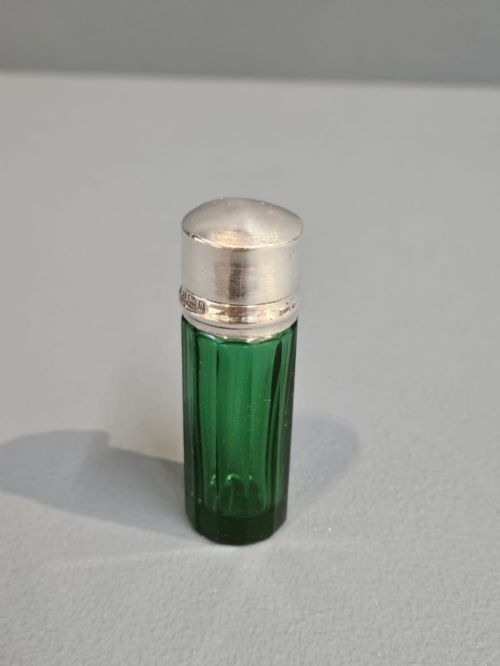
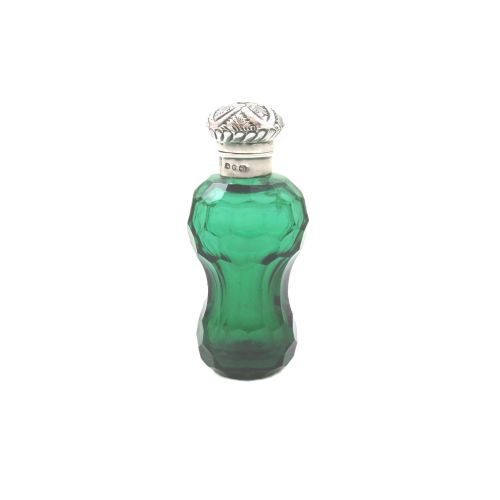
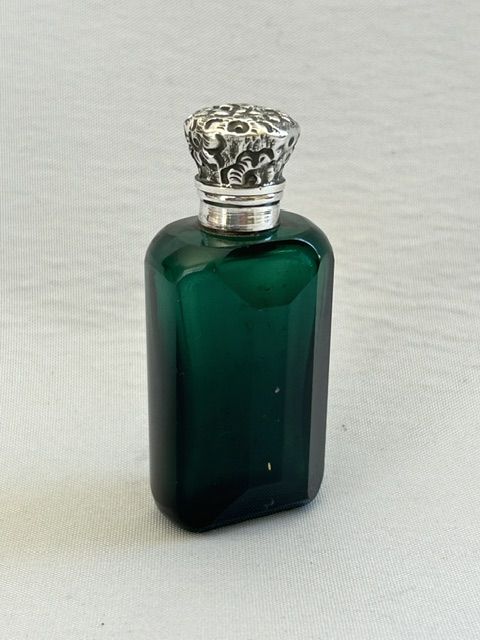
The objects on this page appear in numerous forms including wine glasses, scent bottles, mantle lustres, vases and decorative bowls. Table wares and drinking glasses sit alongside decorative items mounted in sterling silver or decorated with enamel paint and gold leaf.
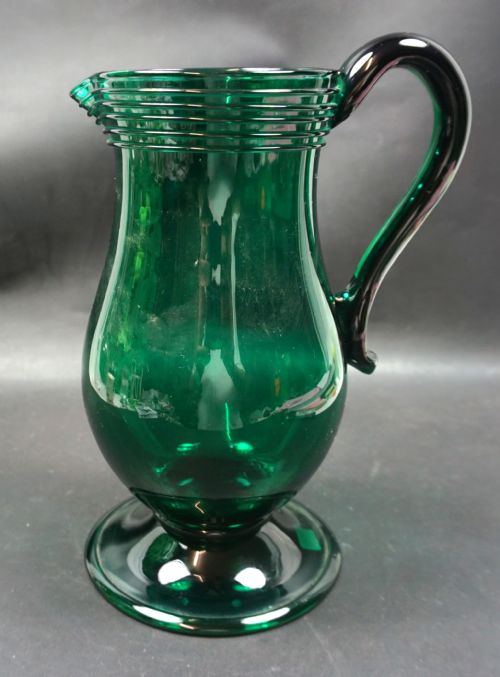
Makers and origins span England, Bohemia and Austro-Hungary, showing stylistic influences from the Arts & Crafts movement and Biedermeier design. Bristol green tones and deep emerald shades dominate the selections available.
Materials and methods
Makers utilised coloured glass, crystal and glass paste, often combining the vitreous body with sterling silver mounts, gold leaf and enamel painting. Artisans shaped vessels using techniques such as folding feet, creating trail rims, and cutting or overlaying the glass.
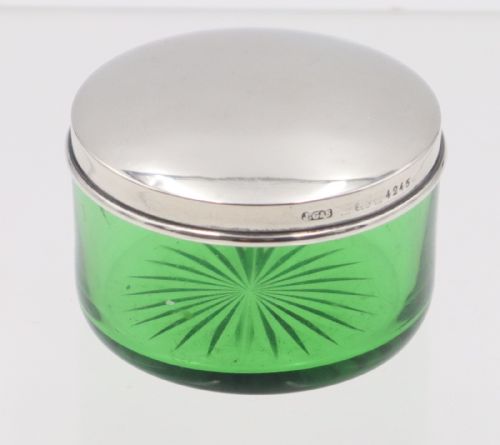
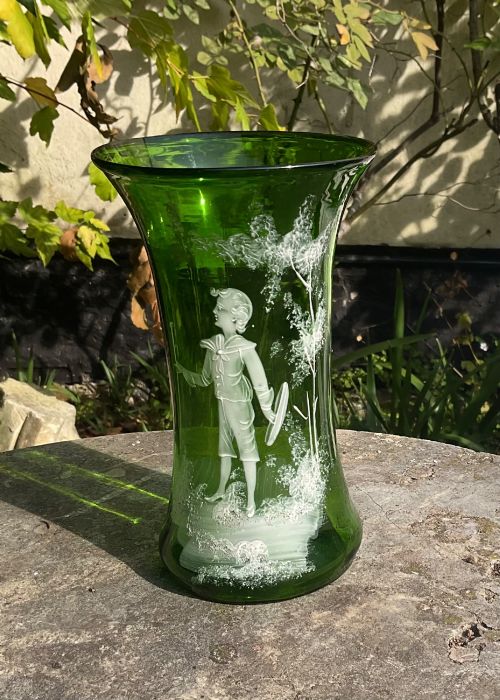
Many items feature hand-painted white enamel scenes in the manner associated with Mary Gregory, or incorporate sulphide figures within solid glass dumps. Metalwork components such as silver collars and hinged box lids were secured to the glass bodies by period silversmiths.
Victorian Emerald Glass Retail Price Guide 2026
Typical asking prices for victorian emerald glass among the pieces listed under this phrase on Sellingantiques today, from the lower quarter to the upper quarter. They describe what is for sale here now, not the wider market.
Listings feature Victorian, Georgian and Edwardian periods alongside materials including sterling silver, enamel, glass paste and coloured glass.
Assessing quality and finish
Quality reveals itself in the depth and uniformity of the emerald colour, the crispness of any cut facets, and the delicacy of applied trails or enamel work. Superior examples display precise symmetry in blown forms and clean integration where silver or metal mounts meet the glass.
The finesse of hand-painted details, such as the figures on Mary Gregory pieces or the gilding on decorative vases, separates standard production items from finer studio or factory output. Heavier vessels with well-finished pontil marks and undamaged silver hardware represent the upper tier of surviving examples.
The Victorian Emerald Glass Glossary
- Bristol green
- A deep, vibrant shade of green glass traditionally associated with English production around the Bristol area. It appears frequently on wine glasses, jugs and scent bottles.
- Mantle lustre
- A decorative glass vase hung with cut crystal prisms designed to catch the light on a fireplace mantelpiece. Pairs of these lustres are particularly sought after by collectors.
- Mary Gregory glass
- Glass decorated with hand-painted white enamel silhouettes, usually depicting children in pastoral settings. This style became popular during the Victorian period.
- Wrythen
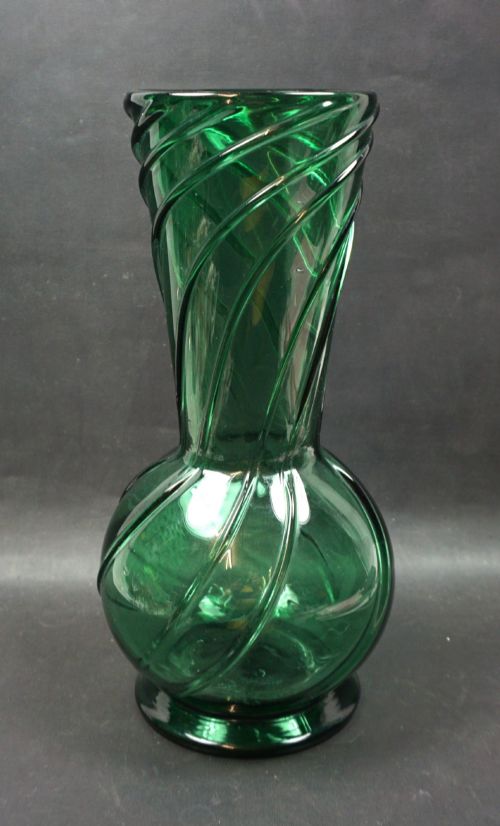
- A decorative spiral pattern moulded into the body of glassware. It gives a twisted optical effect to vases and drinking vessels.
- Sulphide
- A small white ceramic cameo embedded inside clear or coloured glass. They often appear inside solid glass paperweights or dumps.
Victorian Emerald Glass: Frequently Asked Questions
Were these pieces used daily?
Many items such as wine glasses, decanters and apothecary bottles served functional purposes in nineteenth-century homes. Others, including mantle lustres and decorative bowls, were strictly ornamental.
Scent bottles and dressing table sets were personal accessories used daily in the bedroom or boudoir. Table wares would appear during formal dining and entertaining.
How can I tell Victorian glass from later copies?
Examine the base of the vessel for a pontil mark, which indicates the piece was hand-blown and snapped off the punty rod. Victorian glass often shows minor irregularities, tiny air bubbles and hand-finished traits absent in modern machine-made reproductions.
Check for period hallmarks on any silver collars, lids or mounts. These assay marks provide reliable dating evidence for the piece.
What is Mary Gregory glass?
Mary Gregory glass refers to Victorian glassware featuring hand-painted white enamel decoration of children, birds or foliage. The technique creates a distinct opaque silhouette against the emerald green background.
While named after an American decorator, most of these pieces originated in Victorian England and Bohemia. They appear commonly on ewers, vases and dressing table sets.