

Victorian Embroidery
Victorian embroidery brings tactile depth into a room through needlework, tapestries, samplers, and fitted sewing furniture.
Victorian Embroidery
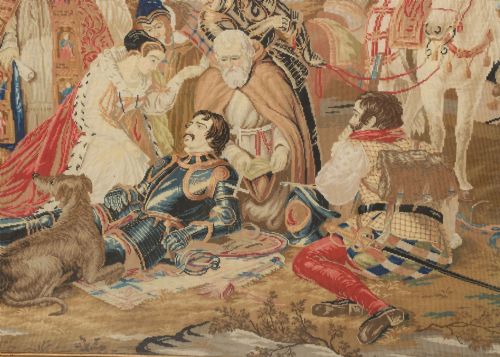
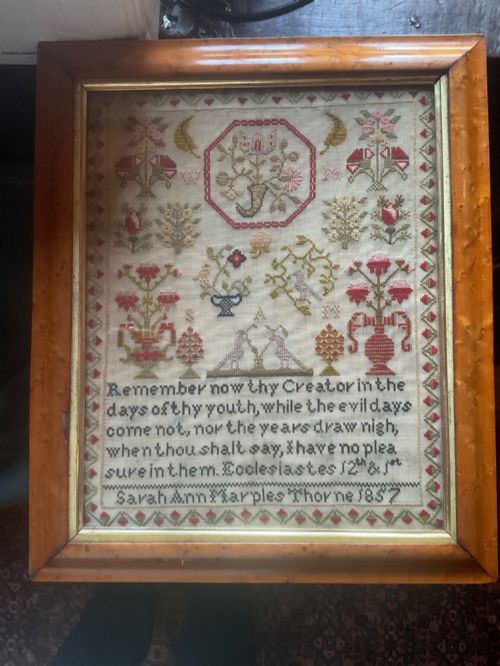
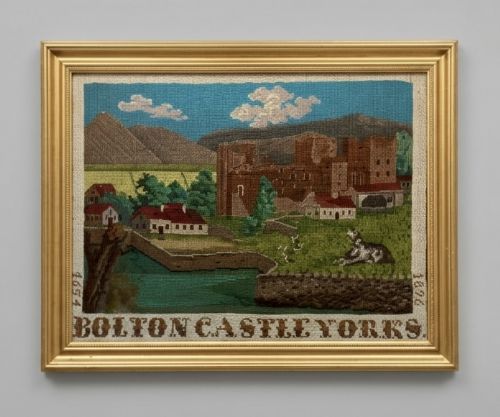
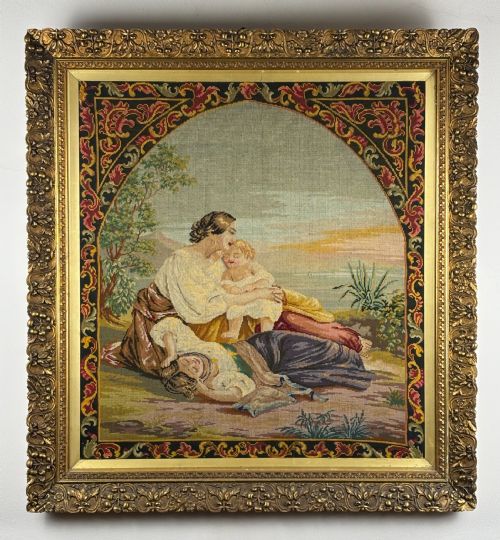
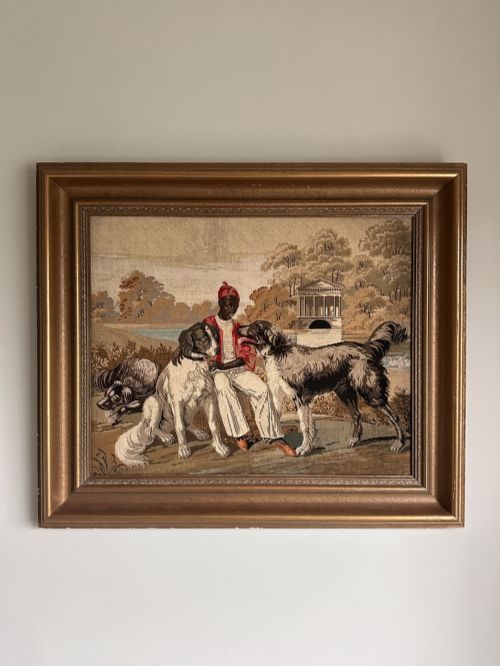
Victorian embroidery encompasses framed wool work, silk pictures, samplers, and tactile textile panels created across the nineteenth century. These pieces often depict animals, classical figures, landscapes, or armorial designs executed with considerable patience.
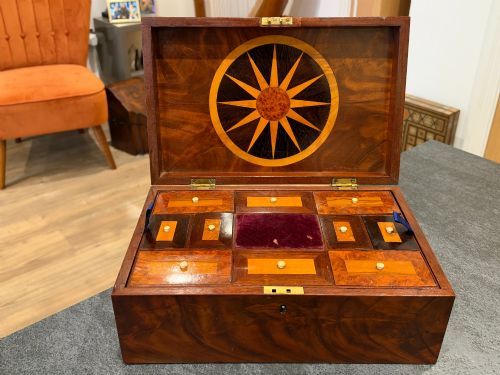
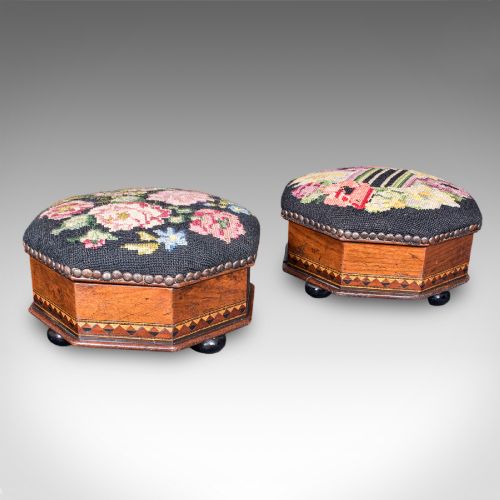
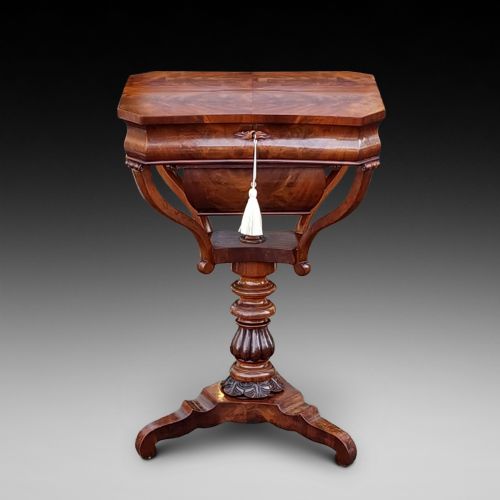
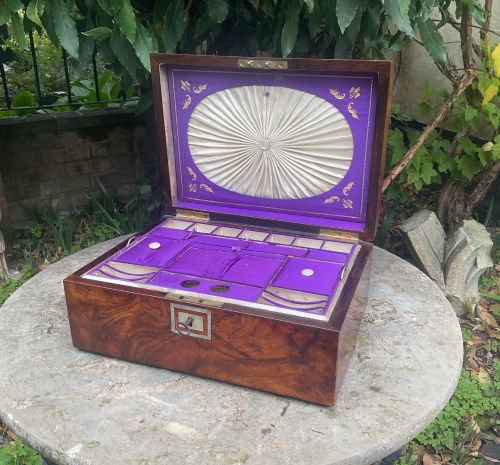
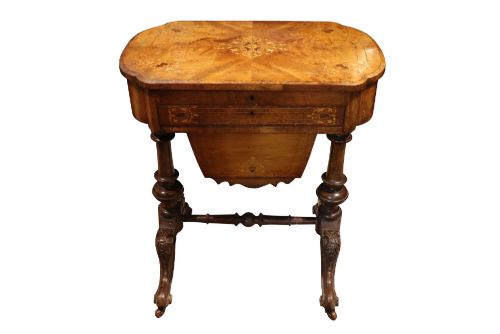
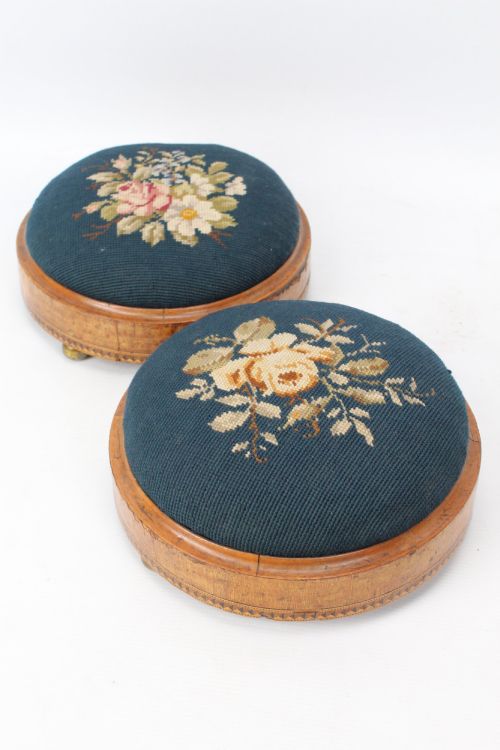
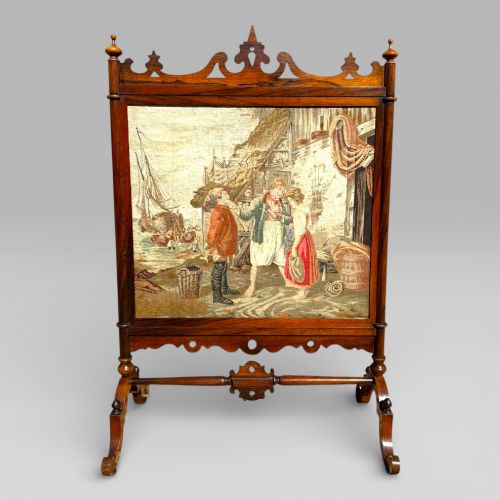
Buyers seeking victorian embroidery frequently encounter framed tapestries, foot stools, needlepoint fire screens, and specialised sewing boxes housing original needlework. The forms range from small domestic samplers to large wall panels intended for prominent display.
Originating predominantly from British and European workshops, these textiles reflect the domestic pursuits and decorative tastes of the era. The surviving examples preserve intricate hand-stitched details that demonstrate centuries-old needlecraft traditions.
Materials and construction
Needlework pieces rely on natural foundations such as linen, canvas, and wool mesh worked with dyed wool, silk thread, and glass beads. Frames incorporate traditional timbers including walnut, rosewood, mahogany, and giltwood.
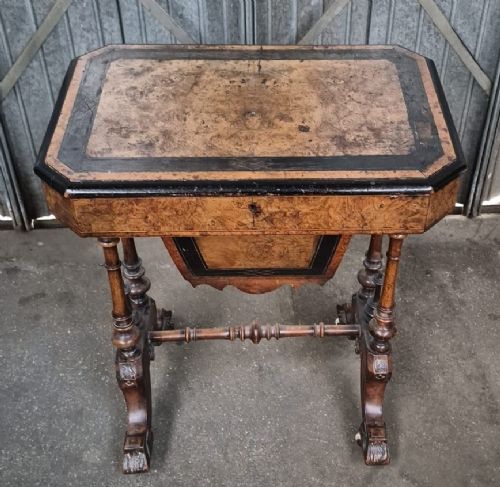
Specialist techniques define the visual texture, utilising Berlin woolwork, plushwork, gros-point, and crewelwork stitches. Furniture elements combine marquetry, Tunbridge ware inlay, and carved wooden supports housing fitted silk interiors.
Victorian Embroidery Retail Price Guide 2026
Typical asking prices for victorian embroidery among the pieces listed under this phrase on Sellingantiques today, from the lower quarter to the upper quarter. They describe what is for sale here now, not the wider market.
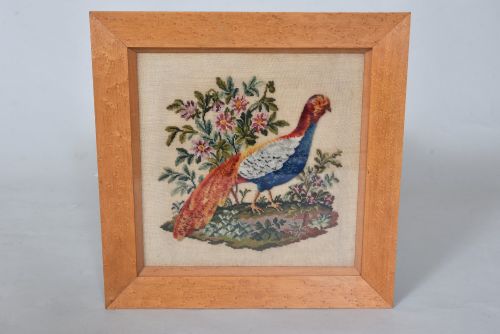
A plushwork pheasant emerges from the wool with a tactile, velvety texture that demands a quiet touch.
Evaluating craftsmanship
The distinction in quality rests upon the tightness of the stitch tension, the complexity of the colour shading, and the preservation of the textile fibres. Superior woolwork maintains vibrant pigment depth and crisp pictorial definition without thread slackness.
Enclosing frames and cabinetry contribute substantially to overall excellence, where solid walnut, burr maple, or inlaid Tunbridge woodwork match the artistic merit of the interior textile panel.
Stevens of Coventry
The Victorian Embroidery Glossary
- Berlin woolwork
- A type of counted-thread embroidery popular during the nineteenth century, worked in brightly coloured wools from charted grid patterns. It allowed stitchers to create elaborate pictorial scenes and portraits.
- Sampler
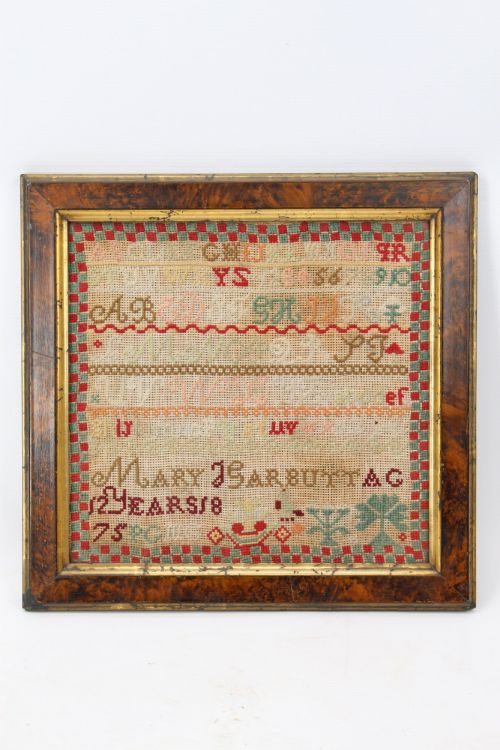
- A piece of needlework produced as a demonstration or test of skill in various stitches, often featuring alphabets, numbers, and the maker's name and age. These offer precise chronological markers for historians.
- Tunbridge ware
- Intricate decorative woodwork characterised by mosaic patterns formed from thousands of tiny tinted wood blocks, frequently applied to small boxes and sewing accessories. It originates from the town of Tunbridge Wells in Kent.
- Plushwork
- A specialised embroidery technique incorporating raised, cut-pile stitches that produce a textured, velvet-like surface resembling animal fur. It frequently appears on nineteenth-century wildlife depictions.
Victorian Embroidery: Frequently Asked Questions
What is Berlin woolwork?
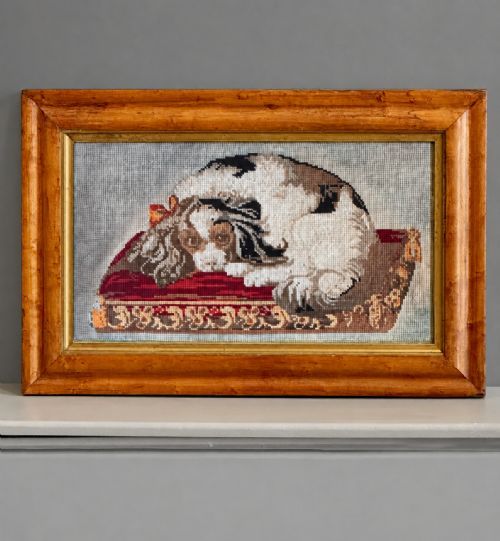
Berlin woolwork is a distinctive style of nineteenth-century embroidery worked with brightly coloured wool yarns on a canvas grid. It utilised printed patterns numbered for specific shades, enabling stitchers to achieve realistic pictorial depth.
This technique produced vivid wall hangings, cushion covers, and fire screen panels depicting animals, historical scenes, and floral motifs. The wools retained their rich pigments through careful indoor preservation.
How were fire screens used?
Fire screens functioned as movable household barriers placed strategically to shield individuals from the intense radiant heat of coal-burning fireplaces. The adjustable needlework panel could be raised or angled to protect the face from scorching.
Beyond practical thermal protection, these screens served as prominent decorative furnishings in nineteenth-century drawing rooms. They displayed the needlework skills of the household members to visiting guests.
How do I care for antique needlework?
Antique textiles require protection from direct sunlight to prevent the fading of silk and wool threads. Framing under glass helps shield the delicate fibres from airborne dust and atmospheric moisture.
Routine maintenance involves gentle surface dusting with a soft brush rather than rigorous cleaning. Maintaining stable room humidity preserves both the fabric ground and the surrounding wooden frames.
What are sewing boxes used for?
Sewing boxes provided organised storage for threads, needles, scissors, and small textile implements required for domestic handcrafts. Fitted internal compartments kept delicate tools secure and accessible during regular needlework sessions.
These boxes frequently incorporated fine exterior woodworking, such as burr walnut veneers or Tunbridge ware mosaics. They functioned as both practical utility items and decorative objects on parlour tables.