



Victorian Ebonised Slipper Chair
A Victorian ebonised slipper chair is a low, dark-finished seat designed for ease, bringing period character and compact elegance to any room.
Victorian Ebonised Slipper Chair
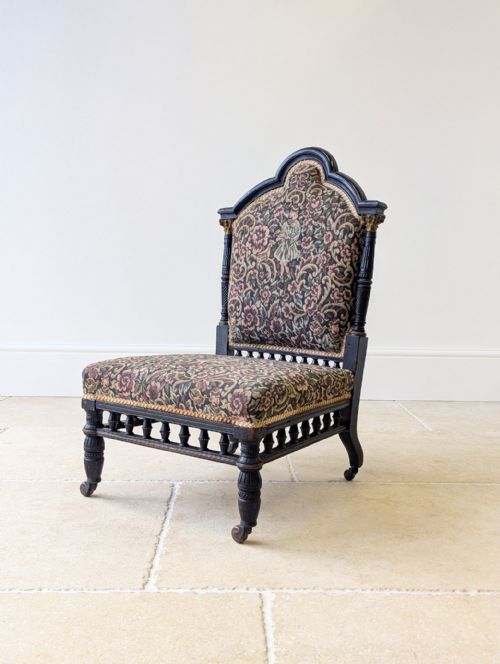
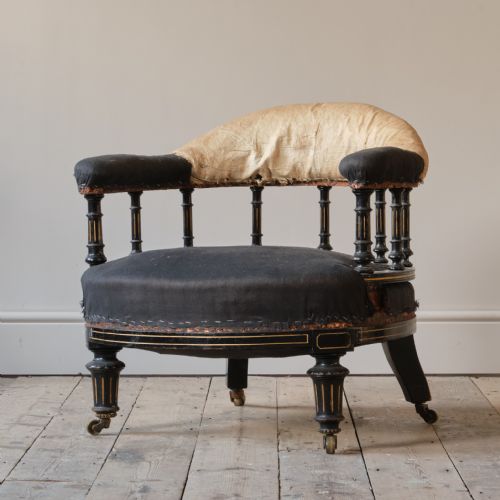
A victorian ebonised slipper chair sits low to the floor, created in forms such as nursing chairs, salon chairs, and bedroom chairs. These pieces emerge predominantly from the nineteenth century, including specific decades like the 1870s and 1880s, alongside occasional Edwardian examples.
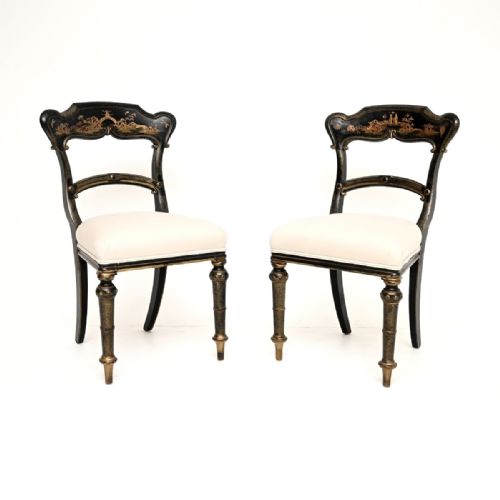
The selection frequently embraces the Aesthetic Movement and French Napoleon III or Chinoiserie styles. Makers such as Gillows and E W Godwin shape the landscape of these dark wood seating options.
Makers utilised various alternative descriptions for these low seats, including boudoir chairs and ladies chairs. The core form remains a compact, easily moved chair intended for domestic comfort.
Construction and materials
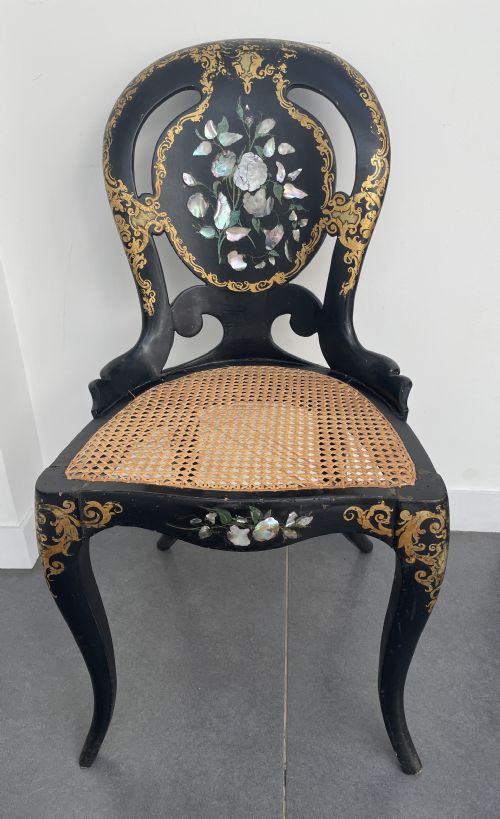
Wood is treated with an ebonised finish to imitate costly ebony, frequently complemented by parcel gilding or mother of pearl inlay. Some pieces utilise papier-mâché with lacquered surfaces.
Upholstery forms a central part of the construction, employing fabric, velvet, and button upholstery techniques. Brass details and cane panels appear on select examples to provide structural or decorative contrast.
Victorian Ebonised Slipper Chair Retail Price Guide 2026
Typical asking prices for victorian ebonised slipper chair among the pieces listed under this phrase on Sellingantiques today, from the lower quarter to the upper quarter. They describe what is for sale here now, not the wider market.
Factors of quality
Quality rests upon the crispness of the ebonised finish and the finesse of any parcel gilding or mother of pearl inlay. Pieces associated with documented makers or distinct design movements demonstrate superior craftsmanship.
The integrity of the underlying wooden frame and the precision of the upholstery work define the enduring standard of each seat. Original decorative details elevate the distinction of individual pieces.
Gillows·E W Godwin·Maple and Co·Jennens and Bettridge
The Victorian Ebonised Slipper Chair Glossary
- Ebonised wood
- Timber stained or painted black to resemble genuine ebony. This finish was widely favoured during the nineteenth century for furniture.
- Aesthetic Movement
- A late nineteenth-century design style emphasising visual beauty over narrative subject matter. It often featured ebonised surfaces and gilt decoration.
- Parcel gilt
- A decorative technique involving partial gilding with gold leaf. It highlights specific carved details on an ebonised wooden frame.
- Nursing chair
- A low-seated Victorian chair designed originally for infant care. These chairs typically feature padded upholstery and lack arms to accommodate garments.
Victorian Ebonised Slipper Chair: Frequently Asked Questions
What is a Victorian ebonised slipper chair?
A Victorian ebonised slipper chair is a low-slung nineteenth-century seat featuring a dark, ebonised wood finish. These chairs were traditionally used in bedrooms and salons for dressing or relaxing.
They appear in various stylistic movements, including the Aesthetic Movement and French Napoleon III designs, often incorporating velvet, button upholstery, or mother of pearl.
How were these chairs used historically?
Historically, low chairs served in private chambers, bedrooms, and drawing rooms for tasks such as putting on footwear or nursing. Their compact proportions suited intimate domestic spaces.
By sitting closer to the floor, they offered a relaxed posture distinct from formal dining or parlour seating.
How do I style a slipper chair today?
A slipper chair functions effectively in bedrooms, dressing rooms, or small corners of a living room. Its low profile prevents it from overwhelming limited space.
Pair it with contrasting textiles or place it near period furniture to highlight its dark ebonised frame and decorative inlay.
How can I tell the period of a chair?
Dating relies on observing construction methods, materials, and stylistic cues such as Aesthetic Movement motifs or Napoleon III forms. Nineteenth-century examples often display hand-applied finishes and traditional joinery.
Reference to specific decades, such as the 1870s or 1880s, helps narrow the timeframe when supported by structural evidence.