




Ebonised Wooden Side Chair
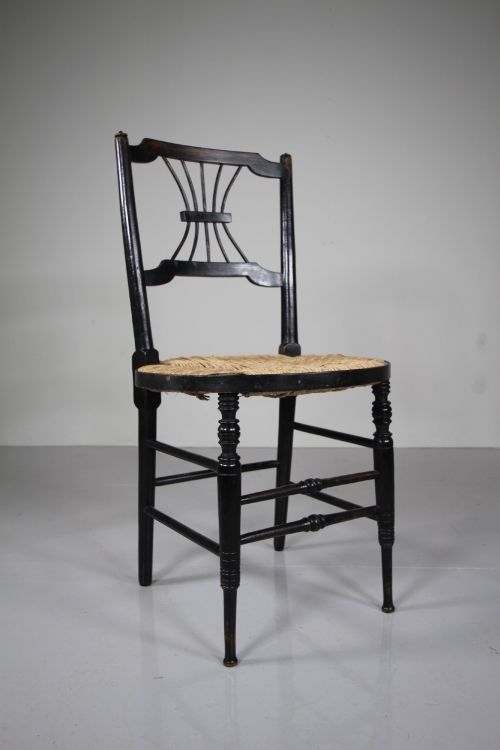
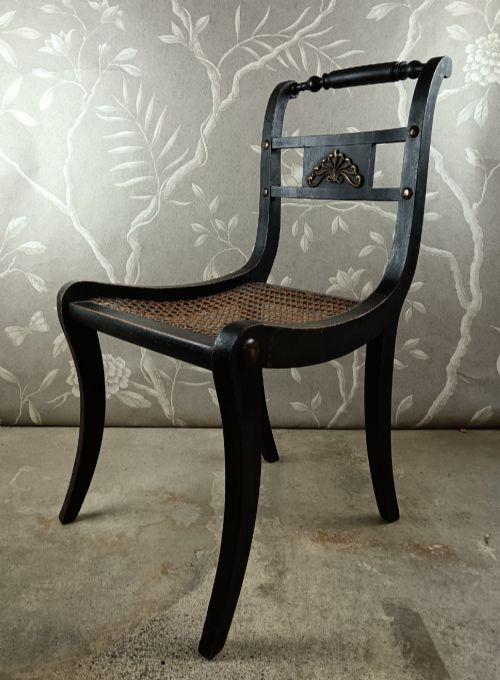
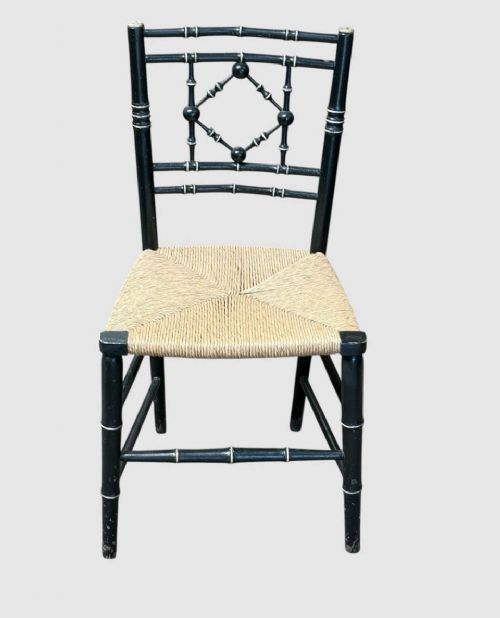
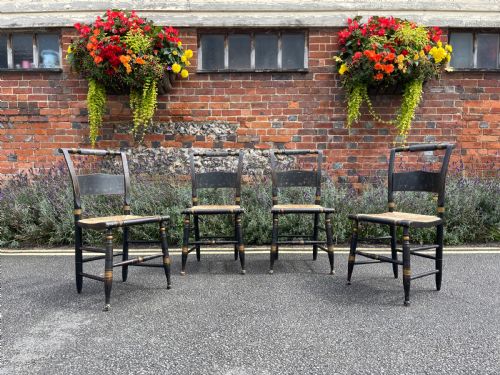
These ebonised wooden side chair examples range from Regency sabre-leg designs to Aesthetic Movement and Victorian seating.
Ebonised Wooden Side Chair
An ebonised wooden side chair is a seat finished to resemble ebony, appearing across Regency, Victorian, and early twentieth-century periods. These pieces serve functional and decorative roles in interiors, often functioning as hall chairs, salon chairs, or dining chairs.
The selections on this page lean heavily towards nineteenth-century examples, including Regency, Aesthetic Movement, and Late Victorian styles. You will find variations featuring rush, cane, fabric, or velvet seats paired with carved or gilt wooden frames.
Forms span from simple turned wooden spindles to elaborate Gothic revival, Chippendale revival, and Sussex chair designs. Most items function as individual statement pieces or part of larger dining and salon sets.
How they were made
Timbers such as beech, oak, and general hardwoods form the structural foundation, treated with ebonising stains or dark finishes to imitate costly exotic woods. Gilding, brass accents, and painted details frequently highlight carved motifs and structural turns.
Seating surfaces utilise traditional methods involving woven rush, woven cane, or padded upholstery covered in velvet and fabric. Joinery relies on period-appropriate turning, framing, and carving techniques characteristic of nineteenth-century workshops.
Ebonised Wooden Side Chair Retail Price Guide 2026
Typical asking prices for ebonised wooden side chair among the pieces listed under this phrase on Sellingantiques today, from the lower quarter to the upper quarter. They describe what is for sale here now, not the wider market.
Some chairs bear the distinct marks of the Aesthetic Movement, proving that Victorians loved a dramatic black finish just as much as we do.
What varies in quality
The refinement of the ebonising finish and the crispness of carved details distinguish standard production from finer workshop output. Original surface preservation and the integrity of applied gilding play significant roles in the overall standard.
The condition of original woven cane or rush seats, alongside the stability of the timber frame, marks the difference between well-preserved survivals and heavily restored examples.
William Morris·Rossetti·Collier and Plucknett·Bruce J. Talbert·Lamb of Manchester·Hitchcock
The Ebonised Wooden Side Chair Glossary
- Ebonised
- Wood treated with stain, paint, or chemical processes to imitate solid ebony. This finish gained popularity during the Regency and Victorian eras for decorative furniture.
- Cane
- Woven material made from the outer skin of rattan palms, utilised for light and resilient seat panels. It appears frequently on Regency and Aesthetic Movement chairs.
- Sabre leg
- A concave-curving furniture leg that tapers toward the foot, inspired by classical Greek and Roman furniture. This form is a defining feature of Regency design.
- Aesthetic Movement
- A late nineteenth-century design style emphasising visual beauty over narrative content, often incorporating simplified forms and ebonised finishes.
- Cockpen
- A Chinese Chippendale style of chair featuring a lattice-work back and straight legs. These appear in various forms through the nineteenth and early twentieth centuries.
Ebonised Wooden Side Chair: Frequently Asked Questions
How do I identify a Regency ebonised chair?
Regency pieces often feature classical elements like sabre legs, gilt accents, and original cane seats dating from around the early nineteenth century.
These characteristics separate them from later Victorian revivals, which frequently incorporate heavier carvings or different upholstery styles.
Were ebonised chairs used in dining rooms?
Yes, ebonised dining chairs and sets of salon chairs appear across the Victorian period, sometimes featuring upholstered pads in velvet or fabric.
They served both formal dining functions and decorative seating roles within nineteenth-century drawing rooms and halls.
What is an Aesthetic Movement chair?
Aesthetic Movement seating dates primarily to the late nineteenth century, reflecting simplified forms, ebonised woodwork, and sometimes influences from Japanese design.
Associated makers and designers of this period include Bruce J. Talbert and Collier and Plucknett.
How should I care for an ebonised wooden finish?
Protect the ebonised surface from direct sunlight and moisture to prevent fading or lifting of the dark stain and any applied gilt details.
Dust gently with a dry cloth and avoid harsh chemical polishes that might degrade the historic finish over time.