

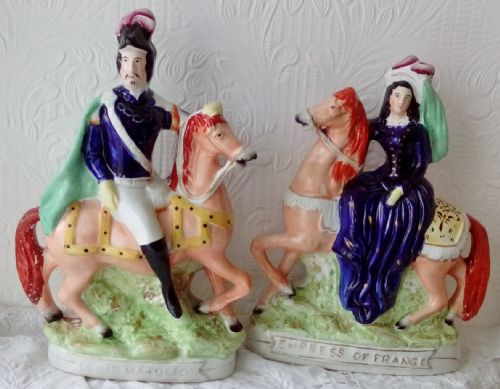


Victorian Earthenware Horse Figure
These Victorian earthenware horse figure examples capture nineteenth-century animalier and equestrian subjects in robust ceramic form.
Victorian Earthenware Horse Figure
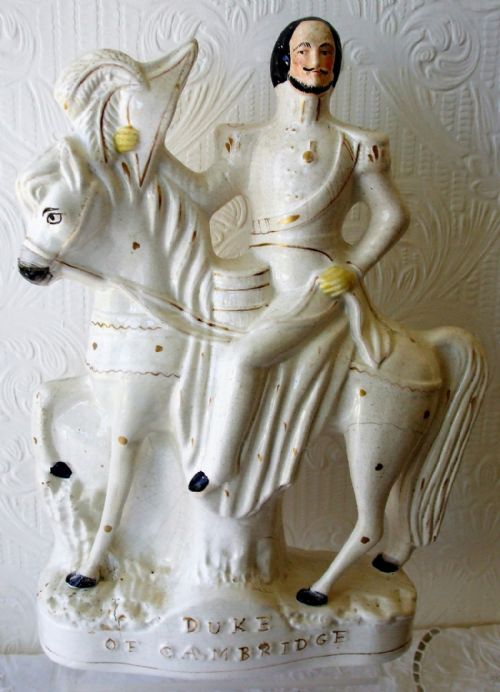
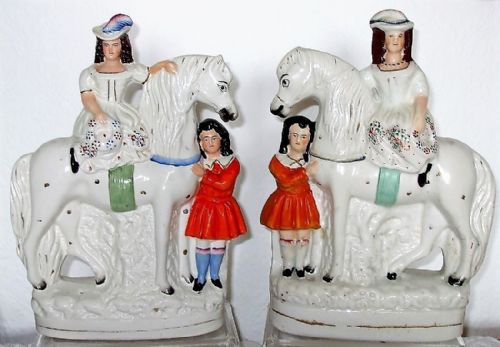
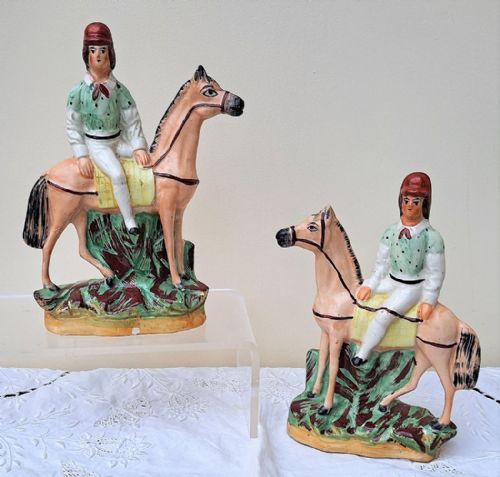
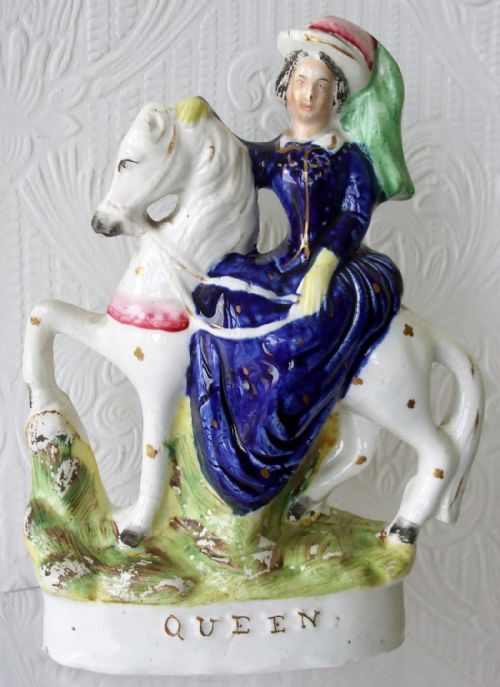
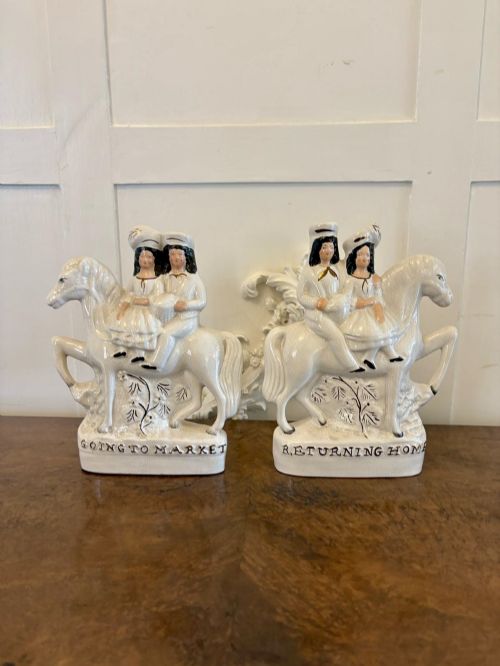
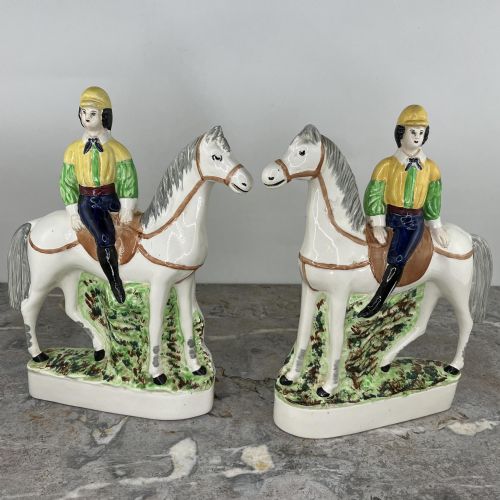
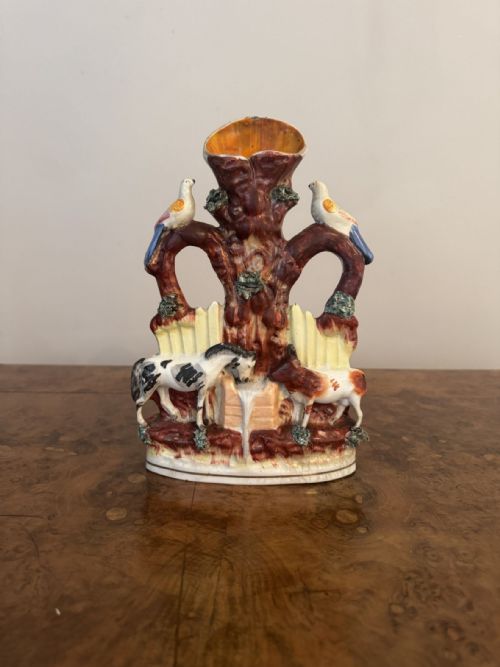
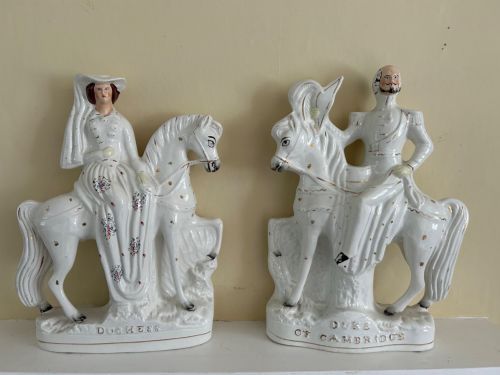
A victorian earthenware horse figure brings nineteenth-century Staffordshire pottery into the home, depicting mounted jockeys, royal figures, and equestrian subjects. Buyers encounter pairs and individual models such as flatback figures, spill vases, and portrait subjects.
Assessing the quality
Model scale and structural complexity influence the distinction between standard flatbacks and large equestrian groups such as the Scottish Highlander on horseback.
Victorian Earthenware Horse Figure Retail Price Guide 2026
Typical asking prices for victorian earthenware horse figure among the pieces listed under this phrase on Sellingantiques today, from the lower quarter to the upper quarter. They describe what is for sale here now, not the wider market.
Listings span the nineteenth century, including specific dates from eighteen-sixty to eighteen-eighty alongside twentieth-century Sampson Smith output.
Sampson Smith
The Victorian Earthenware Horse Figure Glossary
- Earthenware
- Porous pottery fired at lower temperatures than stoneware, requiring a glaze to achieve watertightness. It serves as the primary ceramic body for nineteenth-century Staffordshire figures.
- Flatback
- A figure moulded with a finished front and a plain, unglazed or semi-glazed flat rear side. This construction allowed potters to place larger pieces flush against mantelpieces.
- Lead glaze
- A glossy coating containing lead oxide applied to ceramic bodies before firing. It produces a smooth, reflective surface characteristic of antique pottery.
- Spill vase
- A hollow cylindrical holder incorporated into the figure's design. These vessels held wooden spills used for lighting candles and pipes.
Victorian Earthenware Horse Figure: Frequently Asked Questions
What subjects do these horse figures show?
These ceramic pieces depict jockeys, royalty, soldiers, and literary or historical characters mounted on horseback.
Subjects range from Queen Victoria and military commanders to highwaymen, leopard hunters, and children with horses.
What is the function of a spill vase?
Spill vases incorporated into pottery figures served a practical domestic purpose in nineteenth-century households.
They held slender wooden spills used to transfer fire from hearth to lamps and candles before matches became common.
How are these figures cleaned safely?
Dusting gently with a dry, soft brush preserves the delicate enamel paint and lead glaze on antique earthenware.
Moisture and harsh cleaning agents should be avoided to prevent damage to the historic ceramic surfaces.