



Victorian Duplex Lamp
These robust victorian duplex lamp examples provide brilliant double-wick illumination inside grand nineteenth-century rooms.
Victorian Duplex Lamp
A victorian duplex lamp is a tall, double-burner oil or paraffin lighting fixture designed to sit upon tables and desks during the nineteenth and early twentieth centuries. The search phrase covers pieces primarily originating from the Victorian and Edwardian periods, stretching into the early decades of the twentieth century.
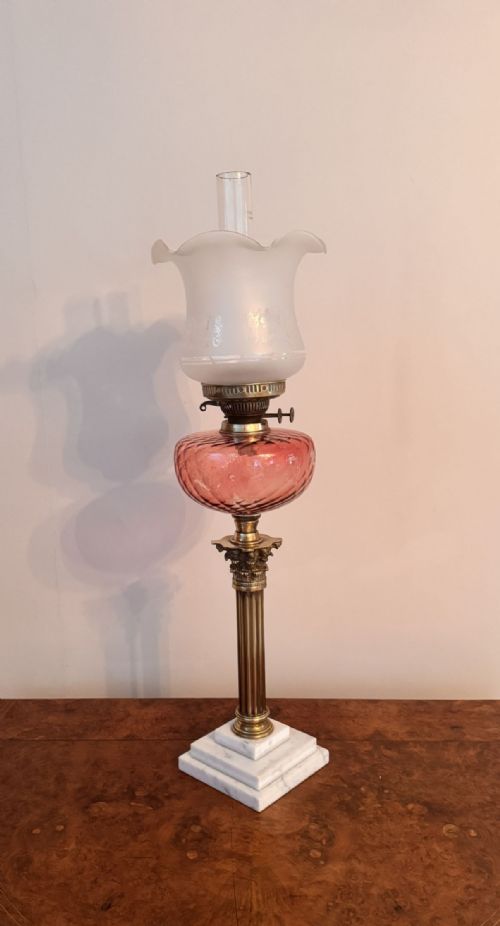
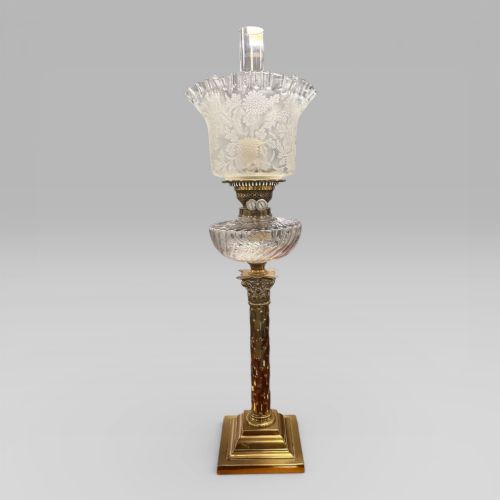
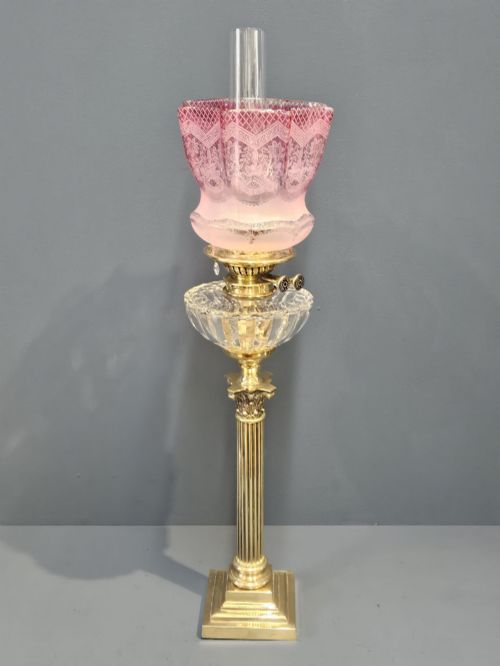
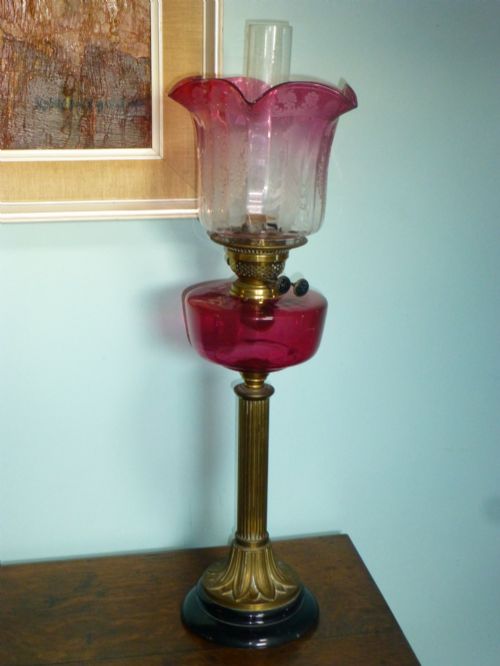
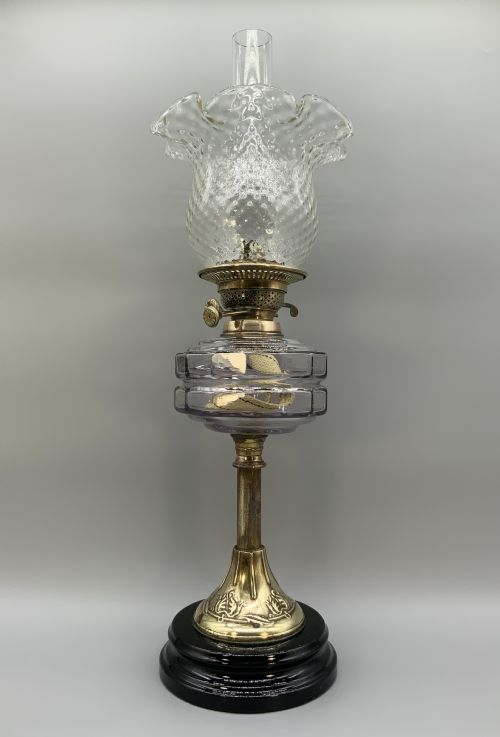
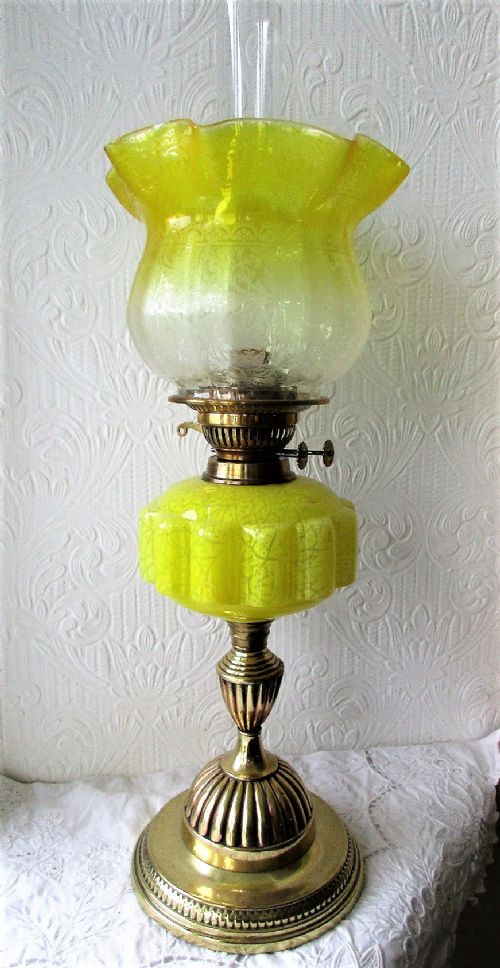
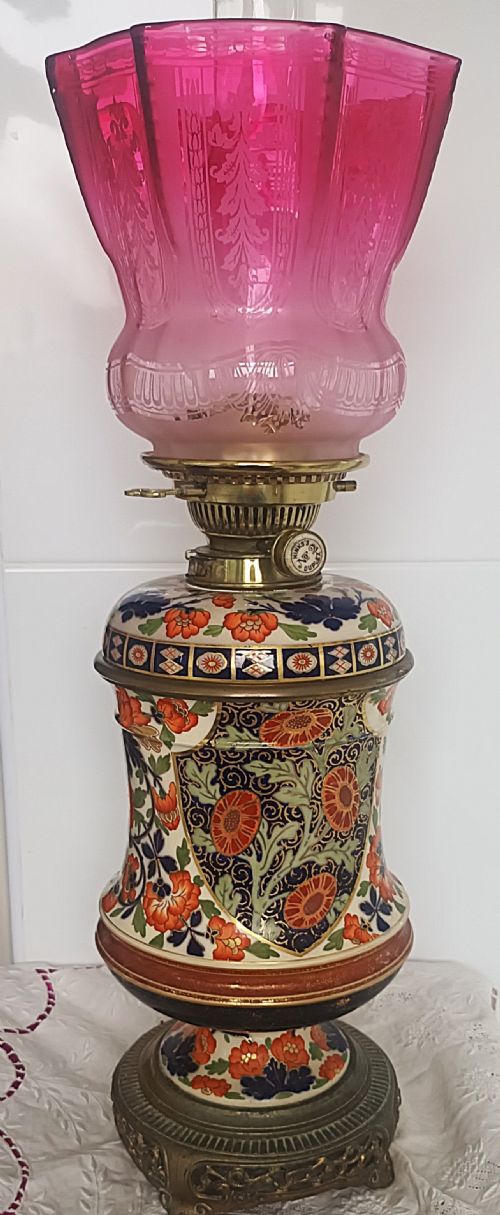
Most examples encountered here feature sturdy brass columns combined with colourful glass fonts or shades. Tall Corinthian and reeded column designs appear frequently alongside ceramic bodies and hand-blown glass components.
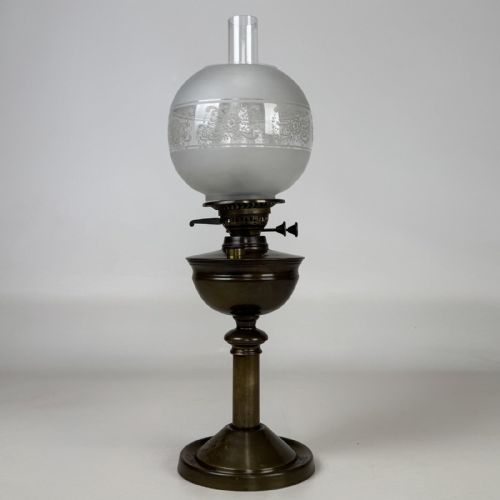
The objects span standard domestic table lamps, adjustable telescopic stands, and specialised library or study models. Production methods range from plain utilitarian brass fittings to highly decorative artistic pairings of ceramic and metal.
How they were made
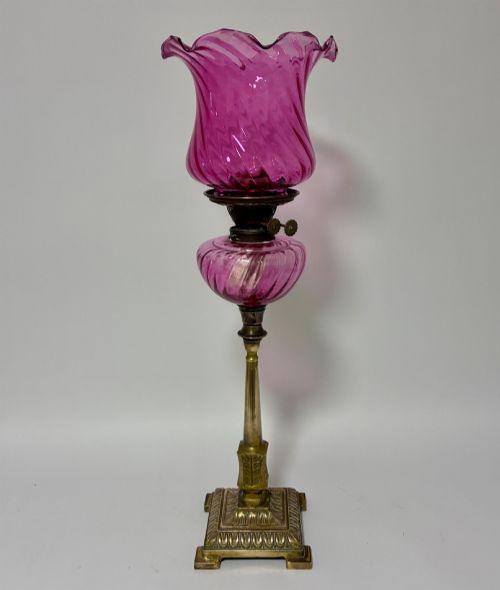
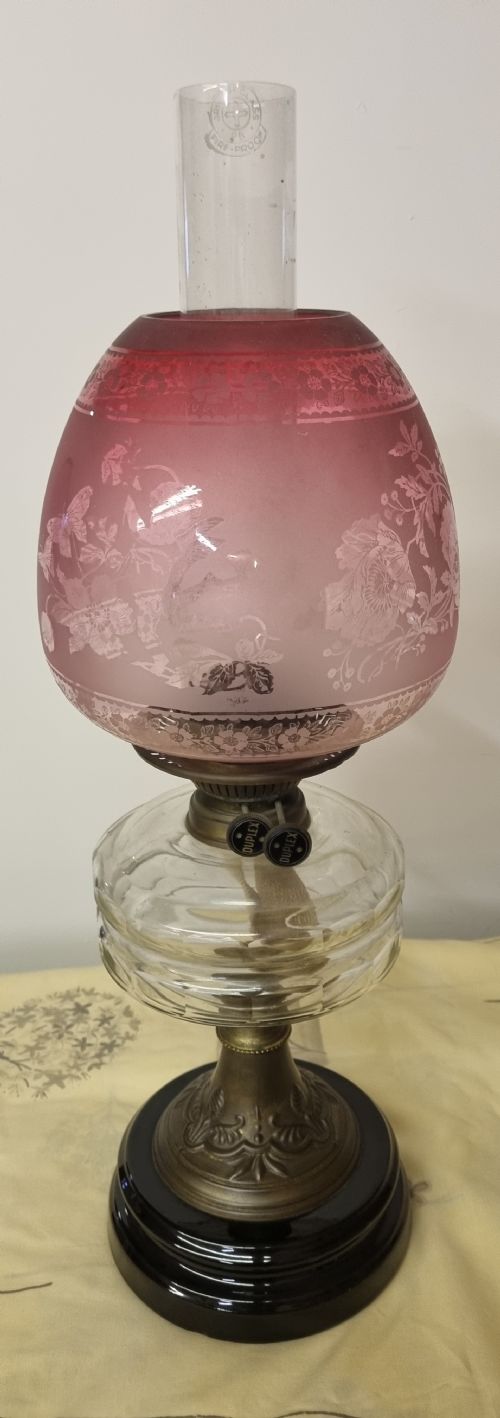
Makers constructed these pieces using heavy cast brass for columns and bases, often paired with hand-blown or etched glass reservoirs and shades. Cranberry glass, opaline, and pink glass fonts provide strong colour contrasts against polished metal surfaces.
Ceramic bodies and porcelain elements appear alongside cast brass, while specialised twin burners sit atop the fuel reservoirs to hold the twin wicks. Fine metalworking techniques produced reeded columns, classical Corinthian capitals, and adjustable telescopic stands.
Victorian Duplex Lamp Retail Price Guide 2026
Typical asking prices for victorian duplex lamp among the pieces listed under this phrase on Sellingantiques today, from the lower quarter to the upper quarter. They describe what is for sale here now, not the wider market.
Owners must resist the urge to use modern scented paraffin unless they enjoy a Victorian drawing room smelling intensely of lavender.
What varies in quality
The distinction between standard domestic lighting and finer workshop output rests in the weight of the brass castings and the complexity of the column design. Elaborate Corinthian capitals, heavy weighted bases, and telescopic mechanisms indicate superior construction.
Glass quality separates ordinary fonts from exceptional pieces, particularly where hand-blown cranberry shades, etched tulip globes, or layered cameo glass are present. Maker-marked burners and matched sets of ceramic or glass components elevate the standing of an individual lamp.
Hinks·Taylor Tunnicliff·Messenger·Young·Stevens and Williams·Doulton Lambeth·Veritas
The Victorian Duplex Lamp Glossary
- Duplex burner
- A twin-wick mechanism that produces a significantly brighter flame than single-wick burners. These burners often carry maker names on the thumb turns.
- Font
- The oil or paraffin reservoir positioned beneath the burner. Fonts are frequently manufactured from coloured glass, ceramics, or brass.
- Corinthian column
- A classical architectural column style featuring ornate acanthus leaf capitals. These columns form the upright stems of many formal nineteenth-century lamps.
- Cranberry glass
- A rich red-pink glass created by adding gold chloride to the molten batch. It is widely used for matching shades and fonts on Victorian lighting.
- Telescopic
- An adjustable mechanism allowing the overall height of the lamp to be raised or lowered. This feature is commonly found on heavy brass reading stands.
Victorian Duplex Lamp: Frequently Asked Questions
What is a duplex lamp?
A duplex lamp is a nineteenth-century lighting fixture utilising a twin-burner system designed to burn paraffin or oil with two parallel wicks.
This double configuration yields a much stronger illumination than single-wick predecessors, making them the primary choice for domestic and study spaces.
How do I identify a Victorian lamp?
Victorian lamps are identified through period materials like heavy cast brass, hand-blown cranberry glass, and specific column styles such as Corinthian or reeded shafts.
Many pieces also feature marked burners from known nineteenth-century manufacturers and traditional ceramic bodies.
Were these lamps converted to electricity?
Many surviving pieces retain their original oil reservoirs and duplex burners, though some examples have undergone conversion to electric wiring over time.
Converters often preserve the external brass and glass components while adapting the internal fittings for modern use.
How do I clean a brass and glass lamp?
Brass components require gentle polishing with appropriate metal cleaner to maintain their finish without damaging the surrounding material.
Glass shades and fonts benefit from careful washing in warm soapy water, taking special care around hand-painted floral decorations or etched surfaces.