


Victorian Dumb Waiter Table
A Victorian dumb waiter table serves dining rooms with tiered tiers and revolving sections, offering clever surface space for food and drink.
Victorian Dumb Waiter Table
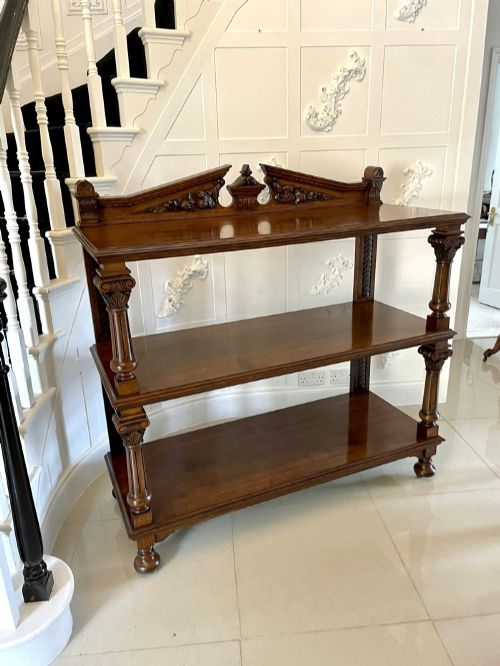
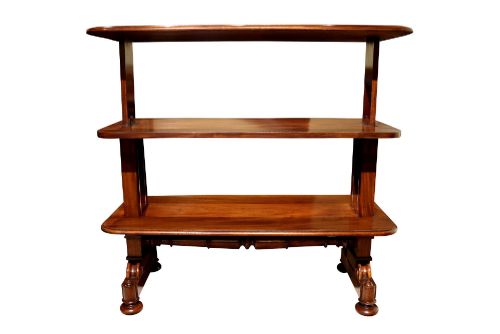
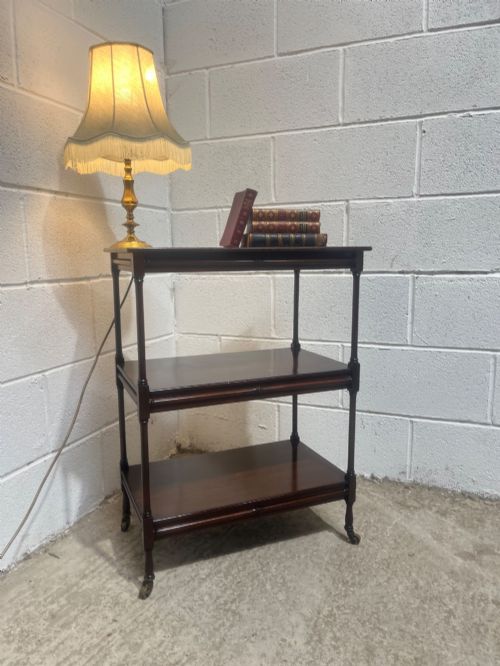
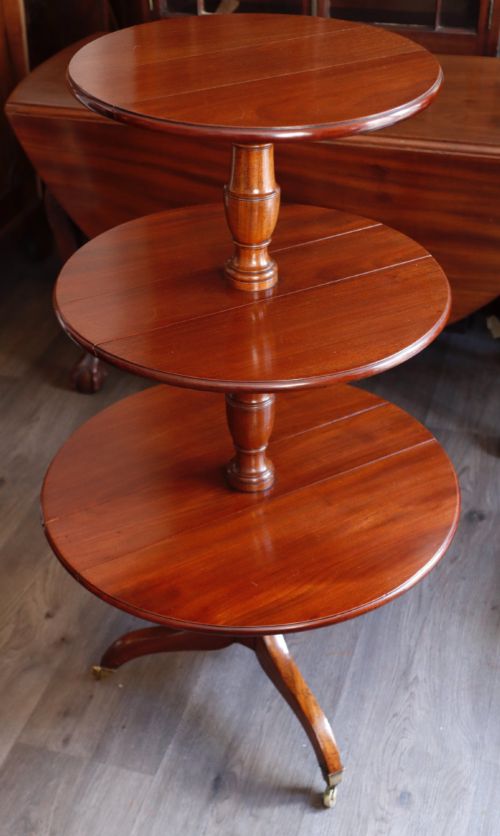
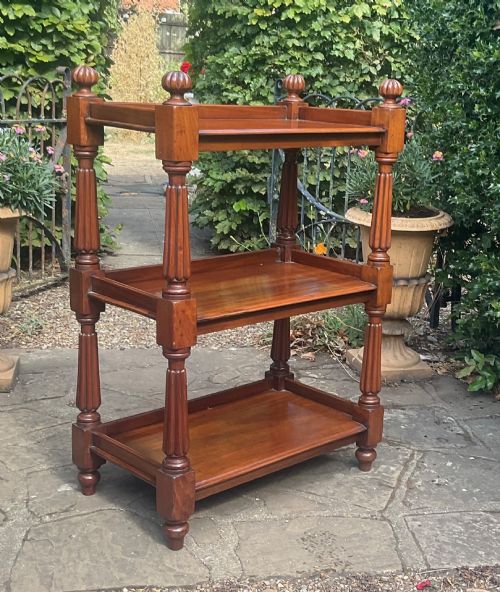
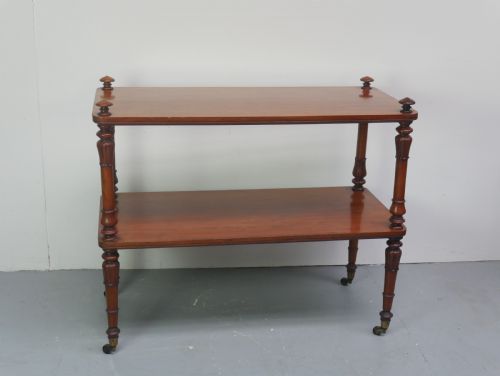
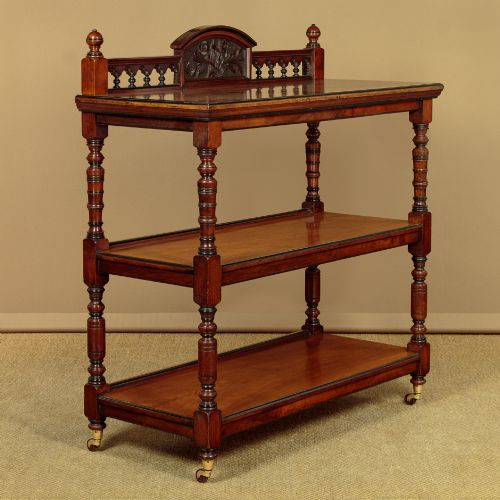
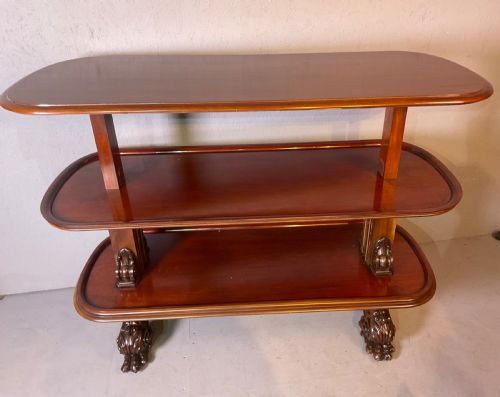
A victorian dumb waiter table is a tiered serving piece designed for dining rooms, functioning as a multi-level stand for dishes, decanters, and glassware. Buyers searching this phrase encounter multi-tiered structures, often featuring two or three tiers supported on tripod bases, pedestals, or robust columns.
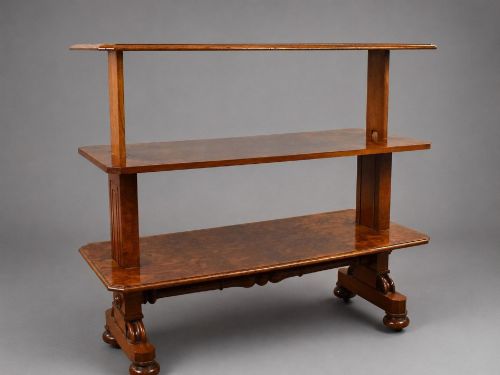
The versions most common on this page span the nineteenth century, including early examples alongside later Victorian interpretations. Forms range from revolving lazy susan tables to rise and fall mechanisms and static side serving furniture.
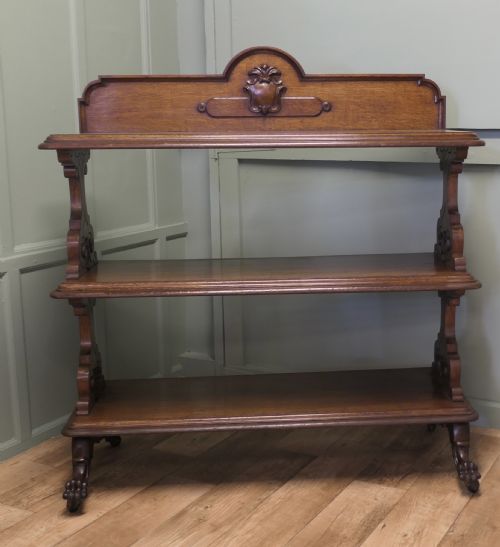
Makers utilised various timber types, principally mahogany, walnut, and oak, alongside rosewood and amboyna. These pieces frequently double as etageres, trolleys, or buffets, designed to stand beside dining tables during meals.
How they were made
Cabinet makers constructed these serving pieces primarily from solid hardwoods and select veneers, employing mahogany, walnut, oak, and rosewood. Structural elements often integrated brass fittings, such as castors, handles, and mechanical rise and fall components.
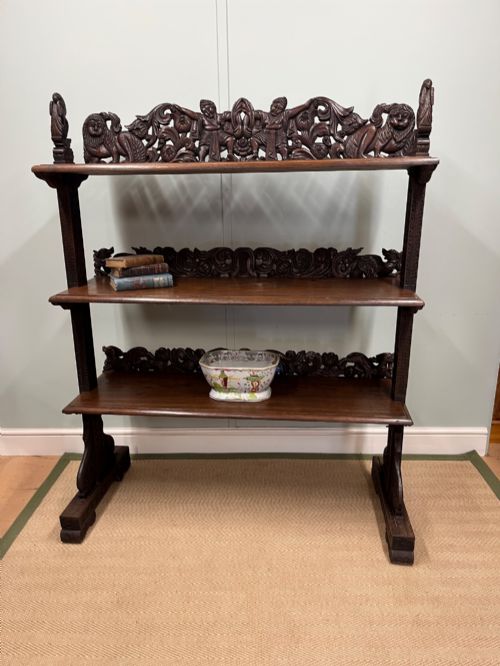
Construction techniques included tripod pedestals with revolving mechanisms, multi-tiered shelving connected by turned columns, and occasionally complex metamorphic actions. Surfaces showcased rich grain patterns, sometimes accented with ebonised details, carving, or ceramic inserts.
What varies in quality
Quality separates through the selection of timber and the precision of the mechanics, distinguishing simple utility items from high-end dining accessories. Superior pieces display finely figured mahogany or burr walnut veneers alongside robust, smooth-running revolving mechanisms and original castors.
Carving depth and execution differentiate standard production from finer craftsmanship, particularly in oak and amboyna variants. The integrity of joints, stability of tiered pedestals, and presence of specialist patents dictate the standing of an individual table.
The Victorian Dumb Waiter Table Glossary
- Dumb waiter
- A multi-tiered serving table used in dining rooms to hold food, drink, and tableware without needing servants present.
- Etagere
- A piece of furniture consisting of a set of open shelves for displaying small objects or serving items.
- Lazy susan
- A revolving apparatus placed on a table or tier to assist in moving dishes easily between diners.
- Rise and fall
- A mechanical feature allowing the height of a table tier or surface to be adjusted.
- Tripod base
- A three-legged support structure commonly found beneath the central pedestals of these serving tables.
Victorian Dumb Waiter Table: Frequently Asked Questions
What is a Victorian dumb waiter table used for?
These tables were placed in dining rooms to hold extra dishes, wine decanters, and serving utensils during meals. They allowed diners to help themselves without requiring attendants in the room.
Today, they function well as side tables, drinks stands, or display surfaces in living spaces and dining areas.
What woods were used for these tables?
Makers predominantly worked with mahogany, walnut, and oak during the nineteenth century. Finer examples incorporated burr walnut, amboyna, rosewood, or ebonised wood.
Brass was frequently utilised for castors, hinges, and mechanical components on adjustable stands.
How do I care for a antique wooden dumb waiter?
Keep the timber away from direct heat sources and strong sunlight to prevent the veneers and solid wood from drying out or splitting. Dust regularly with a dry cloth and apply occasional specialist wax to maintain the finish.
Avoid placing damp glasses directly on the wooden tiers without coasters.