




Victorian Drop Trunk Clock
A victorian drop trunk clock brings reliable timekeeping and classic timber cases to the wall, offering both practical utility and period character.
Victorian Drop Trunk Clock
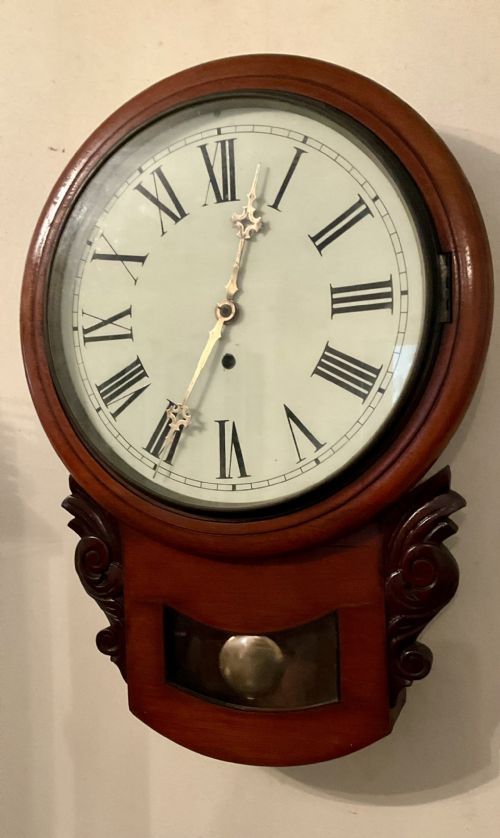
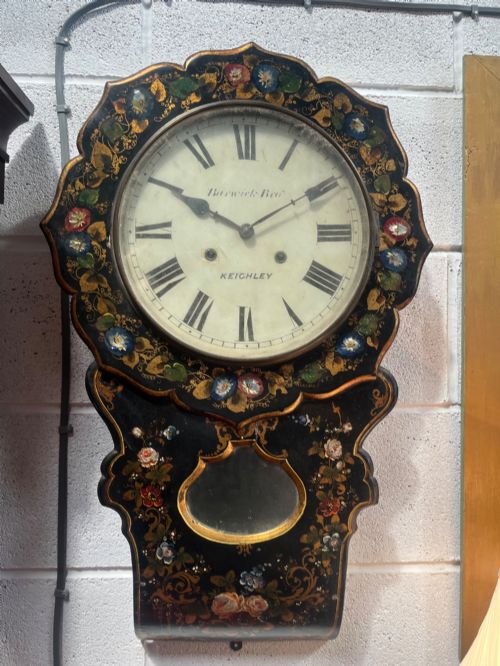
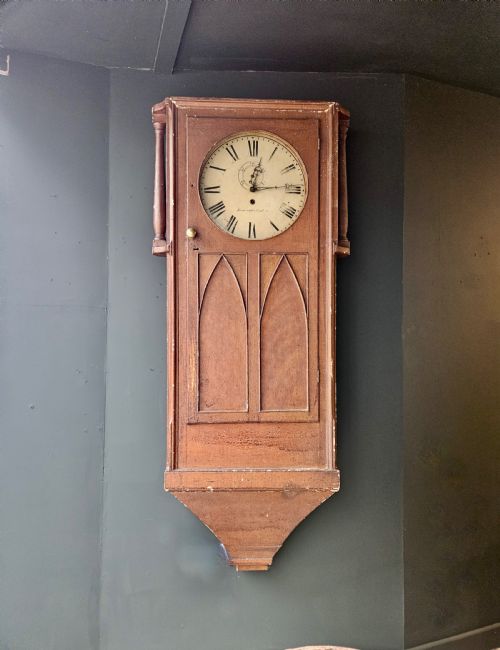
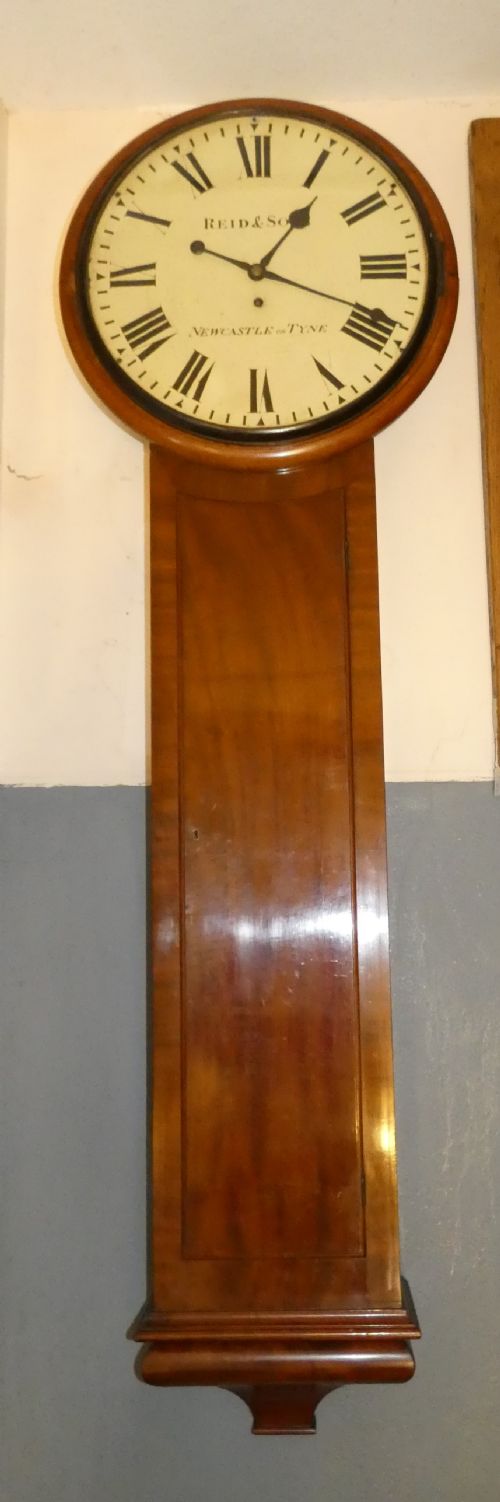
A victorian drop trunk clock is a wall-hanging timekeeper featuring an upper dial surround and an extended lower case, often called a drop dial or drop trunk clock. These pieces appear frequently from nineteenth-century English workshops, showing styles that span the Victorian era, Regency period, and Gothic Revival forms.
Most examples found on this page consist of wall clocks housed in rich timbers with glass viewing doors, designed to hang securely in hallways, offices, and domestic rooms. The form combines a prominent circular bezel for reading the hours with a lower trunk that accommodates the drop of the pendulum or weight.
Assessing quality in these clocks
The standard of a victorian drop trunk clock rests heavily on the crispness of the timber cabinetwork, the depth of rosewood or mahogany grain, and the presence of specialist maker signatures on the dial or movement. Finely executed brass bezels and subtle inlay differentiate superior examples from plain utility pieces.
Internal movement sophistication also divides the range, particularly single versus twin fusee mechanisms that dictate strike capabilities and timekeeping precision. Original painted decoration and well-preserved glass doors maintain the historical integrity of the piece.
Several clocks carry the names of nineteenth-century owners and provincial makers painted directly onto their enamel faces.
Halliday & Rich·John Walker·R. Roberts·Joseph Mansfield·J.W. Enock·Webb of Frome·C. Coleman·Mark Bartley·Sansom·James Bell
The Victorian Drop Trunk Clock Glossary
- Fusee
- A conical pulley connected to the mainspring by a chain or cord, designed to equalise the torque as the spring unwinds. This mechanism ensures consistent power delivery to the gear train for accurate timekeeping.
- Drop Dial
- A clock face mounted on a wooden case that extends downward into a trunk to house the pendulum. This specific silhouette became a staple of nineteenth-century wall clock design.
- Enamel
- A glassy substance fused to a metal dial plate to provide a smooth, white surface for painted numerals. Enamel dials require careful handling to prevent chipping or hairline cracking.
- Regulator
- A high-precision clock designed for accuracy and often featuring a seconds sub-dial or weight-driven movement. These clocks served as time standards for other domestic instruments.
Victorian Drop Trunk Clock: Frequently Asked Questions
Where should I hang a drop dial clock?
Mount the clock on a sturdy interior wall at a comfortable viewing height, ensuring it hangs away from direct drafts and strong sunlight that might affect the timber.
Positioning it on a solid partition wall also helps the pendulum swing freely without interference from vibrations caused by heavy household footfall.
How do fusee movements work?
A fusee movement uses a conical drum and a chain to regulate the pull of the mainspring as it winds down over the eight-day cycle.
This clever mechanical arrangement provides even force to the gears from a fully wound spring to an almost empty one, maintaining consistent timekeeping.
How do I identify a Victorian period clock?
Look for specific timber choices like rosewood and mahogany, often paired with brass bezels, painted enamel dials, and traditional fusee movements characteristic of nineteenth-century British production.
Maker signatures painted on the dial face or stamped onto the brass backplate frequently provide a direct link to a recorded workshop and active decade.
Are these clocks difficult to maintain?
Routine care involves keeping the glass door clean and occasionally dusting the polished mahogany or rosewood case with a dry cloth to protect the timber finish.
Internal movements require professional cleaning and lubrication every few years to ensure the gear train and pendulum continue to operate smoothly.