



Victorian Dog Portrait Art
Victorian dog portrait art captures canine companions in oils, watercolours and needlework from the nineteenth century.
Victorian Dog Portrait Art
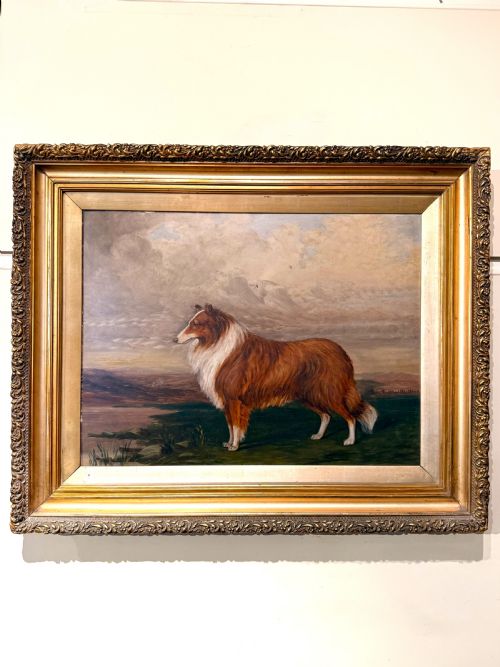
Victorian dog portrait art encompasses painted and worked representations of dogs produced throughout the nineteenth century. These pieces record specific animals, working hounds and household pets through the brush of academic painters and folk artists alike.
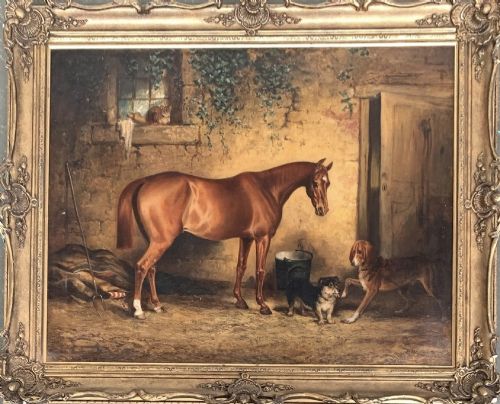
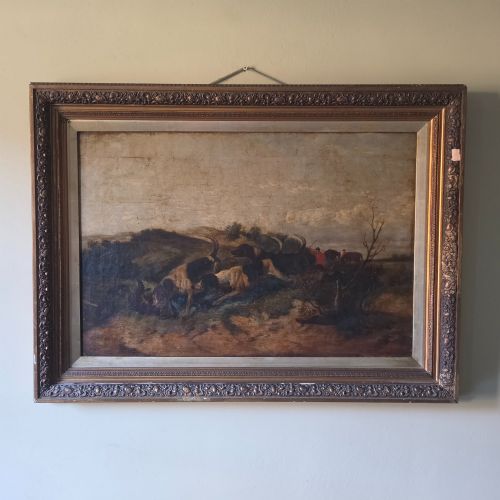
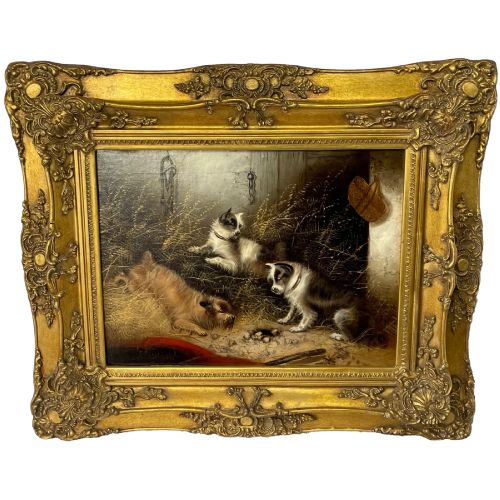
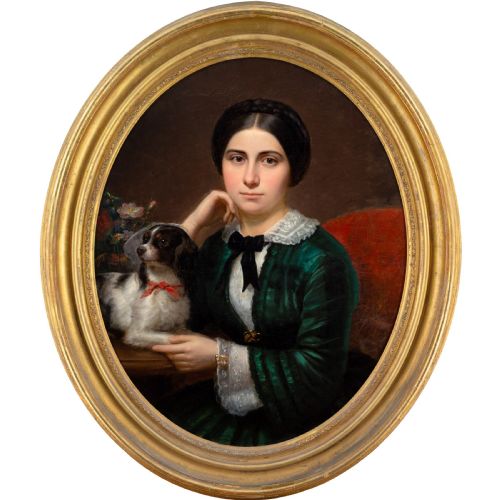
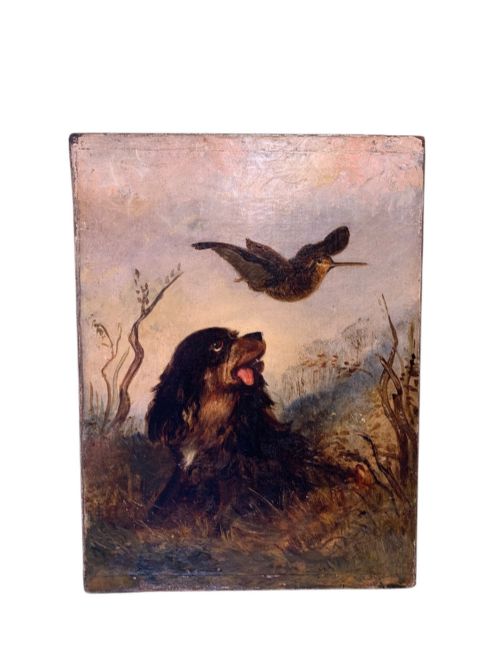
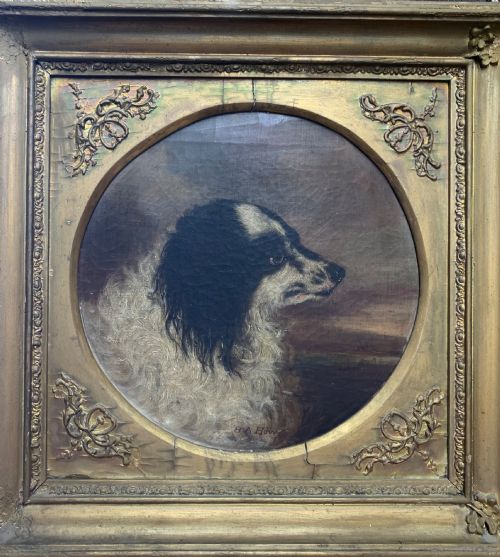
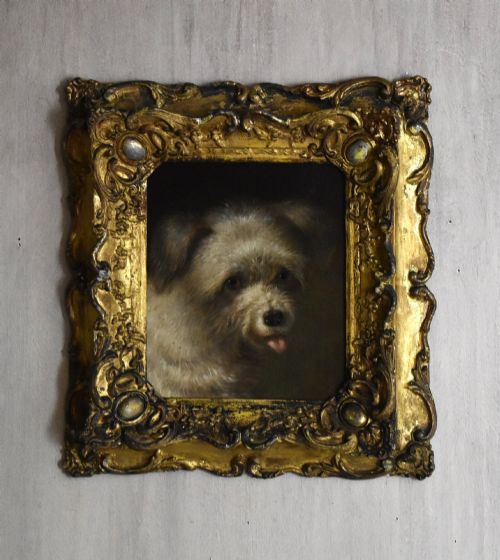
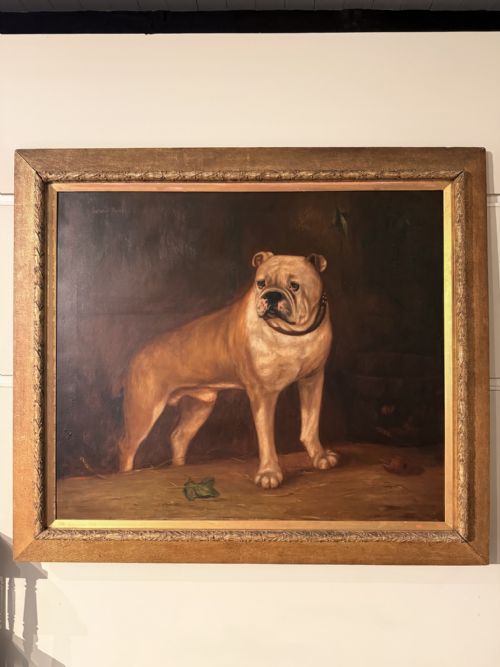
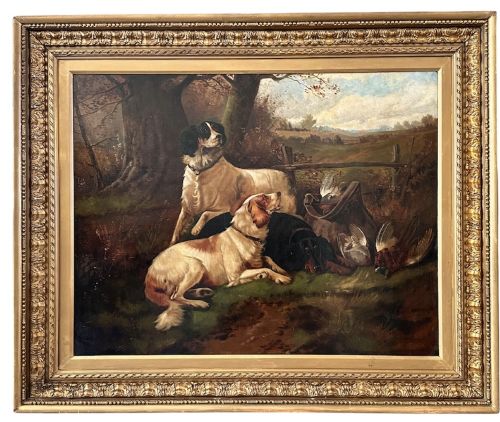
The selections available here rely heavily on oil on canvas and oil on board, frequently set within original giltwood or burr maple frames. Canvases range from intimate studies of spaniels and terriers to expansive landscapes featuring gun dogs and hunt packs.
Materials and methods
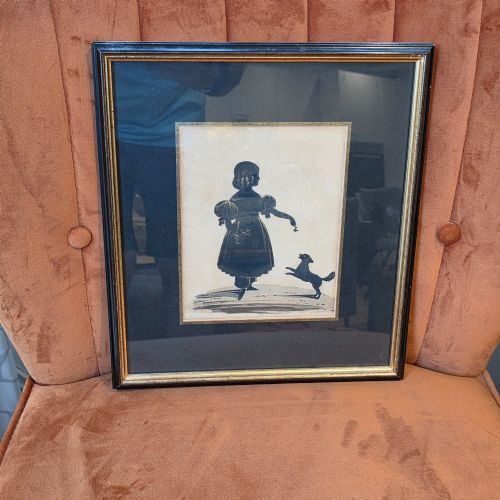
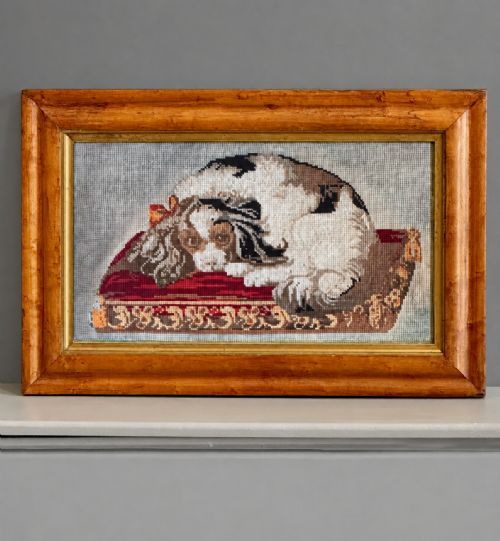
Artists of the period built oil paintings using layers of oil paint on stretched canvas or wooden boards, often incorporating fine preparatory sketching. Works also include needlework Berlin wool work, cut paper silhouettes and pencil drawings on paper.
Framing forms an integral part of the physical object, utilising moulded giltwood and timber frames contemporary with the artwork itself.
Several canvases record specific nineteenth-century hounds staring intently past the viewer, perhaps distracted by an unseen rabbit.
Assessing quality
Quality rests upon the artist's command of anatomy, texture and expression, distinguishing skilled observational painting from stiffer naive execution. Hand-rendered details in the fur, landscape and surrounding light separate finer studio output from standard decorative works.
Preservation of the original surface and the retention of a period-appropriate frame contribute substantially to the integrity of the piece.
Henry Barraud·William James Hubard·Valentine T. Garland·Martin Theodore Ward·John Sargent Noble·C R Breytle·John Emms·John Frederick Herring Senior·Arthur Wardle·William Barraud·Augustin Edouart·Sir Edwin Landseer·George E Sharpe·Colin Graeme Roe·John Trivett Nettleship·Fannie Moody·Edwin Frederic Holt·John Alfred Wheeler·Robert Cleminson
The Victorian Dog Portrait Art Glossary
- Berlin work
- A type of coloured wool needlework popular in the nineteenth century, charted on squared paper for stitching onto canvas. It allowed makers to produce detailed portraits of spaniels and household pets.
- Giltwood
- Timber coated with a thin layer of gold leaf or metal leaf over a prepared ground. This finish is frequently found on nineteenth-century picture frames.
- Regency
- The period spanning the early nineteenth century preceding the Victorian era, often noted in sporting and animal art for a particular clarity of line and palette.
- Sporting art
- Depictions of hunting, shooting, horses and hounds that formed a major genre of British painting. These works often recorded prized gun dogs alongside their owners in field landscapes.
Victorian Dog Portrait Art: Frequently Asked Questions
What is Victorian dog portrait art?
These works are nineteenth-century depictions of dogs created in various mediums including oil paint, watercolour, pencil and needlework. They range from formal commissions of named hounds to charming folk art representations of family pets.
Such pieces reflect the era's deep affection for animals and the rising status of pets within the Victorian household.
How were these dog portraits displayed?
Original owners hung these framed artworks in domestic interiors, country houses and libraries, often grouping sporting subjects together. The heavy giltwood and wood frames were selected to complement the decor of the period.
Today, they suit traditional and eclectic interiors alike, functioning as focal points on panelled or neutral walls.
Are these works painted from life?
Many professional animal painters worked directly from live animals or received commissions from owners to record their favourite hunting dogs and pets. Other pieces were executed after prominent animal artists like Sir Edwin Landseer.
Naïve and folk art examples relied less on academic proportion and more on capturing the direct character of the animal.
How do I identify the period?
Dating relies upon stylistic markers, artist signatures, framing materials and the physical construction of the canvas support or board. Costume in accompanying human figures and landscape conventions also help anchor works to the nineteenth century.
Examine the back of the canvas or frame for old inscriptions, labels and dealer stamps that provide historical context.