

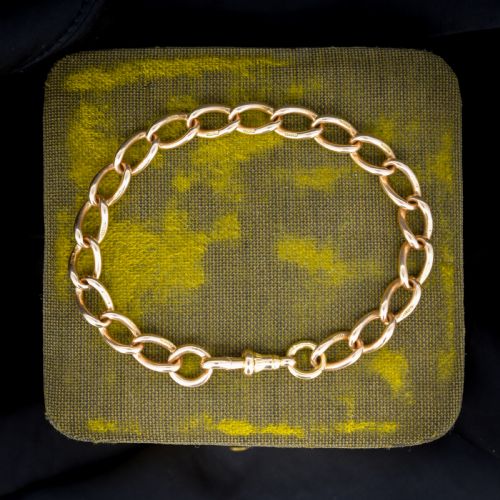


Victorian Dog Clip Chain
When you search for a victorian dog clip chain, you discover a practical piece of history designed to secure pocket watches and fobs.
Victorian Dog Clip Chain
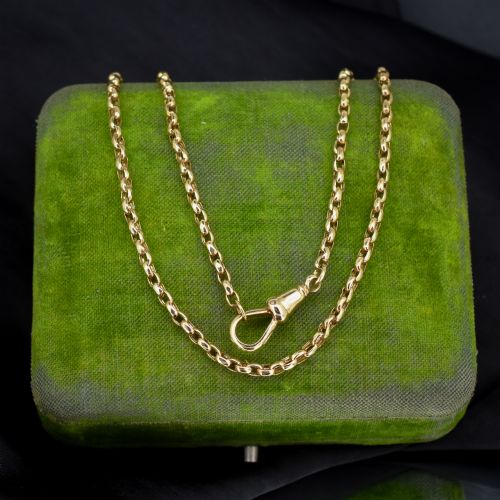
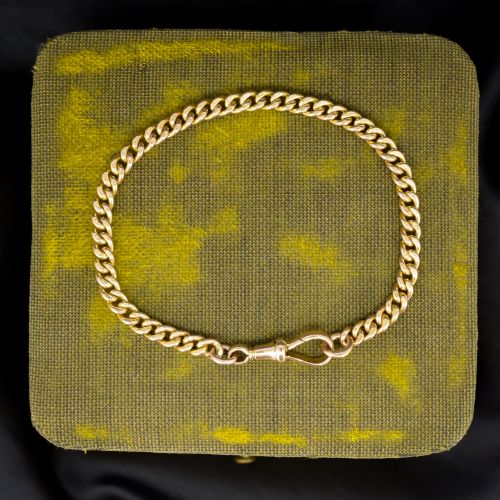
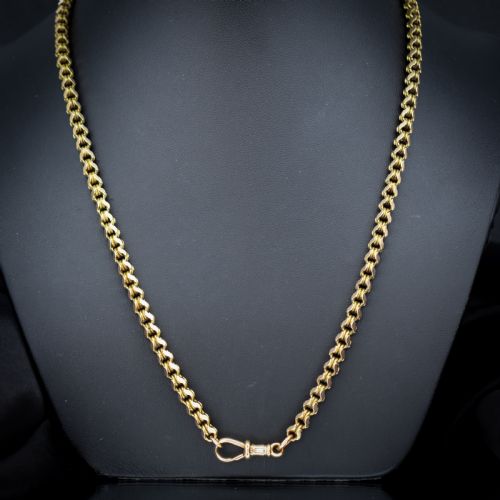
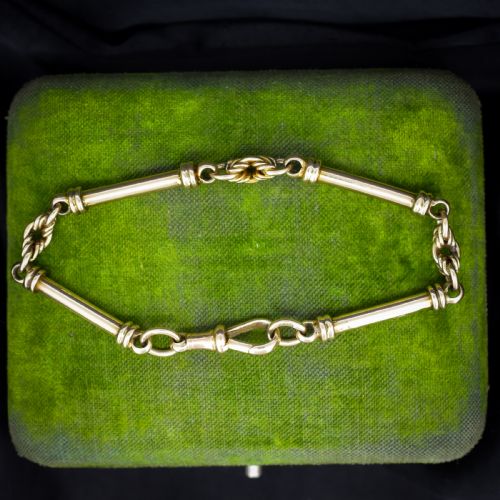
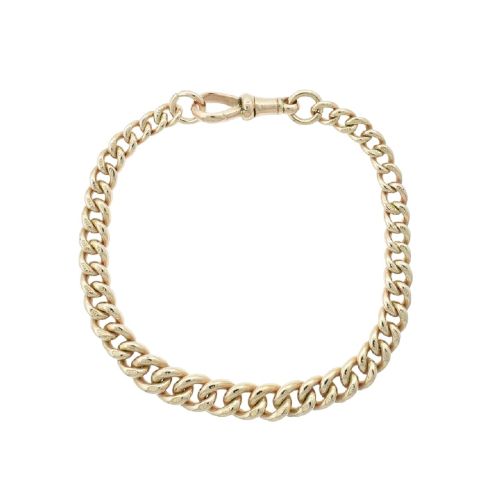
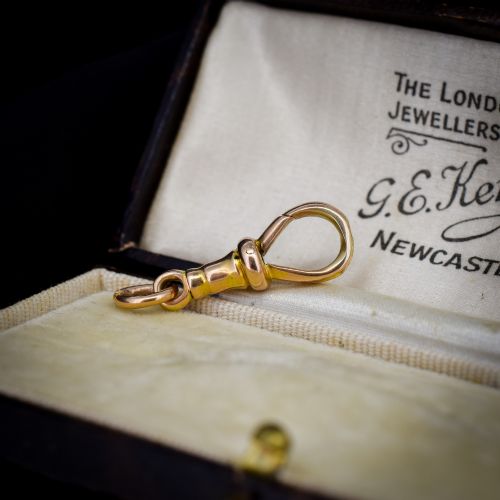
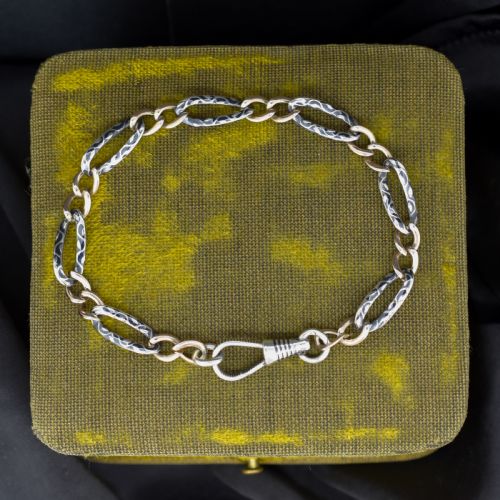
A victorian dog clip chain comprises flexible links of gold or silver terminating in a spring-loaded swivel fastener, originally worn by men and women to secure pocket timepieces. These pieces appear on this page as necklaces, bracelets, and convertible albert chains spanning the nineteenth and early twentieth centuries.
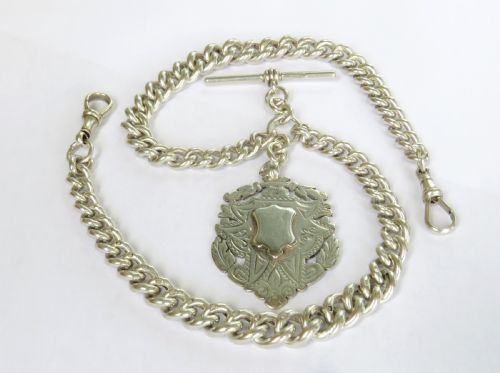
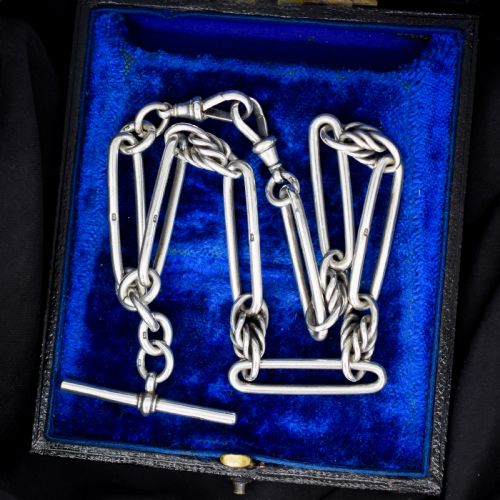
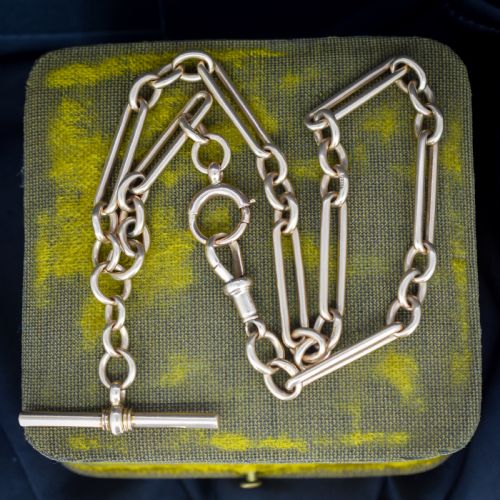
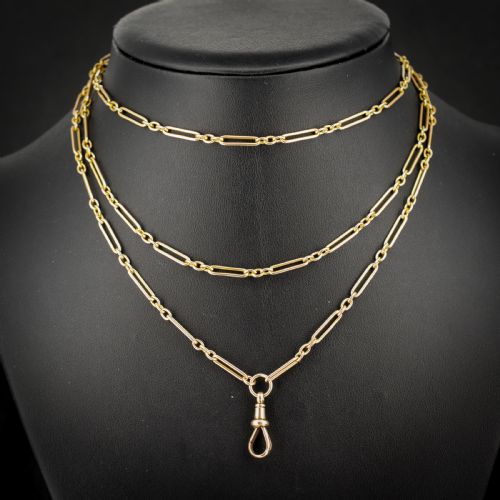
The most common form is the albert chain, named after Prince Albert, which often includes a T-bar for buttonhole attachment and one or two dog clips. You will also find longuards and muff chains designed to drape around the neck in considerable lengths, frequently adapted today for modern wear as layered necklaces or wrap bracelets.
Materials and construction
Goldsmiths and silversmiths utilised sterling silver and various grades of gold, notably nine-carat yellow, rose, and fifteen-carat gold, alongside rolled gold alternatives. Metal components were stamped, drawn into wire, or cast to form intricate link patterns such as curb, trombone, paperclip, and love knot variations.
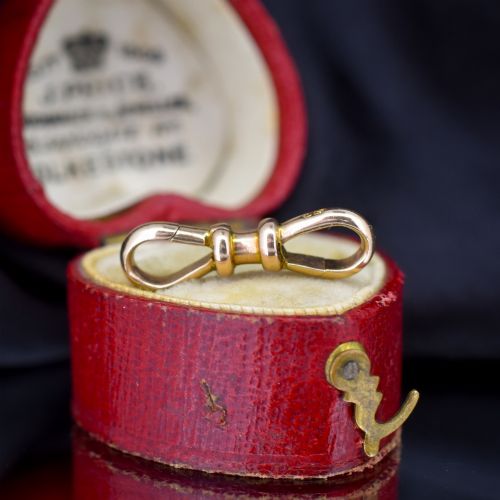
The defining mechanism, the dog clip, relies on a hand-assembled internal steel spring that operates a sliding tongue. Chains were constructed with closed soldered rings or patterned fancy links to balance everyday durability with visual elegance.
Listings feature items in nine-carat gold, fifteen-carat gold, sterling silver, and rolled gold across Victorian and Edwardian periods.
Factors of quality
Quality rests primarily on the integrity of the dog clip spring and the retention of crisp detail across patterned links. A strong, responsive snap in the swivel mechanism indicates a well-preserved clasp that has not lost its tension through decades of use.
Substantial weight and gauge thickness set superior examples apart from lighter iterations, particularly in solid fifteen-carat gold or heavy sterling silver curb links. Original un-mutilated lengths and complete matching components, such as intact T-bars and fully marked swivel clips, elevate the standing of any piece.
The Victorian Dog Clip Chain Glossary
- Dog clip
- A spring-loaded swivel clasp featuring a lever-operated tongue, originally designed to secure pocket watches to albert chains. This mechanism allows the attached charm or watch to rotate freely without twisting the metal links.
- Albert chain
- A pocket watch chain designed to be worn across a waistcoat or attached to a garment buttonhole via a T-bar. These chains often feature one or two dog clips at the terminals for securing timepieces and fobs.
- T-bar
- A short transverse bar of metal attached to the centre of a watch chain, slipped through a vest or buttonhole to anchor the piece. It serves as a diagnostic feature of traditional pocket watch jewellery.
- Longuard
- An exceptionally long chain designed to be worn doubled or looped around the neck, often fitted with a dog clip for suspending pocket watches or eyeglasses. They frequently measure over fifty inches in length.
- Curb link
- A type of jewellery chain formed of interlocking, uniform links that have been twisted slightly to lie flat against the skin. It provides a heavy, fluid drape suited to daily wear.
Victorian Dog Clip Chain: Frequently Asked Questions
How do you wear a longuard chain?
Longuard chains are exceptionally long pieces intended to be doubled over the neck or wrapped multiple times around the wrist as a bracelet. The generous length offers numerous styling configurations for modern wardrobes.
The integrated dog clip can be clipped directly onto a stationary ring or linked back onto the chain itself to create a secure loop.
Are these chains made of solid gold?
The listings include a mix of solid precious metals and rolled gold variants. Solid options feature hallmarks or tests for nine-carat, fifteen-carat, or eighteen-carat gold, as well as sterling silver.
Rolled gold examples consist of a thin layer of gold mechanically bonded to a base metal core. Hallmarks stamped directly onto the links or dog clips often reveal the specific metal purity and origin.
What is the difference between an albert and a muff chain?
An albert chain is shorter, usually measuring between twelve and twenty-four inches, and often incorporates a T-bar intended for buttonhole anchoring. A muff chain is significantly longer, designed to be worn around the neck without a T-bar.
Muff chains historically kept cylindrical hand-warming muffs attached during cold weather. Both styles consistently utilise the characteristic dog clip as a primary fastening device.