


Victorian Dog Artwork
Victorian dog artwork captures canine character through oil paintings, detailed etchings, and needlework from the nineteenth century.
Victorian Dog Artwork
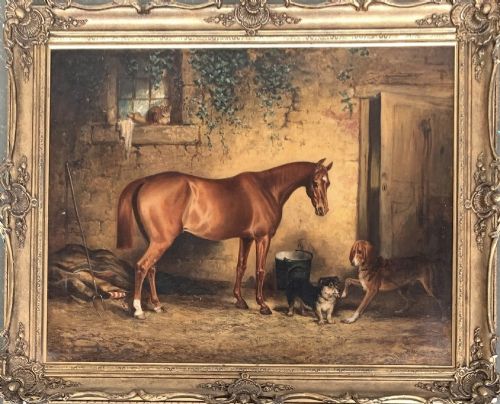
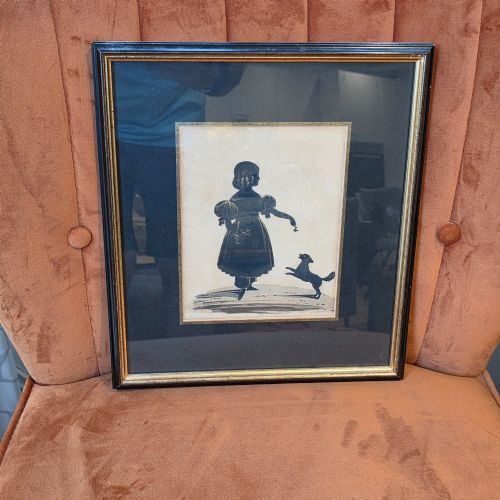
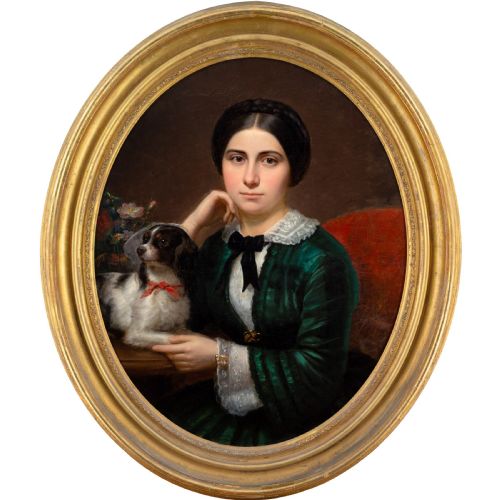
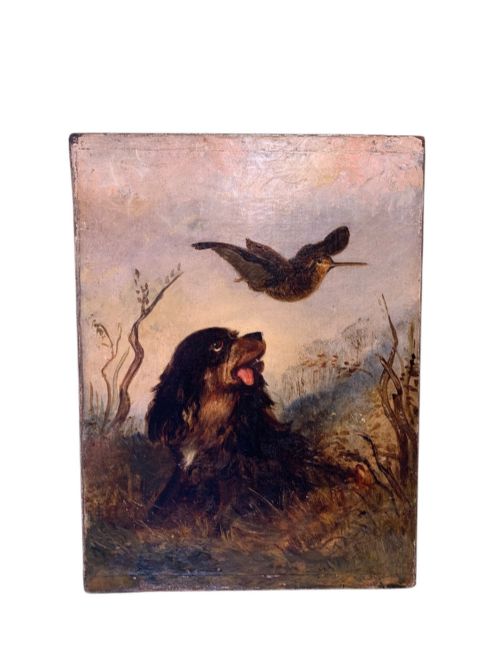
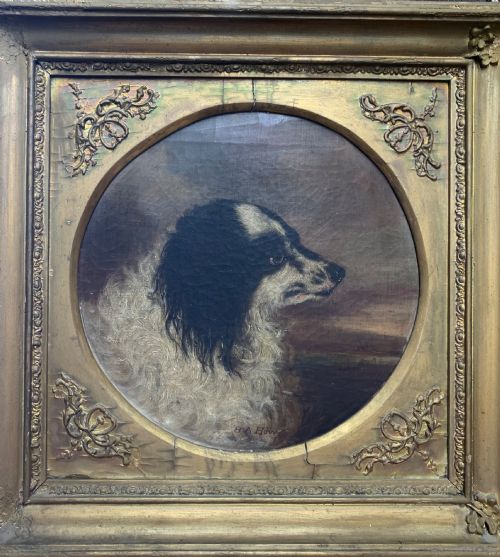
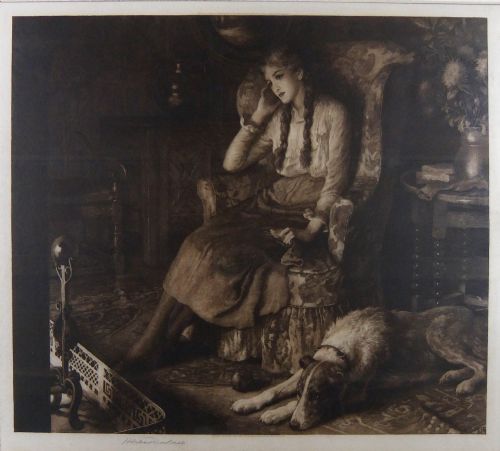
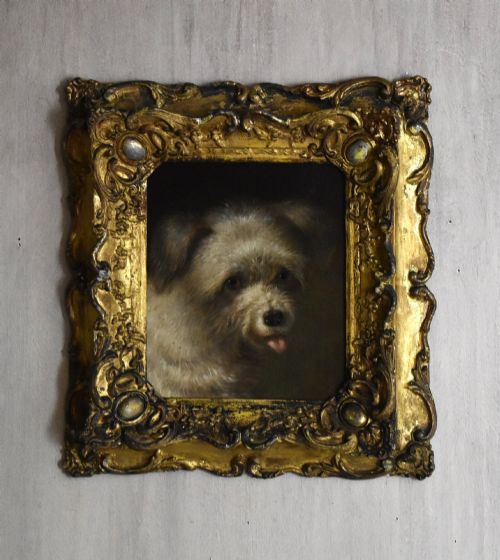
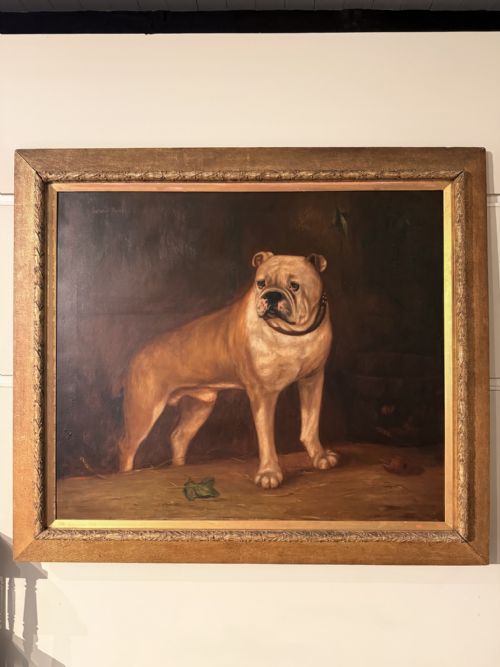
Victorian dog artwork encompasses canine subjects rendered across the nineteenth and early twentieth centuries in various media. These pieces include oil paintings, engravings, watercolours, and needlework depicting pets, gun dogs, and sporting hounds.
The works originate largely from British and French studios, reflecting the period's fascination with animal companionship and sporting life. Portraiture of individual pets shares space with narrative scenes of hounds in the field.
Most examples found on this page date from the mid-nineteenth century to the early twentieth century. They range from formal oil portraits framed in giltwood to intimate etchings on paper.
Materials and methods
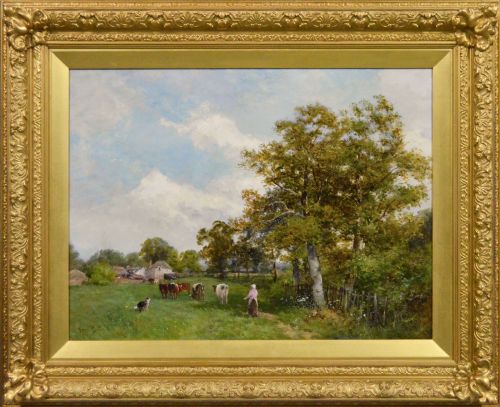
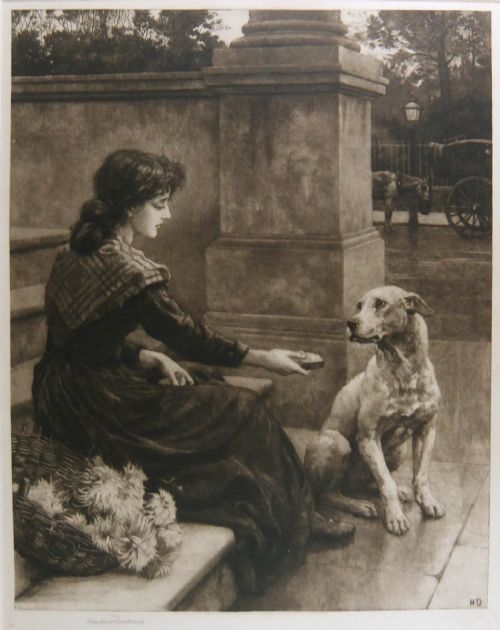
Artists painted primarily with oil paint on canvas or wooden boards, often framing the finished pieces in heavy giltwood moulding. Printmakers utilised copper plates to produce original etchings on paper.
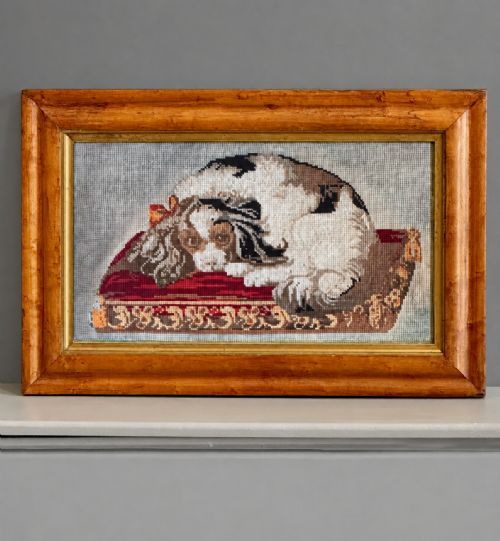
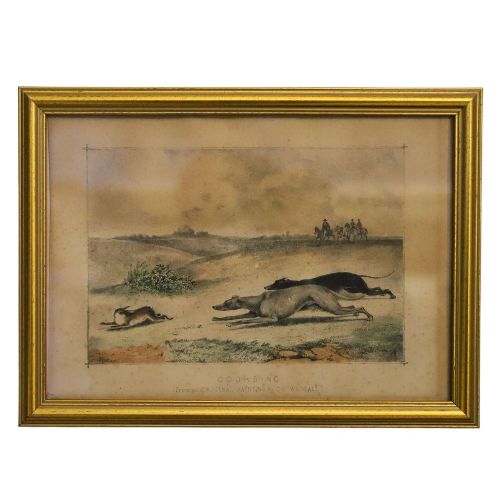
Needlework examples employed coloured threads in Berlin work techniques, worked upon canvas and mounted in burr maple frames. Lithographs and chromolithographs offered mass reproduction of popular sporting subjects.
Listings feature oil on canvas, paper, and giltwood from the nineteenth century.
Judging quality
Quality rests upon the artist's ability to render canine anatomy and individual expression with anatomical conviction. Superior paintings capture the texture of fur and the alert posture of a terrier or setter rather than relying on generic outlines.
The preservation of the original framing, whether a burr maple border or a leaf-gilded wooden frame, contributes significantly to the integrity of the piece. Crispness of line in etchings and the retention of pigment vibrancy in oils distinguish finer works from secondary studio output.
Henry Barraud·William James Hubard·Valentine T Garland·David Bates·Herbert Dicksee·Martin Theodore Ward·John Sargent Noble·Sir Edwin Henry Landseer·C H Weigall·Horatio Henry Couldrey·Claude Cardon·John Emms·Arthur Wardle·William Barraud·George E Sharpe·Colin Graeme Roe·John Trivett Nettleship·Fannie Moody·Edwin Frederic Holt·John Alfred Wheeler
The Victorian Dog Artwork Glossary
- Berlin work
- A type of coloured needlework popular in the nineteenth century, charted on squared paper and stitched on canvas. This technique allowed domestic makers to copy popular paintings using wool.
- Chromolithography
- A planographic printing method used to produce multicoloured images. It layers different coloured inks on stone to create faithful reproductions of original artworks.
- Etching
- A printmaking process where lines are bitten into a metal plate with acid before being inked and pressed onto paper. The resulting image exhibits fine, characteristic burr lines.
- Giltwood
- Wood that has been coated with a thin layer of gold leaf or gilt powder. It is commonly found on nineteenth-century frames designed to complement oil paintings.
- Lithography
- A flat-surface printing method based on the mutual repulsion of oil and water. Artists drew directly onto limestone blocks to produce prints.
Victorian Dog Artwork: Frequently Asked Questions
What subjects appear in Victorian dog artwork?
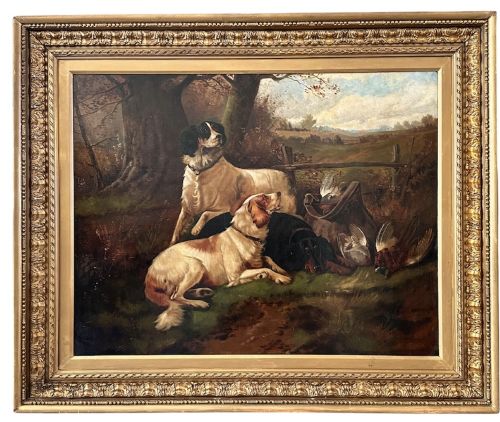
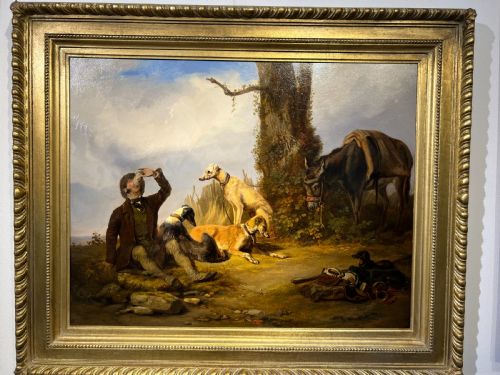
Canine subjects range from prized gun dogs and hunt packs to individual pet portraits and narrative scenes. Artists frequently depicted terriers, spaniels, collies, and hounds either alone in landscapes or alongside their owners.
Sporting dogs are often shown in the field with game, while pet portraits emphasise the distinct personality and physical conformation of a favoured animal.
How do I care for antique dog paintings?
Protect oil paintings and works on paper from direct sunlight to prevent fading of pigments and degradation of the canvas or paper support. Maintain stable indoor humidity levels to avoid cracking in the paint layer or warping of wooden stretchers and frames.
Dust giltwood frames gently with a dry, soft brush rather than liquid cleaners. Leave deeper conservation work to professional restorers.
How are periods and dates identified?
Dates rely upon artist signatures, exhibition records, and stylistic markers characteristic of the nineteenth century. Costume details in human figures or the specific framing materials also provide clues to the era of creation.
Many works bear inscriptions on the reverse or contemporary documentation naming the subject and artist.
Where were these pieces displayed originally?
Original owners hung these artworks in country houses, sporting lodges, and urban drawing rooms to signal status and affection for field sports. Large oil paintings anchored principal reception rooms, while smaller etchings suited intimate studies.
Needlework panels often decorated domestic interiors as handmade expressions of popular canine motifs.