



Victorian Animalier Art
Victorian animalier art brings intense realism to depictions of domestic creatures, farmyard groups and powerful wild beasts through oil paintings, works on paper and bronze sculptures.
Victorian Animalier Art
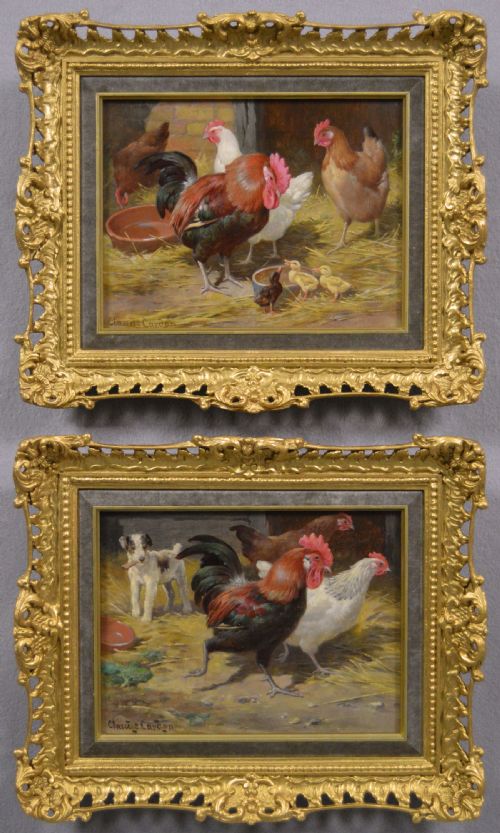
Victorian animalier art focuses squarely on the natural behaviour and physical forms of animals, ranging from farmyard poultry and domestic cats to exotic big cats and birds of prey. When you examine these works, you encounter subjects created across the nineteenth century and into the early twentieth century.
The objects take several distinct physical forms on this page, dominated by oil paintings on canvas alongside framed drawings on paper and bronze sculptures. Many pieces bear attribution to named artists or established followers who specialised in capturing the character of beasts with meticulous accuracy.
How They Were Made
These works rely on traditional nineteenth-century studio techniques, predominantly employing oil paint applied to canvas or specialised studies executed on paper. Artists also utilised chromolithography to reproduce detailed animal studies for broader distribution.
Three-dimensional subjects demand metal casting expertise, seen in bronze sculptures that capture muscular tension and feathered texture. Frames typically utilise wood and gold leaf or giltwood construction to complement the visual weight of the paintings.
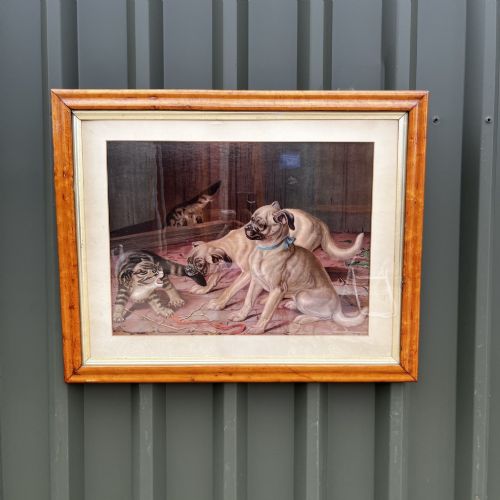
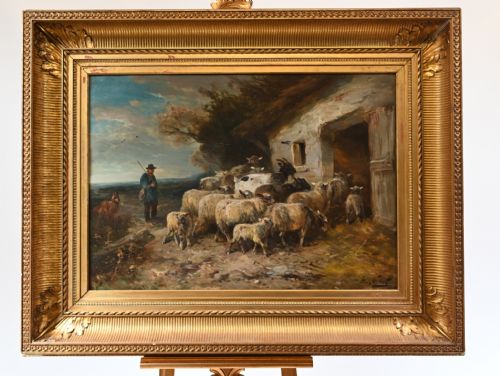
Pugs, cats, lions, falcons, and flocks of sheep share the stage, proving that Victorian artists loved both the fierce and the fluffy.
What Varies in Quality
Quality in these animal studies rests upon the artist's command of anatomy, posture and light, where superior hands render fur, feathers and muscle with anatomical precision rather than generic convention. The distinction between a master's hand and a follower lies in the vitality and convincing weight of the creature depicted.
The integrity of the framing materials, such as period giltwood and gold leaf surrounds, contributes to the overall presence of paintings on canvas. Furthermore, the crispness of the cast in bronze sculptures determines how sharply fine details like fur texture and facial expression emerge.
Valentine T. Garland·Horatio Henry Couldrey·Henry Schouten·Claude Cardon·Eugene Verboeckhoven·Edgar Hunt·John Macallan Swan·Geza Vastagh·Cuthbert Edmund Swan·Pierre Jules Mène
The Victorian Animalier Art Glossary
- Animalier
- Artworks that focus primarily on the representation of animals, whether domestic livestock, pets or exotic wildlife. This genre flourished in sculpture and painting during the nineteenth century.
- Chromolithography
- A planographic colour printing technique used to produce multi-coloured prints. It allowed affordable reproductions of detailed animal studies on paper.
- Giltwood
- Timber that has been coated with a thin layer of gold leaf or gold paint. It frequently forms the decorative frames enclosing nineteenth-century oil paintings.
- Realism
- An artistic movement focused on depicting subjects truthfully and without idealisation. In this context, it manifests as accurate observation of animal anatomy and behaviour.
Victorian Animalier Art: Frequently Asked Questions
What is Victorian animalier art?
Victorian animalier art comprises paintings, works on paper and bronze sculptures dedicated to the realistic portrayal of animals. These pieces capture everything from farmyard chickens and domestic cats to exotic big cats.
The genre reflects nineteenth-century naturalism, where artists observed creatures with scientific precision and artistic skill. Such works appeal to collectors who appreciate both fine technique and the character of animals.
How do I identify periods in animalier art?
Identifying the period involves examining the medium, the style of the frame, and any artist signatures or stamps. Nineteenth-century works often employ oil on canvas with traditional giltwood surrounds.
Changes in clothing styles, printing methods like chromolithography, and biographical dates of the artists help narrow down the execution date. Canvas markings and paper quality also offer clues to the era of production.
Where were these pieces displayed?
During the nineteenth century, framed animal paintings and bronze sculptures occupied the reception rooms and studies of domestic homes. Wealthy patrons displayed them to signal an educated appreciation of nature and fine craft.
Today, these artworks suit similar domestic settings, mounted securely on walls or placed on sturdy wooden furniture where their detailed textures remain visible.
How should I care for oil paintings and bronzes?
Oil paintings on canvas require stable indoor humidity and protection from direct sunlight to prevent the paint from cracking and the canvas from slackening. Dusting should occur gently with a soft, dry brush.
Bronze sculptures need occasional light dusting with a clean cloth and should be kept away from excessive moisture. Avoid harsh chemical cleaners that can strip the original patina from the metal surface.