



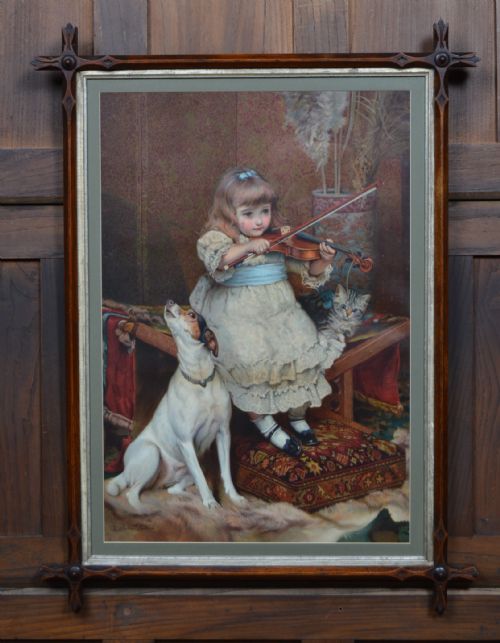
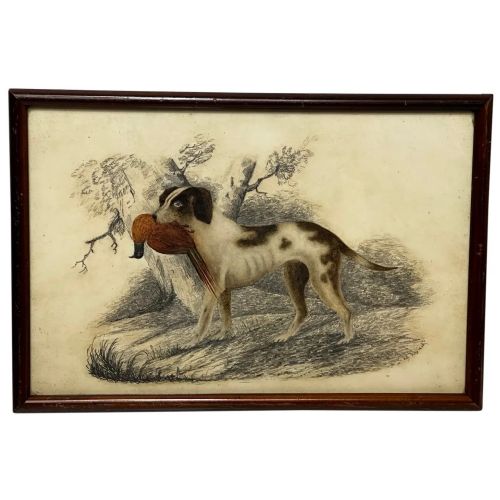


Victorian Dog Art Print
These Victorian dog art print pieces capture nineteenth-century canine subjects through prints, etchings and paintings to hang on your wall.
Victorian Dog Art Print
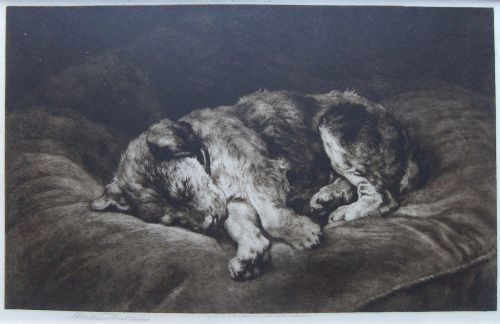
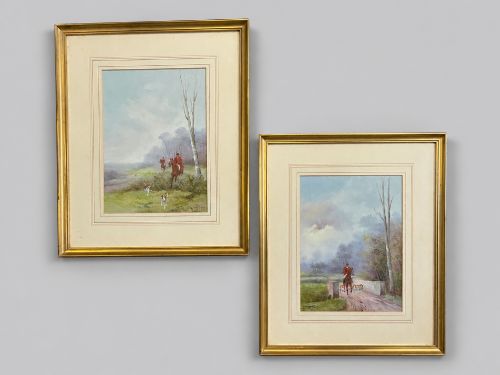
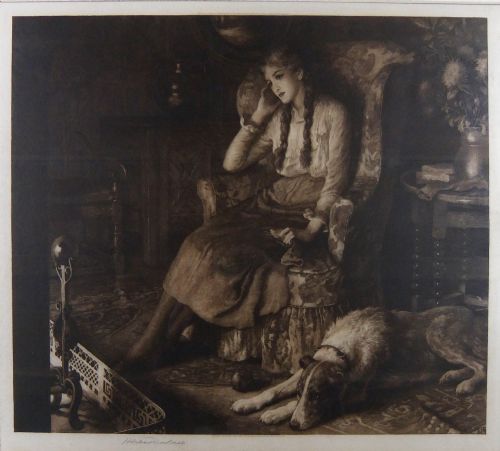
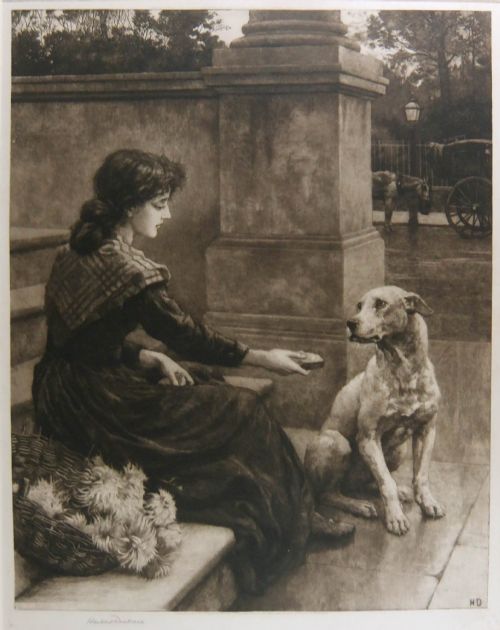
A victorian dog art print comprises framed prints, engravings, lithographs and etchings depicting sporting dogs, hunting hounds and household pets. These works capture nineteenth-century canine subjects across the Victorian and Edwardian periods.
Most items originate from the nineteenth century, extending into the early twentieth century through works by notable printmakers. Buyers encounter everything from large chromolithographs to intimate drypoint etchings.
Materials and techniques
Works utilise paper, ink and glass housed within wood, gilded wood or gilt wood frames. Printmakers employed etching, lithography and chromolithography to produce detailed imagery.
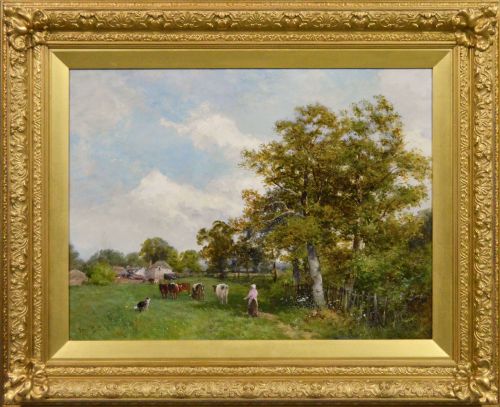
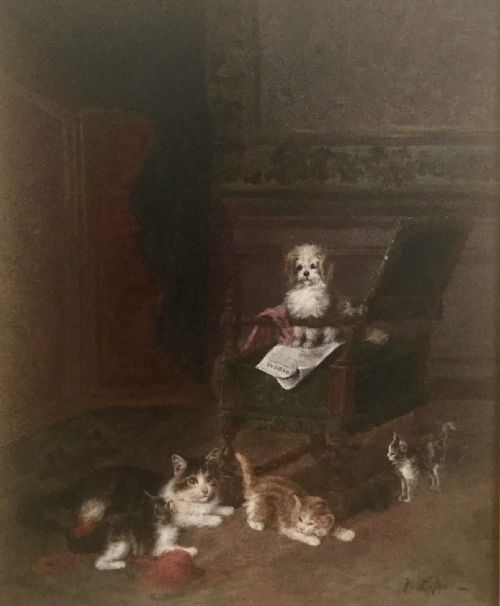
Painters applied oil on canvas and watercolour on paper to record canine forms. Many prints and etchings remain framed behind glass to protect the paper substrate.
Victorian Dog Art Print Retail Price Guide 2026
Typical asking prices for victorian dog art print among the pieces listed under this phrase on Sellingantiques today, from the lower quarter to the upper quarter. They describe what is for sale here now, not the wider market.
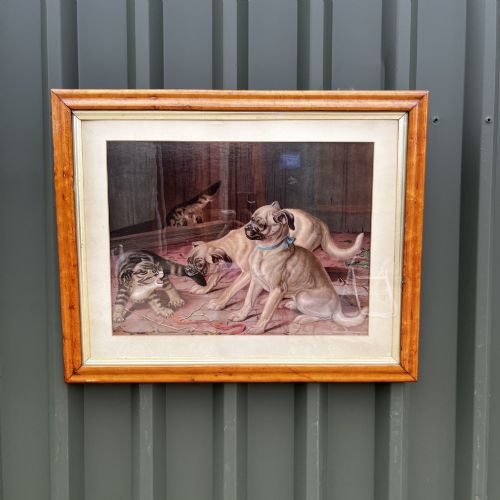
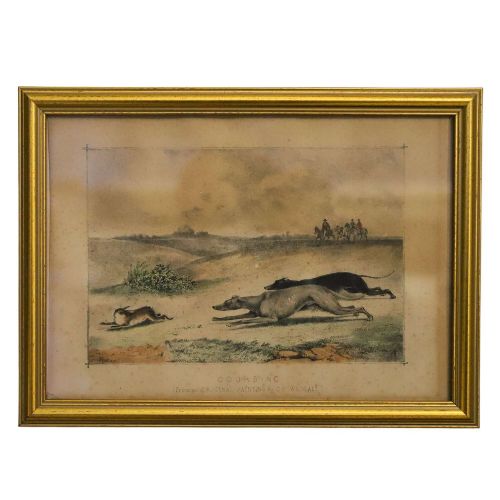
Pugs, bulldogs, terriers and coursing greyhounds peer out from these walls, proving that nineteenth-century households loved their dogs just as much as we do.
Evaluating quality
Quality rests upon the clarity of the print impression or the brushwork within the painting. Original etchings and drypoints display sharp plate marks and fine line definition, whilst chromolithographs rely on precise colour registration.
The character of the framing material contributes to the overall presentation, with period gilded wood frames enhancing the visual weight of the artwork.
David Bates·Herbert Dicksee·C. H. Weigall·Horatio Henry Couldrey·Paul Jones·Charles Burton Barber·Landseer·Jules Le Roy
The Victorian Dog Art Print Glossary
- Chromolithography
- A planographic printing technique that uses multiple limestone blocks to build up rich colour on paper. This method produced many nineteenth-century wall art reproductions.
- Drypoint
- An intaglio printmaking technique where an artist scratches directly into a metal plate with a sharp needle. This process raises a burr that holds ink to create soft, velvety lines.
- Lithography
- A planographic printing method based on the repulsion of oil and water on a flat stone surface. Artists use this technique to draw direct painterly marks for reproduction.
- Etchings
- Intaglio prints created by applying acid to bite lines into a metal plate before inking and printing. This technique allows for intricate detail in fine art reproduction.
- Sporting art
- Artistic representation of field sports, hunting dogs, game and livestock. Nineteenth-century examples often record specific breeds like pointers and greyhounds.
Victorian Dog Art Print: Frequently Asked Questions
How do I hang a framed etching safely?
Use picture hooks rated for the weight of the wood frame and ensure the wire is secure. Hang the piece away from direct sunlight to protect the paper and ink from fading.
Keep the artwork in a stable environment away from damp walls to preserve both the print and its period frame.
What is the difference between an etching and a lithograph?
An etching involves incising lines into a metal plate with acid or a needle to hold ink. A lithograph is printed from a flat stone or metal surface using oil-based inks.
Etchings often show a distinct plate mark impression in the paper, whereas lithographs rely on drawn surface texture.
Are these works original period pieces?
The selection includes original nineteenth-century drypoint etchings, lithographs, watercolours and oil paintings. Dates span from the Victorian era into the early twentieth century.
Each listing specifies the medium, whether an original print or a period painting.
How do I clean the glass on framed art?
Spray a small amount of glass cleaner onto a soft cloth rather than directly onto the frame. Wipe the glass gently to avoid liquid seeping beneath the rebate into the print.
Take care not to touch the gilded wood frame with harsh cleaning chemicals.