


Victorian Document Storage
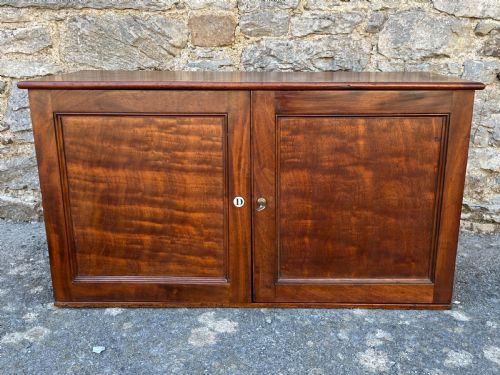
Victorian document storage offers sturdy mahogany deed boxes, tambour front filing cabinets, and leather correspondence cases built to organise nineteenth-century paperwork.
Victorian Document Storage
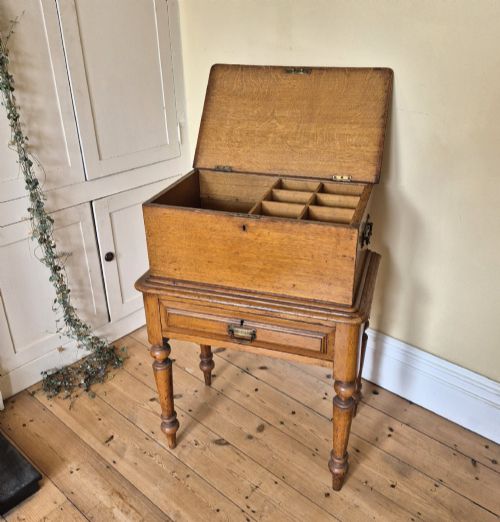
Victorian document storage encompasses practical office furniture and personal receptacles designed to secure papers, correspondence, and deeds. These pieces range from modest wooden writing slopes and leather correspondence cases to large military campaign chests and multi-drawer filing cabinets.
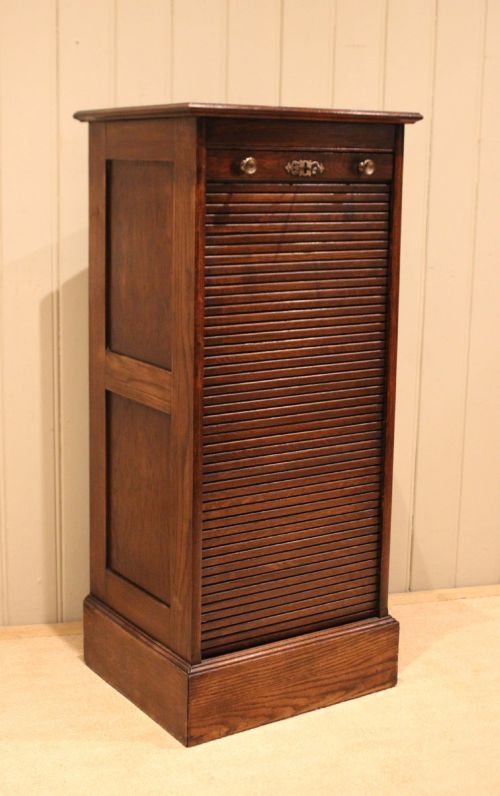
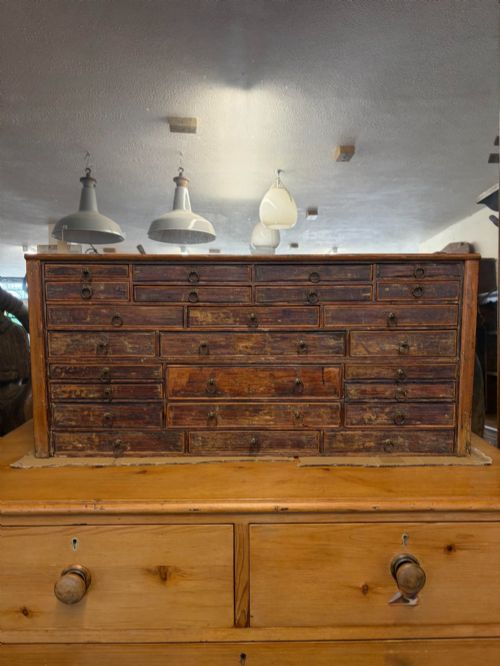
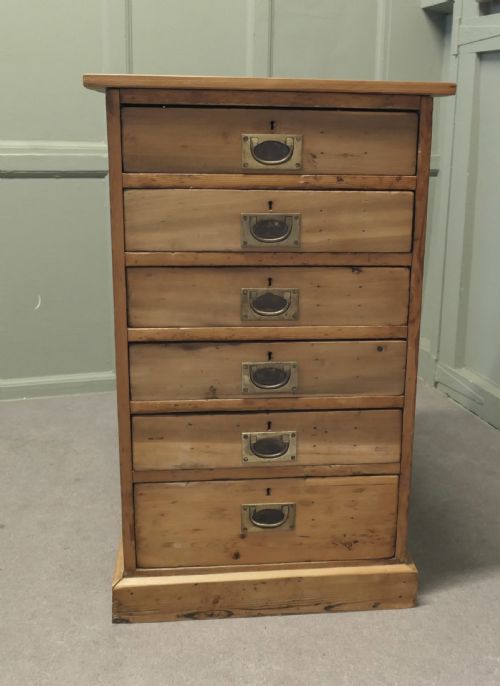
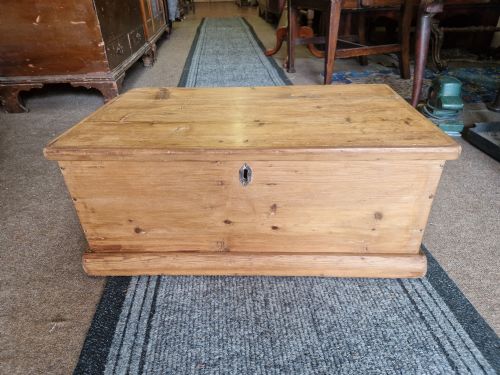
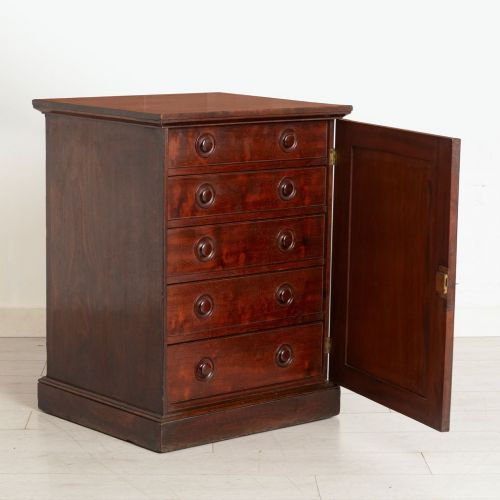
The versions most commonly met on this page include mahogany deed boxes, shallow pine filing drawers, and tambour front cabinets originating from the nineteenth century and the early twentieth century. Many items reflect institutional or domestic utility, employing timber frameworks to protect important records.
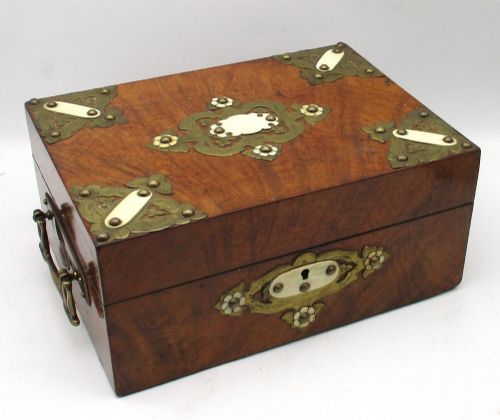
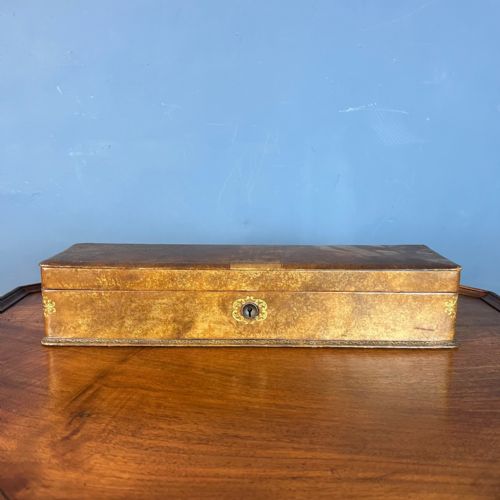
Makers and regional styles introduce significant variety, with pieces exhibiting Campaign, Arts and Crafts, Anglo-Indian, and Anglo-Chinese influences. Buyers encounter everything from simple pine boxes to elaborate burr walnut presentation boxes lined with fabric interiors.
Assessing Quality and Execution
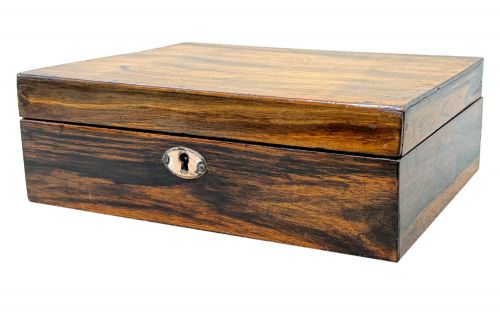
The distinction between standard utility items and superior examples rests upon the selection of timber, the refinement of internal fittings, and the integrity of brass hardware. Higher quality cabinets and boxes display choice veneers like burr walnut or rosewood, coupled with hand-cut dovetail joints and original working locks.
Specialised mechanical systems, such as patent letter files or complex tambour fronts, separate mass-produced office furniture from bespoke workshop commissions. Retained original linings, tooled leather panels, and documented provenance further elevate the standing of individual pieces.
Luxmore's of Ilfracombe·North Eastern Railway·Gillows·Amberg·W & J Milne
The Victorian Document Storage Glossary
- Tambour
- A flexible sliding shutter formed of narrow strips of wood glued to canvas, allowing access to the interior of a filing cabinet without swinging doors. This mechanism gained popularity in office furniture of the late nineteenth century.
- Campaign chest
- A modular set of drawers or a box built in two or more sections with recessed brass handles and corner brackets, designed for easy dismantling and transport by military officers. These pieces often utilise camphor wood, teak, or mahogany.
- Writing slope
- A portable box with a hinged, slanted lid that opens to reveal a writing surface, inkwell compartments, and storage space for stationery. When closed, it forms a flat box suitable for travel.
- Deed box
- A heavy storage receptacle, frequently constructed from mahogany or oak with an iron lock, utilised for securing legal documents and land deeds. Pairs of these boxes were common in domestic studies and offices.
- Marquetry
- Decorative veneer work where thin pieces of wood, shell, or ivory are fitted together to form pictorial or geometric patterns on the surface of a box or cabinet. It appears frequently on burr walnut and rosewood correspondence cases.
Victorian Document Storage: Frequently Asked Questions
How were campaign chests used?
Campaign chests were built in modular sections with recessed brass hardware so military officers could pack and transport their belongings during travels. The sturdy construction protected official documents and personal effects across rough terrain.
These pieces typically separated into two stacked halves, featuring flush carrying handles on the sides and robust timber frames.
What distinguishes a deed box from a jewellery box?
Deed boxes are utilitarian containers, usually made of plain mahogany or oak, equipped with sturdy locks to secure legal papers and contracts. They prioritise robust construction and simple rectangular proportions over decorative embellishment.
Jewellery boxes, conversely, frequently showcase delicate marquetry inlay, burr walnut veneers, and fitted silk or velvet interiors designed to cradle smaller personal valuables.
How do I care for antique leather writing slopes?
Antique leather writing slopes require gentle treatment to preserve the original tooled surfaces and timber finishes. Keep them away from direct sunlight and excessive humidity to prevent the wood from warping and the leather from drying out.
Occasional light dusting with a dry cloth is sufficient, avoiding modern chemical polishes that can damage nineteenth-century finishes and paper linings.