



Victorian Display Desk
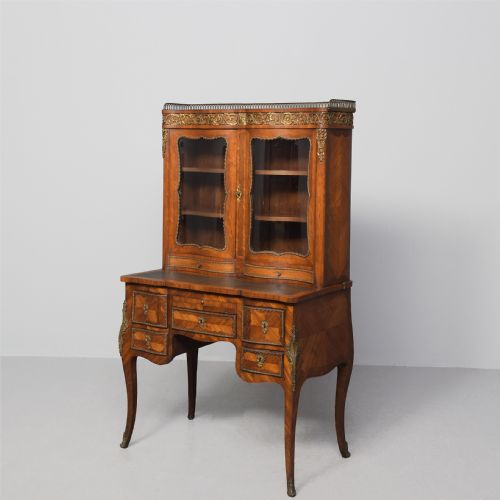
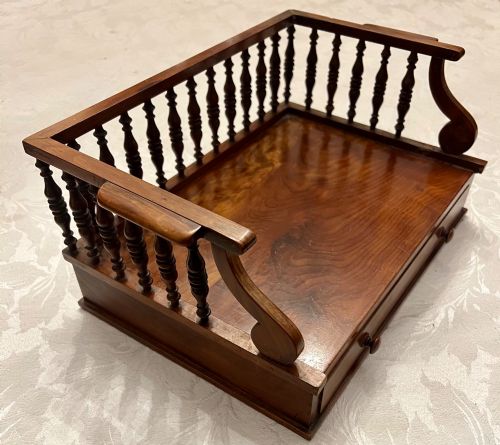
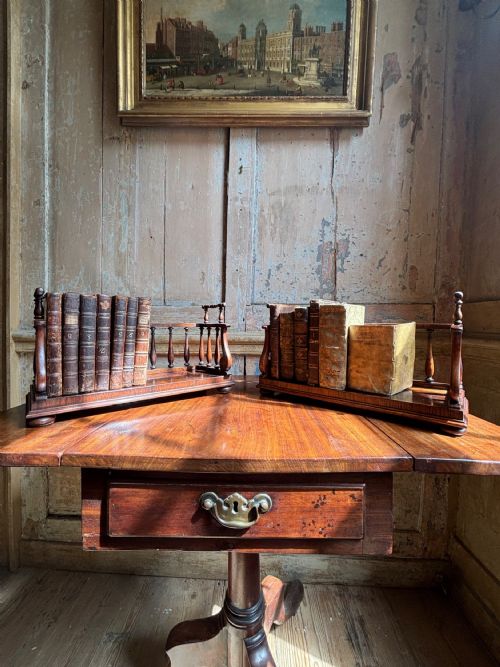
A victorian display desk brings together the utility of a writing surface and the enclosure of a cabinet, offering a place to write and display books.
Victorian Display Desk
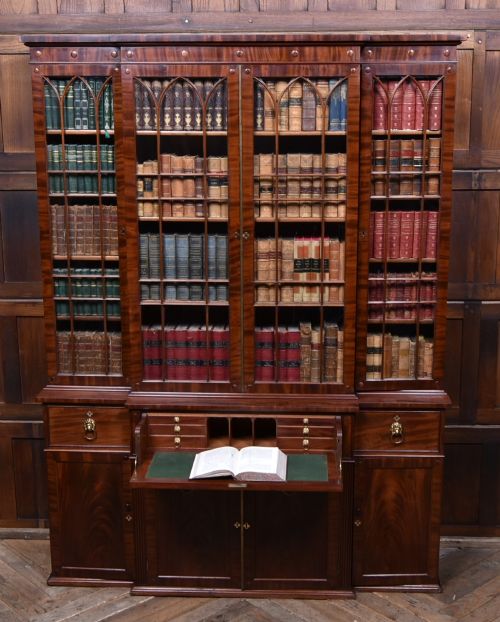
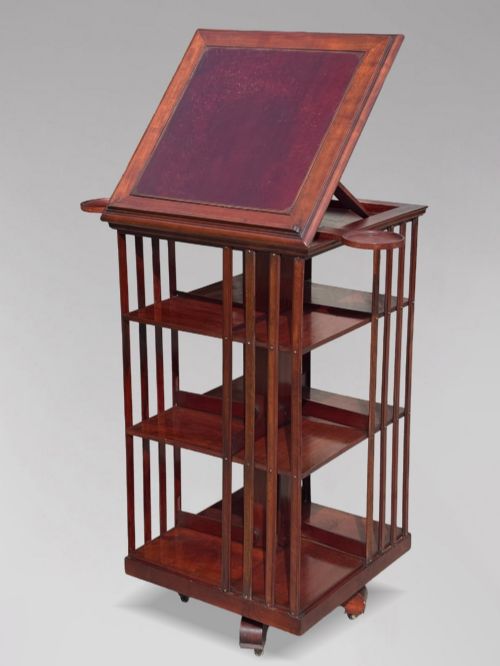
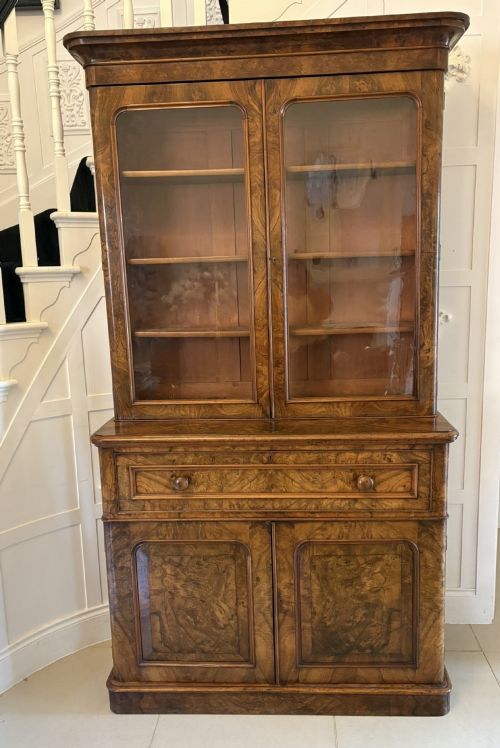
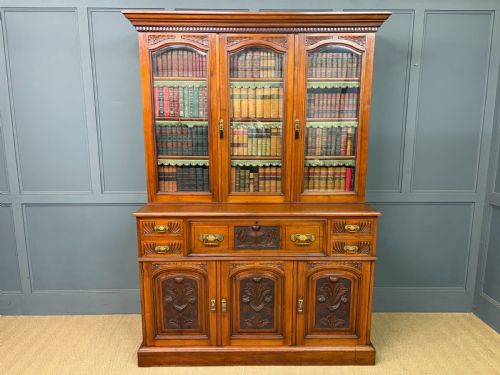
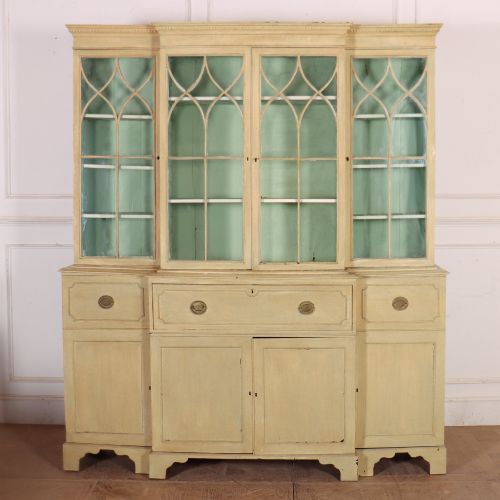
When you search for a victorian display desk, you encounter large library furniture and secretaire bookcases built during the nineteenth century. These items combine writing compartments with glazed or open shelving for books and objects.
The selections recorded on this page lean heavily towards mahogany, walnut, and oak secretaire bookcases alongside related reading stands and library furniture. They originate primarily from the Victorian and wider nineteenth-century periods, reflecting the heavy reading culture of the era.
How they were made
Cabinet makers utilised dense hardwoods such as mahogany, walnut, and rosewood, often applying burr walnut veneers to large flat panels to create patterned surfaces. Secondary timbers like oak appeared in drawer linings and internal framing.
Glazing bars divided the upper cabinet doors into geometric panes of glass, while drop-front writing drawers relied on brass hinges and leather inserts. Structural joints depended on traditional dovetailing and mortise and tenon construction.
Victorian Display Desk Retail Price Guide 2026
Typical asking prices for victorian display desk among the pieces listed under this phrase on Sellingantiques today, from the lower quarter to the upper quarter. They describe what is for sale here now, not the wider market.
Listings feature nineteenth-century furniture predominantly in mahogany, walnut, and oak, spanning Victorian and Regency styles.
What varies in quality
The distinction between ordinary utility pieces and high-end cabinet work rests on timber selection and grain matching. Superior items display carefully matched burr walnut or pollard oak veneers across the entire facade rather than plain sawn planks.
Construction details such as hand-cut dovetails, original brass hardware, and finely carved mouldings elevate the status of a piece. The crispness of carved wooden details and the clarity of the glazed door panels indicate the skill of the workshop.
Morris & Co·Howard & Sons·Negretti & Zambra·William Tonks·Ross of London
The Victorian Display Desk Glossary
- Secretaire
- A desk fitted with a pull-out or drop-front writing drawer that conceals small pigeonholes and miniature drawers. This mechanism allows a tall bookcase to double as a compact writing station.
- Burr walnut
- A prized timber veneer harvested from the wart-like growths on walnut trees, yielding swirling, knotty grain patterns. Cabinet makers used it on prominent exterior surfaces to catch the eye.
- Glazing
- The fitting of glass panes into wooden frames on upper cabinet doors to protect books while keeping them visible. Early examples often feature hand-blown cylinder glass with minor surface ripples.
- Dovetail
- A joint formed by interlocking fan-shaped wooden pins and tails, securing drawer corners together without metal fasteners. Hand-cut versions show slight irregularities compared to machine-cut joints.
Victorian Display Desk: Frequently Asked Questions
What is a secretaire bookcase?
A secretaire bookcase is a tall piece of furniture that combines a lower writing drawer with an upper shelved cabinet for books. The drop-front drawer opens to reveal internal compartments for stationery and letters.
These hybrid items allowed Victorian homeowners to save floor space by merging a library bookcase with a traditional writing desk.
How do I identify Victorian walnut?
Victorian walnut exhibits a rich brown tone with darker grain streaks, often finished with a warm polish that deepens over time. It appears frequently in mid-to-late nineteenth-century cabinets and desks.
Cabinet makers often applied burr walnut veneers over softer woods to create decorative patterns on drawer fronts and door panels.
Where were these pieces used?
These pieces belonged in domestic libraries, studies, and formal drawing rooms of nineteenth-century homes. They served as central storage units for private book collections and correspondence.
Today, they function well in home offices and living spaces where both display shelving and a writing surface are useful.
How do I care for mahogany furniture?
Mahogany furniture requires regular dusting with a soft, dry cloth and protection from direct sunlight to prevent fading. Maintaining a stable indoor humidity prevents the timber and veneers from drying out or cracking.
Avoid placing hot or wet items directly on the polished wooden surfaces to preserve the finish.