


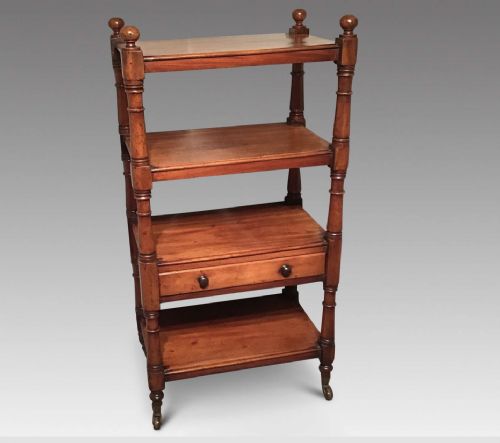

Victorian Dinner Trolley
A victorian dinner trolley is a tiered server built for dining rooms, offering sturdy shelves to move heavy dishes and wine with ease.
Victorian Dinner Trolley
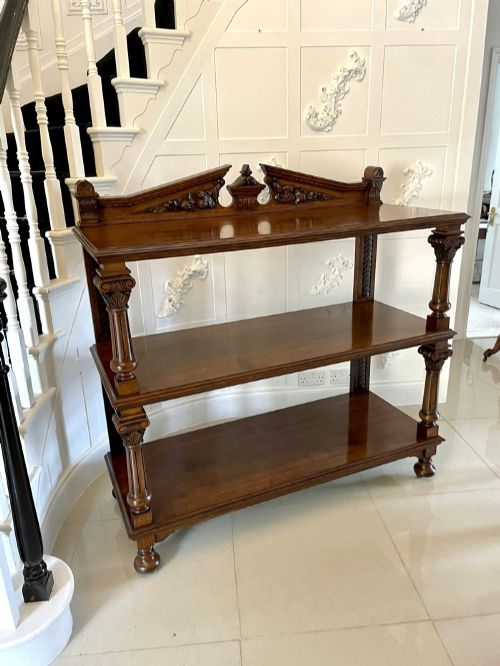
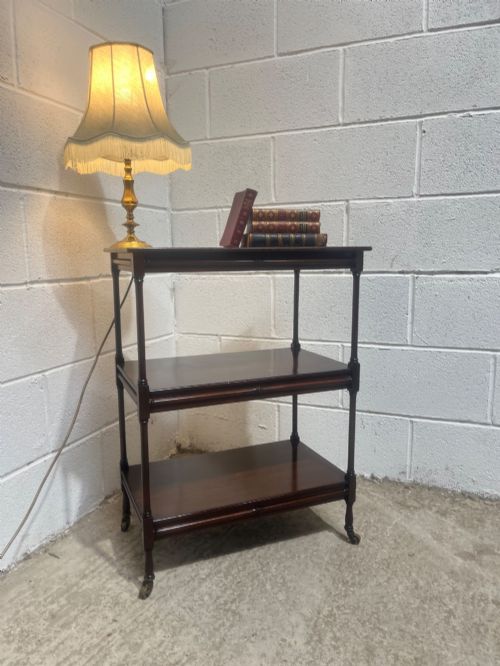
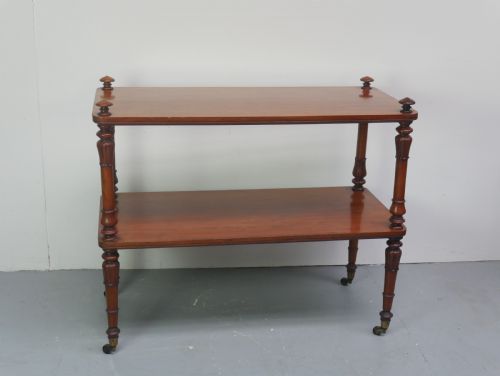
A victorian dinner trolley takes the form of a tiered wooden stand, most frequently seen with three shelves designed for side service in the dining room. These pieces appear in mahogany, walnut, oak, and ebonised wood, often fitted with original castors for movement across the floor.
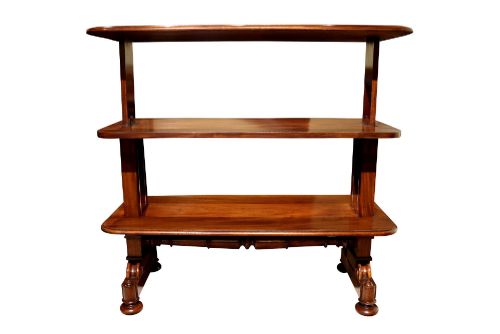
The objects listed under this heading span the nineteenth century, including William IV examples, mid-century pieces, and later Victorian and Aesthetic Movement designs. Alongside standard three-tier buffets and dumb waiters, buyers encounter variations featuring cabinets or adjustable tiers.
Makers such as Maple & Co produced these items, alongside many unrecorded workshops that favoured rich timbers and carved details. The primary function remains serving and display, whether configured as a rise-and-fall buffet or a simple side table.
Distinguishing quality in the build
The selection of timber dictates the visual weight of the piece, with finely figured mahogany and rich walnut standing apart from plainer framing woods. Carved enrichment on the tiers and uprights shows the hand of a skilled workshop rather than standard production.
Mechanical complexity separates simple shelves from sophisticated designs, particularly in fully adjustable tiers and rise-and-fall mechanisms that operate without binding. The presence of original castors and integrated cabinets further distinguishes the top tier of survival.
Forms on this page range from simple three-tier dumb waiters and buffets to side tables and designs with integrated small cabinets.
Maple & Co
The Victorian Dinner Trolley Glossary
- Dumb waiter
- A tiered serving stand used in dining rooms to hold dishes, cutlery, and bottles without needing a servant at the elbow. These items feature multiple shelves supported by turned columns.
- Buffet
- A heavy side table or server with shelves or enclosed cabinet space designed for holding food and serving utensils. They are constructed in mahogany, oak, or walnut.
- Rise and fall
- A mechanical system allowing specific tiers of a serving stand to be adjusted in height using a central screw or ratchet mechanism. This innovation permitted compact storage or altered clearance for tall bottles.
- Castor
- A small wheel mounted on a swivel attached to the base of furniture legs for easy rolling. Original examples on these trolleys are typically made of brass and ceramic.
- Aesthetic Movement
- A late nineteenth-century design style focusing on artistic visual qualities and Japanese-influenced forms rather than heavy historic revivalism. Pieces in this style use ebonised wood and clean lines.
Victorian Dinner Trolley: Frequently Asked Questions
What is a victorian dinner trolley used for?
These tiered stands served as portable sideboards in nineteenth-century dining rooms, holding extra dishes, wine bottles, and serving silver close to the table.
Today, they function well as mobile drinks trolleys, side tables, or display shelving in living spaces and kitchens.
How many tiers do these trolleys have?
The majority of pieces encountered on this page feature three distinct shelves supported by turned wooden columns or pillars.
Some variations also incorporate small enclosed cabinets or adjustable mechanisms on the central shaft.
What woods were used for these pieces?
Cabinet makers predominantly worked with mahogany and walnut, though oak and ebonised wood also appear frequently across the period.
These dense hardwoods provided the structural strength needed to support heavy porcelain and glass across multiple levels.
Are the castors on these trolleys original?
Many pieces retain their original brass and ceramic castors, which permitted smooth movement across heavy dining room carpets.
Checking the fixings where the wheels meet the legs helps confirm whether the hardware belongs to the original build date.