

Victorian Dining Room Table
A victorian dining room table gathers people around solid mahogany and oak, built for long meals and heavy service.
Victorian Dining Room Table
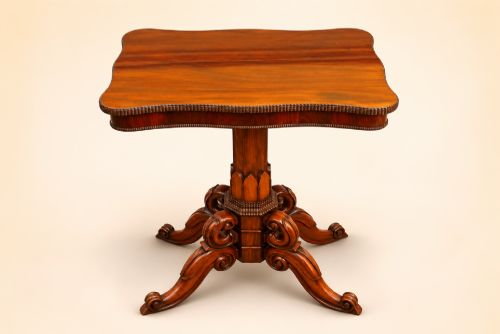
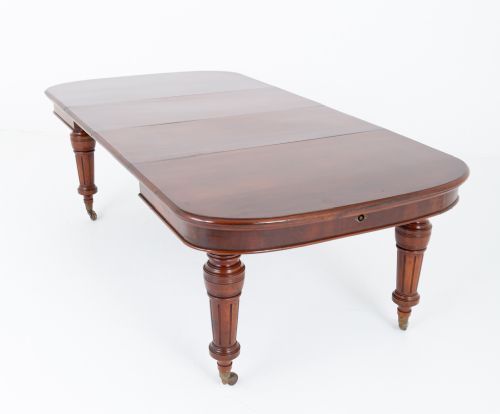
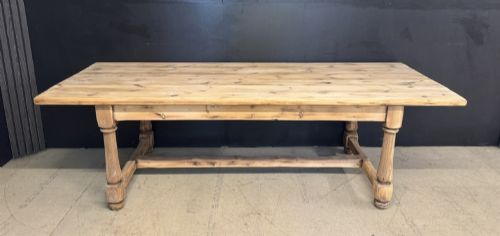
A victorian dining room table sits at the heart of the home, designed to host substantial gatherings through extended leaves and sturdy pedestals. The examples found here span formal mahogany extending formats to robust pine and oak farmhouse types.
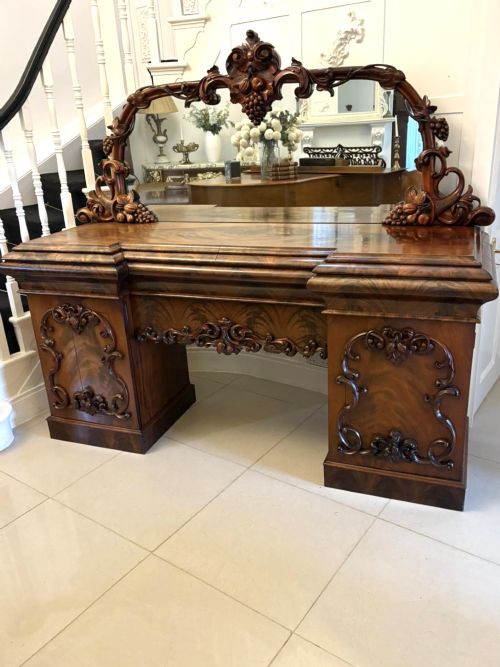
Makers shaped these surfaces to adapt, incorporating extra leaves for expansion during feasts. Alongside tables, the related serving furniture such as sideboards, buffets and dumb waiters complete the dining space.
How they were made
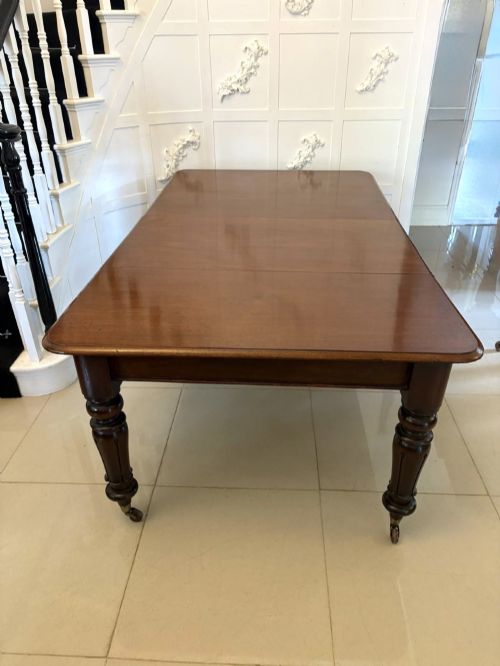
Cabinet makers relied primarily on dense timbers like mahogany, walnut and oak, often applying flame mahogany veneer to show off grain patterns. Brass mechanisms and castors allowed heavy extending dining tables to move smoothly.
Carving was executed by hand, displaying Gothic Revival, Chippendale or plain classical motifs. Secondary woods like pine appeared in structural frames and drawer linings.
Victorian Dining Room Table Retail Price Guide 2026
Typical asking prices for victorian dining room table among the pieces listed under this phrase on Sellingantiques today, from the lower quarter to the upper quarter. They describe what is for sale here now, not the wider market.
What varies in quality
Quality rests in the selection of timber and the precision of the extending mechanism. Solid, well-figured mahogany or walnut holds up better than softer secondary woods over decades of use.
The depth of hand carving and the integrity of joints separate standard workshop output from exceptional commissions.
F & J Smith·Gillows
The Victorian Dining Room Table Glossary
- Extending table
- A dining table fitted with a central mechanism to insert removable leaves. This allows the surface to expand for large dinner parties and shorten for everyday use.
- Dumb waiter
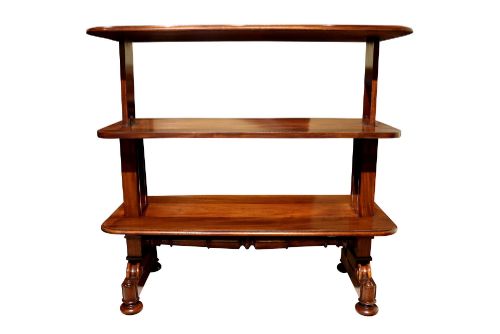
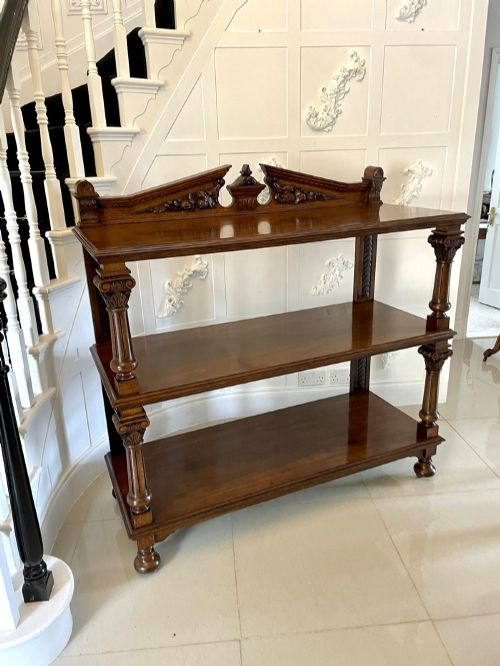
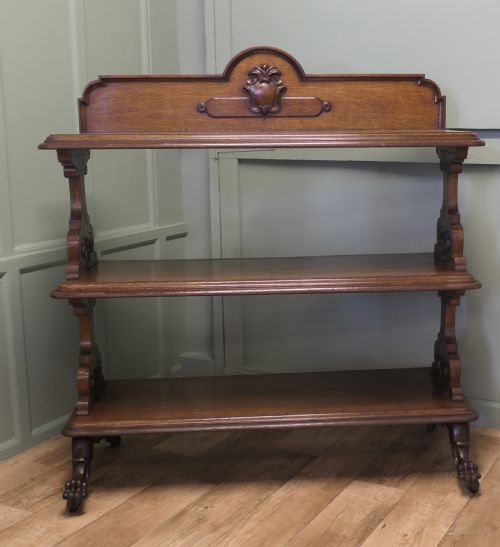
- A tiered freestanding shelving unit or serving table used to hold dishes and cutlery near the dining table. They reduce the need for servants during meals.
- Flame mahogany veneer
- A thin slice of mahogany cut from the fork of the tree where branches meet the trunk. It creates a distinctive rippled flame pattern across large tabletops and sideboards.
- Pedestal base
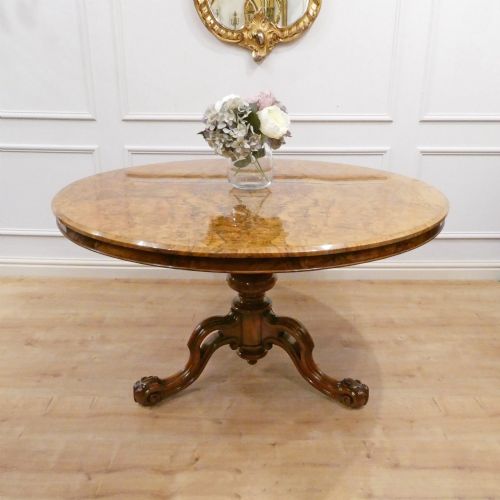
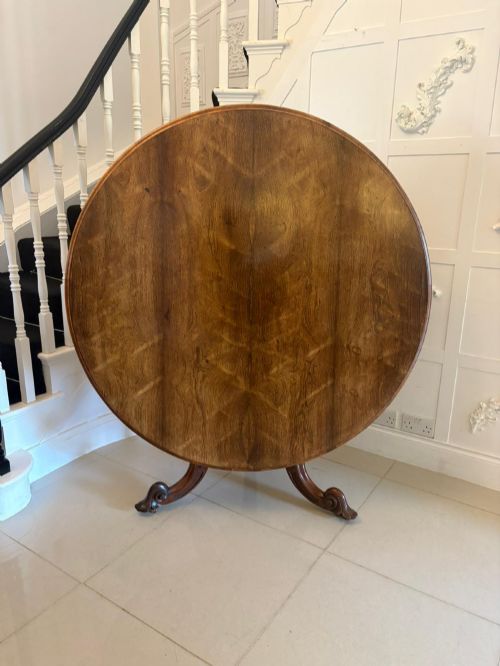
- A central column support resting on feet, commonly used on round or extending tables to maximise legroom around the perimeter.
- Sideboard
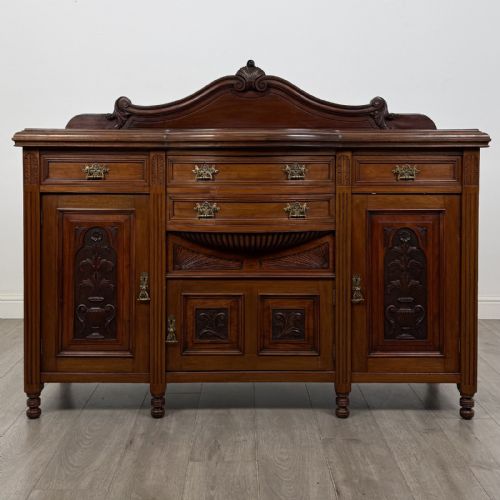
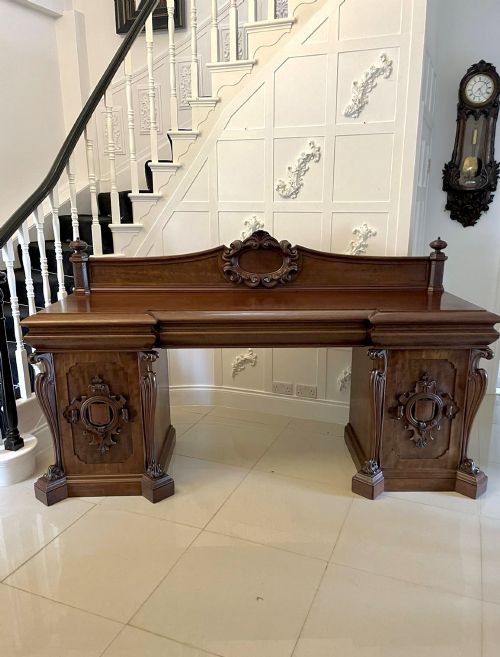
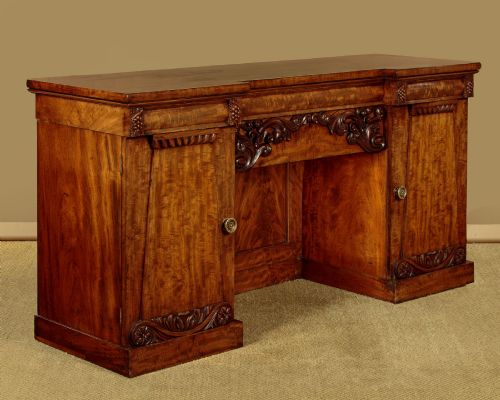
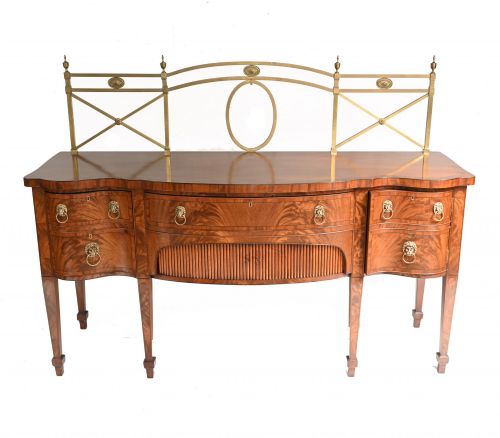
- A long low cabinet placed against the dining room wall for storing silver, linen and serving dishes. They often incorporate brass galleries or raised mirror backs.
Victorian Dining Room Table: Frequently Asked Questions
How do I operate an extending dining table?
Most period extending tables utilise a winder handle and internal wooden runners to pull the two halves apart. Additional leaves drop into the central gap and lock into place with brass pins.
Keep the runners clean and lightly waxed so the timber glides smoothly without binding or straining the joints.
What is the difference between a sideboard and a buffet?
Sideboards generally feature enclosed cupboards and drawers designed for storing heavy dining silver and linens. Buffets often include open tiers or serving shelves intended for presenting dishes.
Both pieces functioned as auxiliary serving stations in nineteenth century dining rooms.
How do I care for a polished mahogany surface?
Apply natural beeswax periodically and buff with a soft cloth to maintain the protective shine. Avoid placing hot dishes or wet glasses directly onto the polished wood.
Keep tables away from direct heat sources and strong sunlight to prevent the timber from drying and splitting.
Can I seat twenty people at these tables?
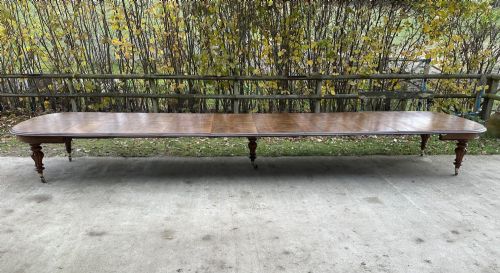
Certain large banquet tables were constructed specifically for boardrooms or grand houses to seat twenty or more guests. These super-sized formats require multiple leaves and heavy pedestal or multileg support.
Check the fully extended length and leg clearance before planning large dinner parties.