
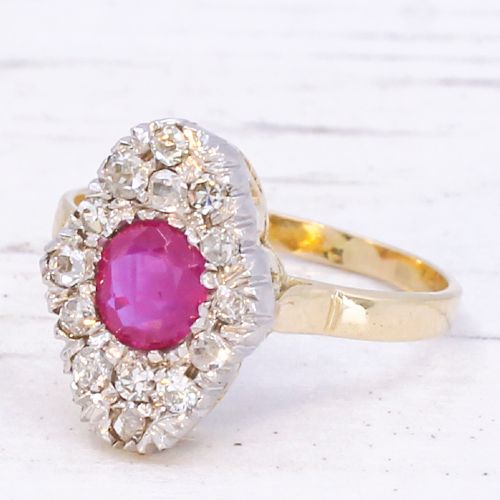


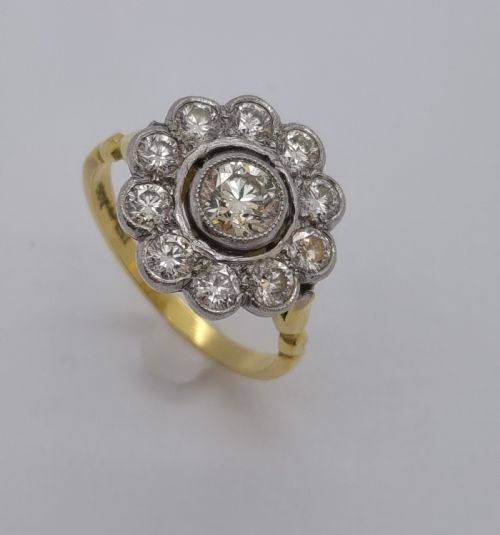


Victorian Diamond Target Ring
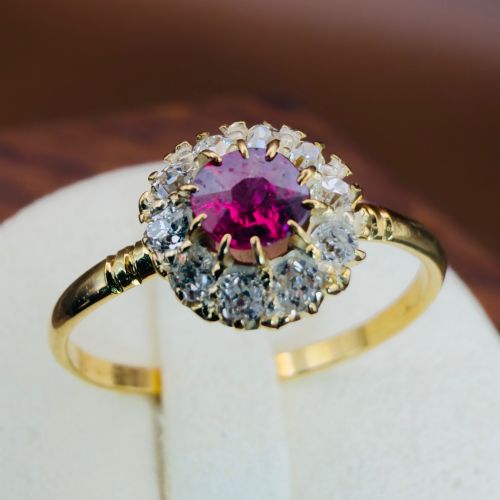
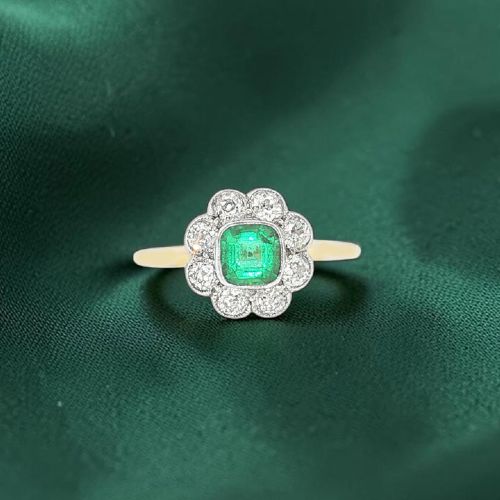
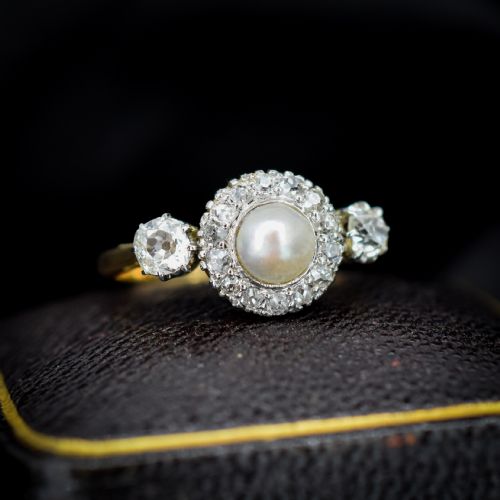
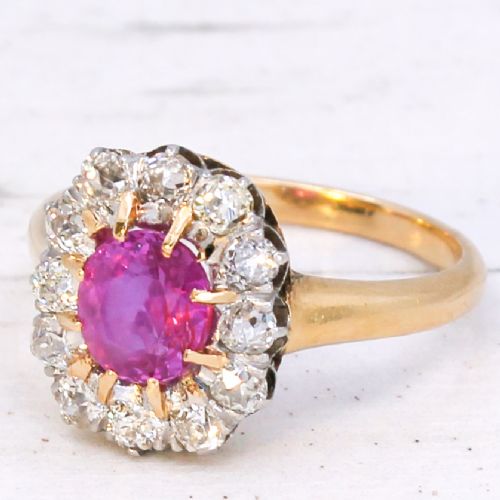
A victorian diamond target ring brings together concentric circles of stones in a precise geometric arrangement that draws the eye directly to the centre.
Victorian Diamond Target Ring
A victorian diamond target ring centres on a distinct circular motif, frequently framing a central stone within matching tiers of smaller gems. The pieces found here span the Victorian and Edwardian periods, stretching from the eighteen-eighties into the early twentieth century.
Beyond the classic all-diamond formations, variations incorporate rubies, sapphires, emeralds, pearls, turquoises, opals, or spinels set into the outer borders. These configurations create concentric bands of contrasting colour that define the target aesthetic.
Most examples rely on traditional yellow gold or eighteen-carat yellow gold for their shanks and settings, occasionally paired with silver overlays on the face. The surviving stock represents a convergence of fine jewellery forms produced across decades of meticulous bench work.
How they were made
Goldsmiths constructed these mounts predominantly in yellow gold and eighteen-carat yellow gold, shaping robust shanks by hand while incorporating detailed wirework or gallery bezels. Silver was frequently deployed on the upper face of earlier pieces to keep white metal surfaces bright against the stones.
Gemstones within these rings include old cut diamonds and rose cut diamonds alongside natural rubies, spinels, sapphires, emeralds, pearls, and turquoise. Stones were secured using delicate claw settings, closed backs, or grain settings that follow the precise circular geometry of the design.
Materials appearing in these archived and active pieces include eighteen-carat yellow gold, silver, pearls, and unheated Burmese gemstones.
What varies in quality
The precision of the concentric tiers dictates the visual harmony of a target cluster, separating routine production from superior bench craftsmanship. Symmetry in the stone arrangement and the uniformity of the surrounding border demand high levels of skill from the maker.
The choice of central gemstone introduces notable variation, particularly when certified natural Burmese rubies, spinels, or substantial old cut diamonds are involved. The pairing of coloured gems with clean diamond borders alters both the visual weight and the character of the piece.
The Victorian Diamond Target Ring Glossary
- Target ring
- A cluster ring featuring concentric rings of gemstones surrounding a central stone, creating a bullseye pattern. This geometric layout defines the primary visual characteristic of the group.
- Old cut diamond
- A hand-faceted diamond cut popular before modern brilliant standards, typically possessing a smaller table and higher crown. These stones display distinctive broad flash patterns under candlelight.
- Rose cut diamond
- A domed gemstone cut with a flat base and triangular facets meeting in a pointed apex. They offer a soft, translucent gleam rather than deep brilliance.
- Cluster ring
- A ring design where a central stone is surrounded by a group of smaller gems. This configuration maximises surface presence on the hand.
- Etruscan revival
- A nineteenth-century design movement drawing inspiration from ancient archaeological discoveries, often featuring granulation and applied gold wirework. Pieces from this style exhibit distinct classical motifs.
Victorian Diamond Target Ring: Frequently Asked Questions
What is a target ring?
A target ring is a specific style of cluster jewellery featuring concentric rings of stones arranged around a central focal point. The resulting circular pattern resembles a target or bullseye.
Such configurations became prominent during the Victorian and Edwardian eras, utilising contrasting gems like rubies, sapphires, or emeralds alongside diamonds to emphasise the geometric layers.
Are these rings suitable for daily wear?
Victorian and Edwardian rings require thoughtful care due to their age and delicate claw or bezel settings. Owners typically remove them during heavy manual tasks to protect the older gold work and mounted gems.
Routine inspection by a jeweller helps ensure the security of the stones within their original concentric tiers.
What gems appear in target rings?
Diamonds form the core of most target designs, frequently appearing as old cuts or rose cuts in the central position or surrounding borders. Coloured stones such as rubies, sapphires, spinels, pearls, and turquoise are also common.
These varied combinations of materials allow for striking colour contrasts between the inner focal stone and the outer rings.