


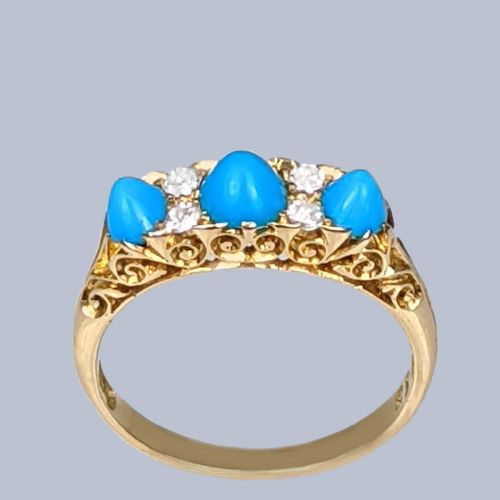
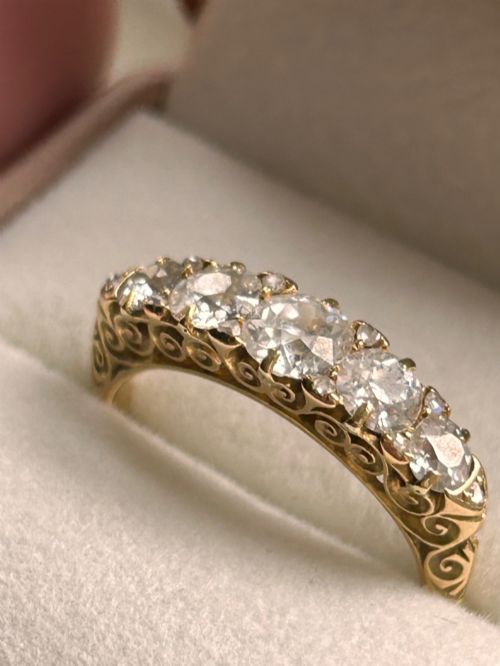
Victorian Diamond Band Ring
A victorian diamond band ring brings together old cut stones and heavy gold in designs meant for daily wear.
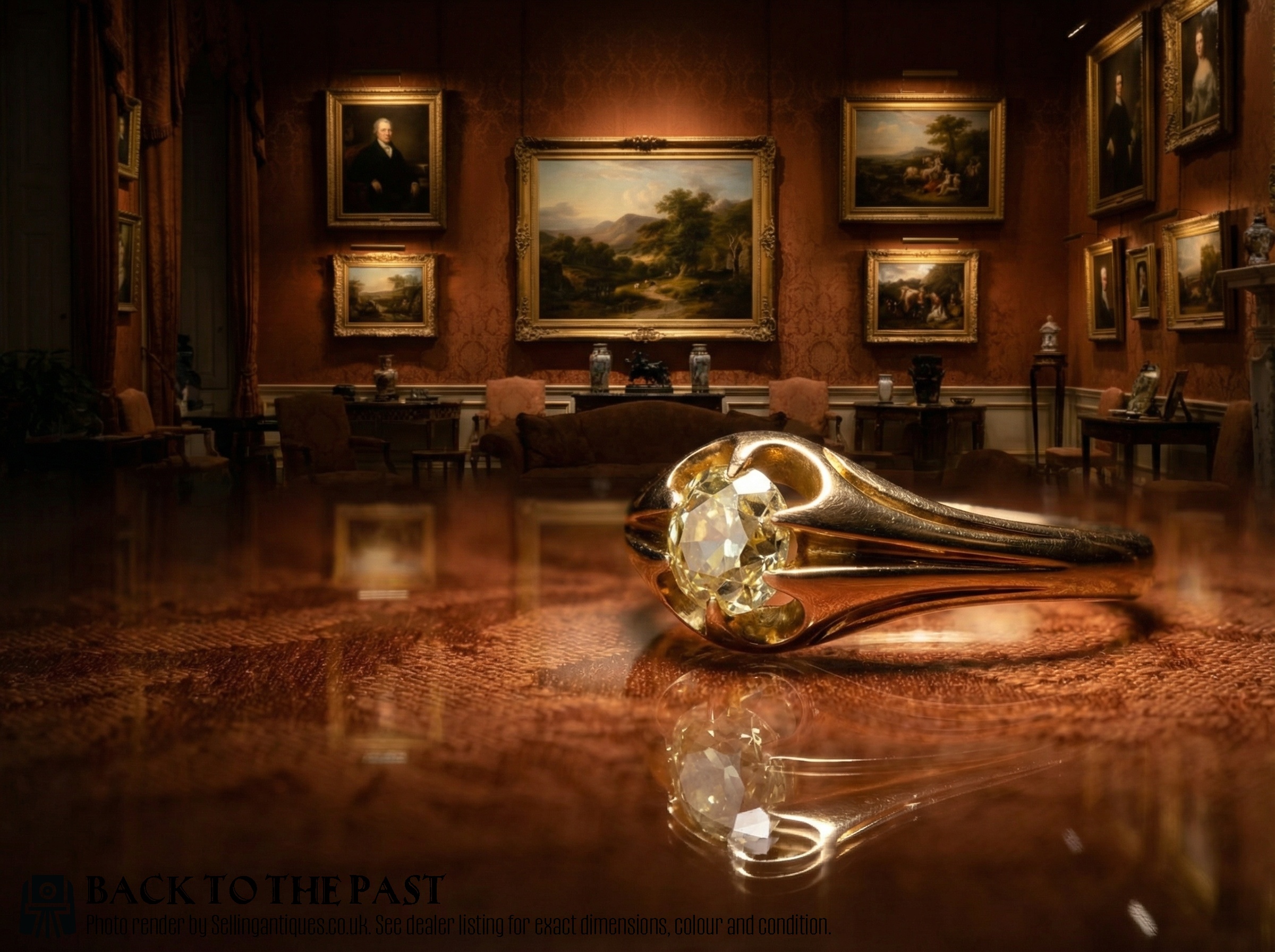
Victorian Diamond Band Ring
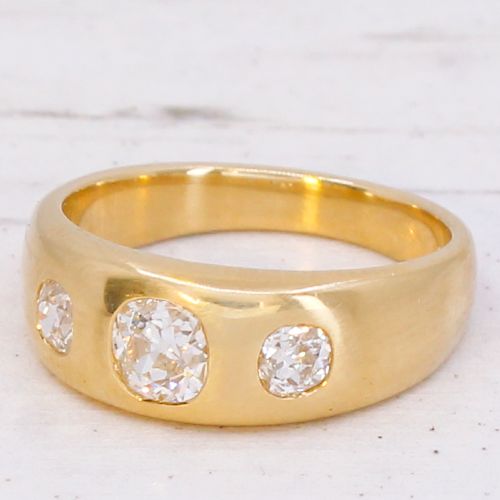
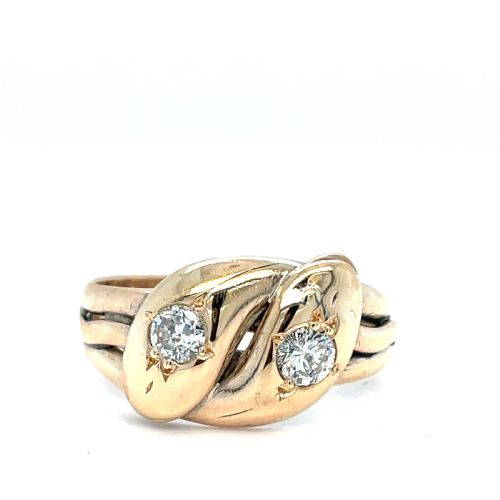
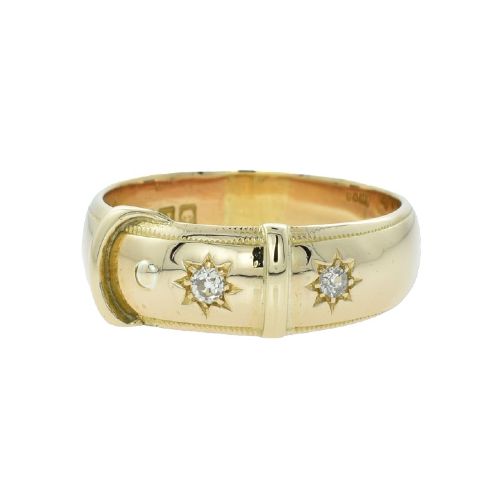
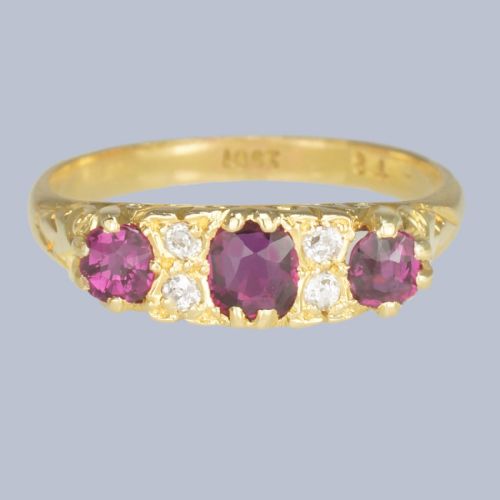
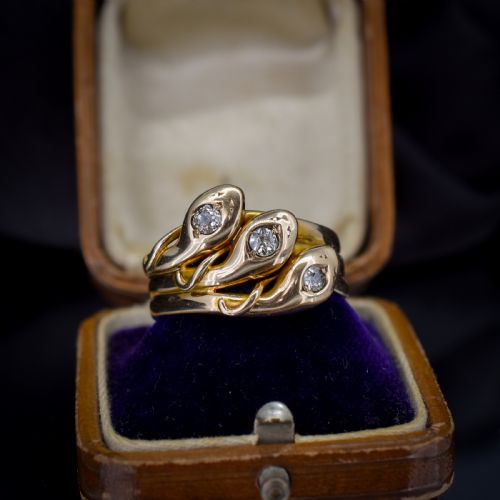
A victorian diamond band ring sits flat to the finger, often taking the form of a gypsy setting, a buckle, a snake, or a multi-stone half hoop. These pieces were designed to withstand daily use without catching on fabrics.
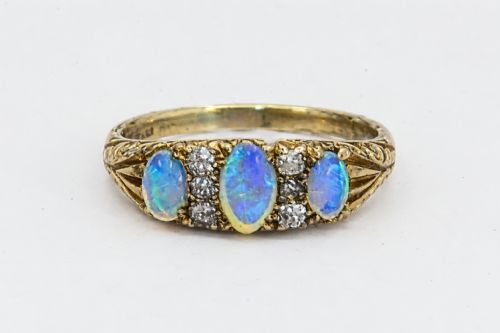
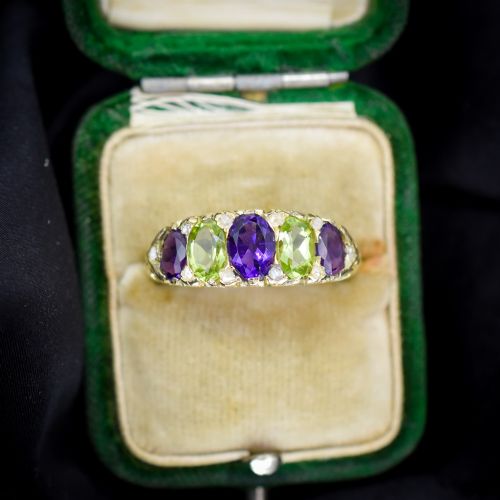
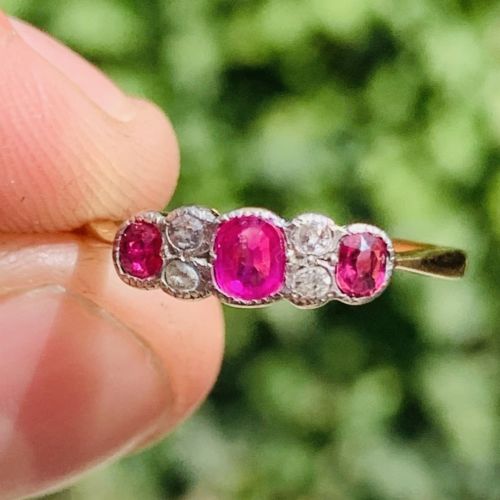
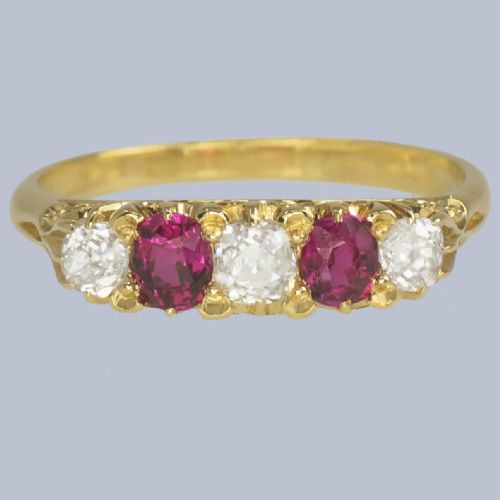
The version most commonly met on this page is the 18ct yellow gold band, integrating old cut diamonds alongside rubies, sapphires, turquoise, or opals. Many of these examples date from the late nineteenth century and the early twentieth century.
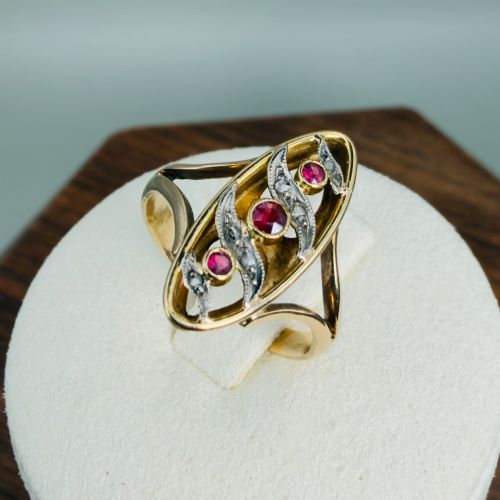
Beyond the standard band configurations, buyers encounter navette styles, boat rings, starbursts, and serpentine motifs wrapping around the finger. Each form reflects the varied tastes of the Victorian and Edwardian periods.
How they were made
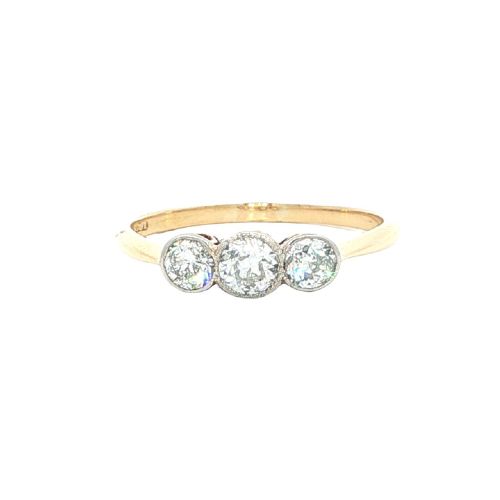
Goldsmiths utilised 18ct yellow gold, alongside occasional 15ct or 9ct variants, casting and forging heavy metal bands to securely hold the stones flush or within low starburst settings. Platinum appears in later pieces, particularly around the turn of the twentieth century, to mount diamonds with a bright white contrast.
Diamonds used in these rings are predominantly old mine cuts and old European cuts, exhibiting distinct hand-faceted proportions that differ from modern brilliant cuts. Coloured gemstones such as Burmese and Mogok rubies, sapphires, turquoise, opals, and pearls were set alongside these diamonds using traditional grain and flush techniques.
Listings feature yellow gold, platinum, and multi-stone combinations spanning the Victorian, Edwardian, and Art Deco periods.
What varies in quality
The substance of the band dictates much of the physical quality, with heavier weight and thicker gold shanks showing better preservation through decades of wear. Lighter bands or those worn thin at the back demonstrate the physical toll of time.
Stone selection and matching create the distinction between standard production and finer examples. Uniformity in old cut diamonds, coupled with rich natural colour in accompanying rubies, sapphires, or opals, elevates the overall execution of the ring.
The Victorian Diamond Band Ring Glossary
- Gypsy setting
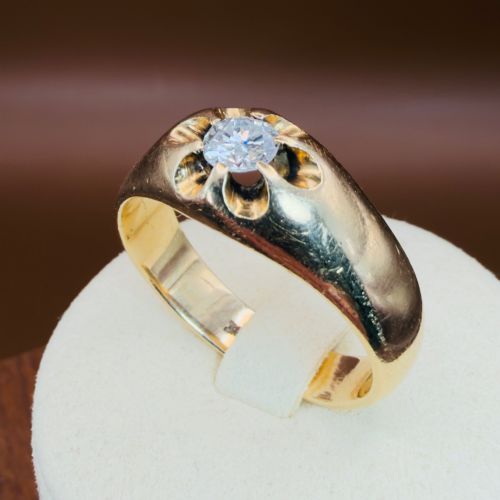
- A mounting style where the diamond is flush-set directly into the thick gold band, sloping smoothly down to the metal. This technique protected the girdle of the stone during manual labour.
- Old cut diamond
- A hand-faceted diamond cut before the modern brilliant standard was established around 1919. These stones typically feature smaller tables, higher crowns, and open culets.
- Trilogy ring
- A ring featuring a sequence of three principal gemstones set across the finger. In Victorian examples, these often pair a central diamond with coloured side stones.
- Navette
- A boat-shaped or marquise-like setting that stretches lengthwise along the finger. This style accommodates clusters of diamonds and coloured gems in an elongated silhouette.
- Buckle ring
- A design sculpted to resemble a buckled belt wrapping the finger. This motif symbolised loyalty and enduring attachment during the Victorian era.
Victorian Diamond Band Ring: Frequently Asked Questions
Can I wear my ring every day?
These bands were built for daily wear with flush or low-profile settings that protect the stones.
Softer gems like turquoise or opal require more care than diamonds, so removing the ring during heavy manual tasks preserves the setting.
What is an old cut diamond?
Old cut diamonds are hand-faceted stones shaped before modern machinery standardised cutting angles.
They display smaller table facets and deeper pavilions, producing a softer candlelight sparkle rather than sharp modern brilliance.
How do I know if the ring is Victorian?
Victorian rings show characteristic hand-wrought details, specific gold carat marks such as 18ct, and traditional gemstone combinations.
Hallmarks stamped inside the band often include date letters or assay office symbols that confirm the exact year of origin.
What does gypsy set mean?
A gypsy setting embeds the diamond flush into a thick gold band rather than lifting it in claws.
This seamless profile prevented the ring from snagging on clothing and remained popular for both men and women throughout the nineteenth century.