







Victorian Dessert Spoons
Victorian dessert spoons bring the weight of nineteenth-century dining tables into modern hands, offering distinct craftsmanship in silver and silver gilt.
Victorian Dessert Spoons
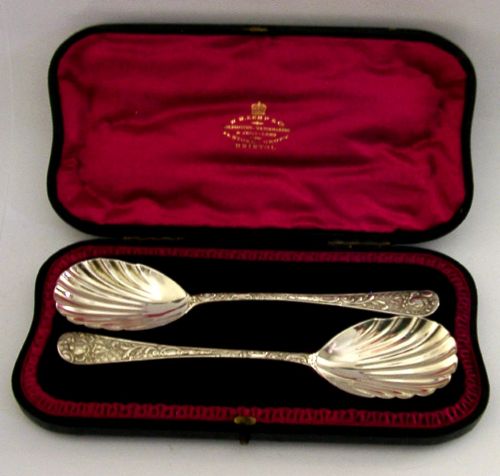
Victorian dessert spoons represent a specific category of nineteenth-century tableware designed for the middle course of a formal meal. Buyers searching this phrase encounter various forms, including cased pairs, individual serving pieces, and fruit sets.
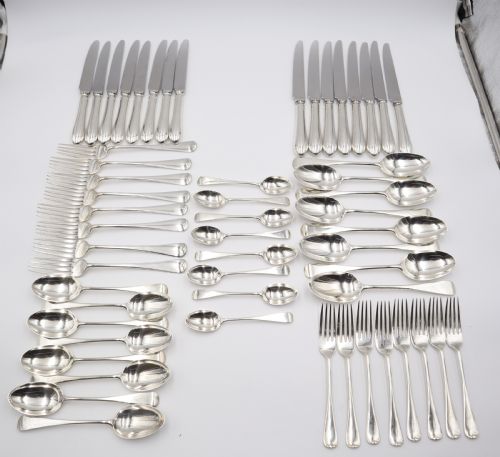
The pieces appearing on this page span the Victorian era, alongside associated nineteenth-century items and occasional Edwardian or Georgian crossovers. Most examples take the form of sterling silver or silver plate spoons, frequently accompanied by fitted presentation boxes or matching serving accessories.
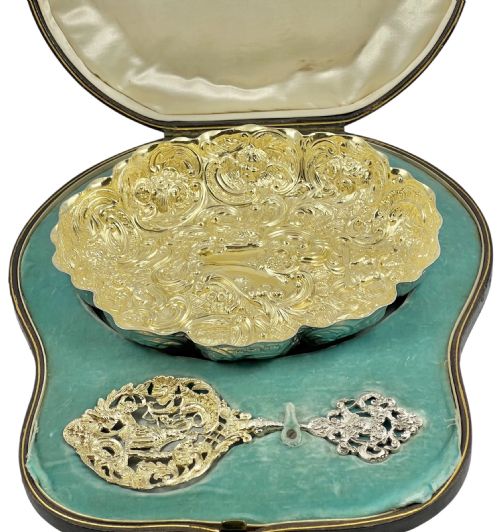
Makers and silversmiths utilised traditional metalworking techniques to produce these utensils, often enhancing them with parcel gilding or elaborate chased fruit motifs. They appear both as standalone pairs and as part of larger cutlery canteens.
Materials and construction
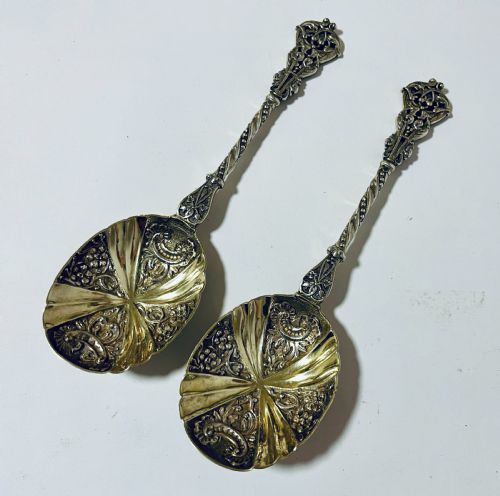
The construction of Victorian dessert spoons relies predominantly on sterling silver and silver plate, shaped to withstand daily household use. Many examples incorporate silver gilt surfaces, applying a thin layer of gold over the silver base to create a contrasting decorative finish.
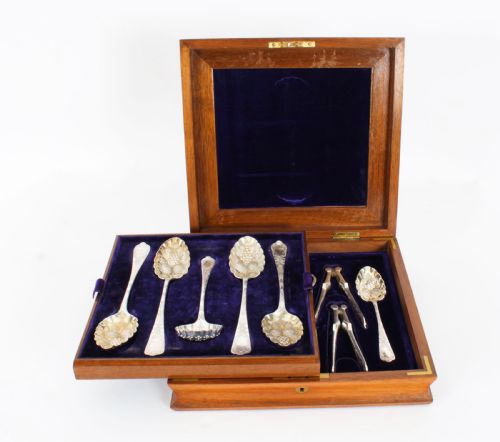
Makers employed engraving and chasing techniques to decorate the handles and bowls, frequently featuring fruit and berry designs. Presentation sets integrate textile linings such as velvet, silk, and satin within fitted wooden boxes to protect the metalwork.
Victorian Dessert Spoons Retail Price Guide 2026
Typical asking prices for victorian dessert spoons among the pieces listed under this phrase on Sellingantiques today, from the lower quarter to the upper quarter. They describe what is for sale here now, not the wider market.
Listings feature materials including sterling silver, silver plate, silver gilt, and glass, alongside velvet, satin, and silk box linings.
Factors of distinction
Quality in these items rests upon the crispness of the hand-engraving and the depth of the chased decoration on the bowl and handle. Plain patterns demand precise balance and weight, whereas heavily ornamented pieces depend on the clarity of the fruit or berry motifs.
The presence of an original fitted case lined in silk, satin, or velvet alters the character of a set. Complete canteens or matching pairs demonstrate a higher level of original commissioning than assembled groups of individual spoons.
Hukin and Heath
The Victorian Dessert Spoons Glossary
- Sterling Silver
- A standard alloy consisting of ninety-two point five percent silver by mass, with the remainder composed of copper or other metals. This alloy provides the durable foundation for quality nineteenth-century tableware.
- Silver Gilt
- Sterling silver or silver plate that has been coated with a thin layer of gold on its surface. This technique produces a rich two-tone or fully gilded appearance.
- Berry Spoon
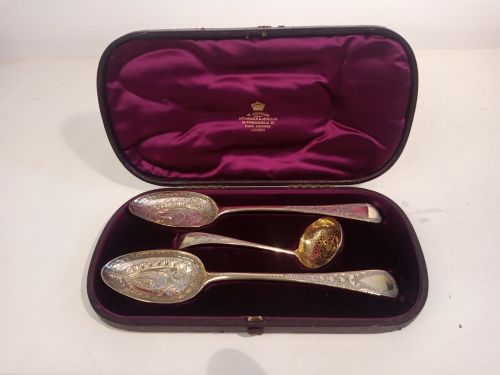
- A serving spoon featuring fruit and leaf engraving or repoussé work added to the bowl, often during the Victorian period. These pieces were typically designed for serving soft fruits and desserts.
- Flatware
- Table utensils used for eating, serving, or preparing food, including spoons, forks, and knives. The term encompasses both everyday sets and formal dining implements.
Victorian Dessert Spoons: Frequently Asked Questions
What were Victorian dessert spoons used for?
These utensils were created for the dessert course of formal nineteenth-century meals, specifically for eating puddings, jellies, and stewed or fresh fruits. They sat beside the plate alongside specialised fruit knives and forks.
Over time, many of these spoons transitioned into serving roles for specific dishes like berries, particularly when paired with sugar sifters or cranberry glass bowls in fitted presentation cases.
How do I care for silver spoons?
Maintaining sterling silver and silver plate requires gentle cleaning with specialised silver polishes to remove tarnish without wearing away thin plate or fine engraving. Storing pieces in dry, tarnish-resistant cloths or original fitted boxes helps preserve the metal.
Avoiding harsh chemical dips and abrasive scouring pads ensures that delicate chased fruit patterns and parcel gilt finishes remain intact for daily use or display.
Can I use antique spoons daily?
Sterling silver and heavy silver plate tolerate regular use well because the underlying metal alloys were forged for practical dining. Hand washing after use prevents the accelerated wear associated with modern dishwashers.
Delicate gilt surfaces and cased presentation sets demand more careful handling, making them better suited for special occasions rather than robust everyday dining.
How are different periods identified?
Identifying the age of tableware involves examining official hallmarks stamped into the metal, which indicate the assay office, date letter, and maker's mark. Stylistic clues, such as palm patterns or berry chasing, also point toward specific decades within the nineteenth century.
Transitions from the early Victorian era into Edwardian manufacturing show subtle shifts in box construction, lining materials like silk and velvet, and overall weight distribution.