




Victorian Desk with Superstructure
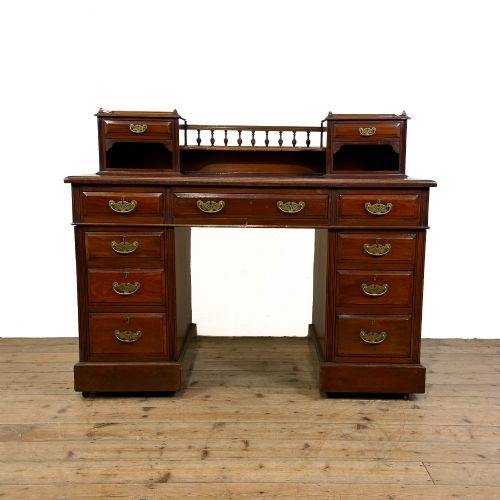
A Victorian desk with superstructure brings architectural presence and tiered compartments to a room, offering private pigeonholes and shelved tidy spaces above the writing surface.
Victorian Desk with Superstructure
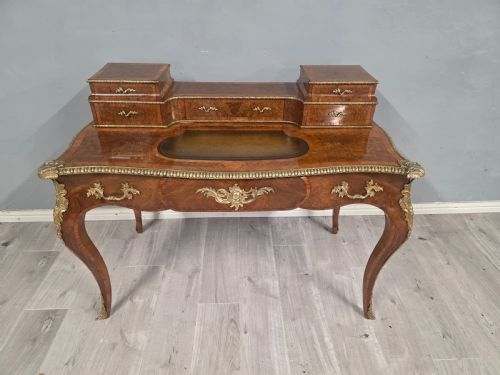
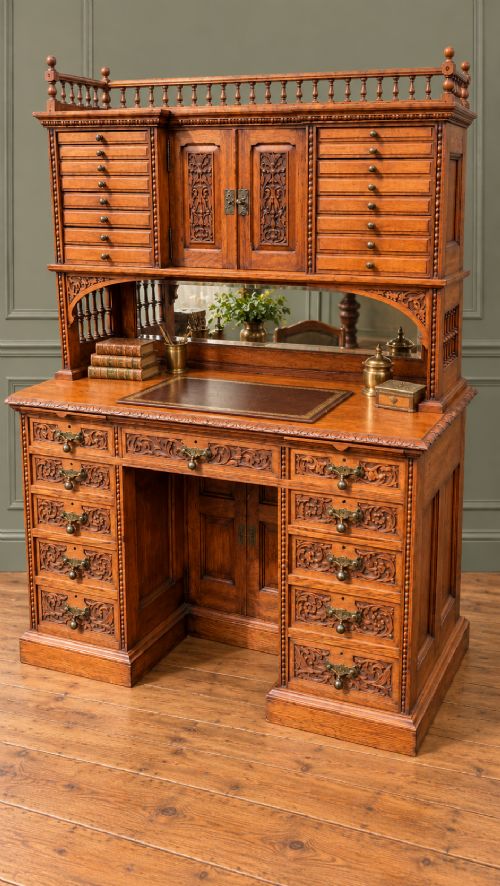
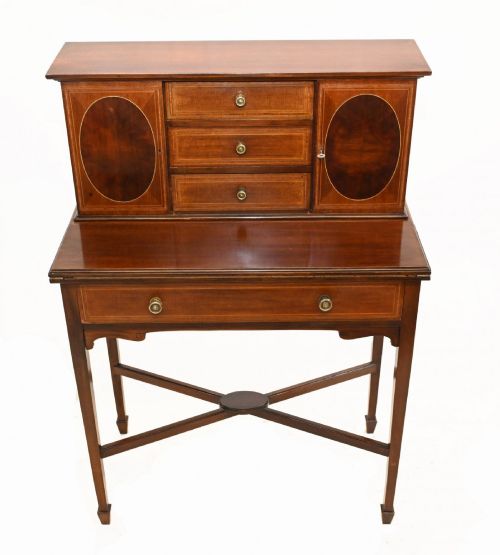
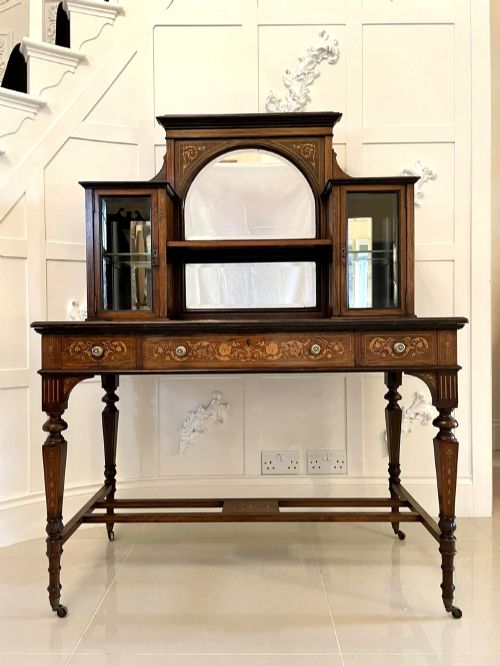
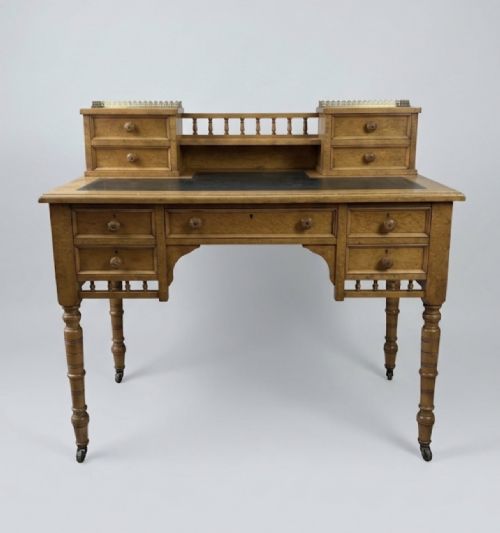
A Victorian desk with superstructure comprises a writing surface combined with an upper tier of drawers, shelves, or pigeonholes, often called a cabinet top or bureau de dame. These pieces emerged across the nineteenth century, with examples dating from eighteen sixty through to nineteen hundred, encompassing various pedestal and ladies writing desk forms.
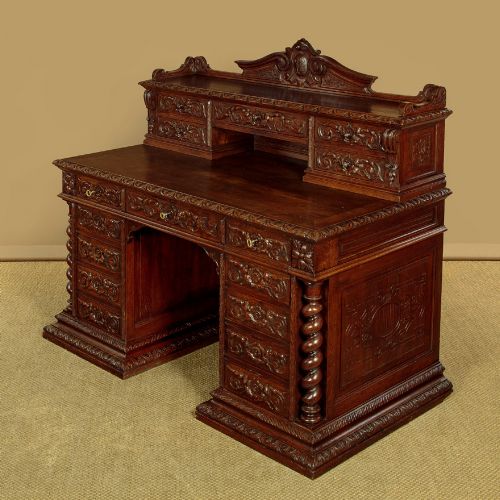
Makers utilised distinct timber palettes across these decades, ranging from rich mahogany and golden oak to burr walnut, pollard oak, birds-eye maple, and satinwood. The superstructure itself provides structural complexity, sometimes featuring ormolu mounts, glass panels, or carved details that frame the central writing area.
Buyers encounter pedestal formats alongside smaller ladies writing desks, reflecting the diverse domestic and professional requirements of the era. This grouping demonstrates how nineteenth-century cabinet makers adapted writing furniture to accommodate the growing volume of correspondence and documentation.
How they were made
Cabinet makers constructed these pieces using dense hardwoods such as oak and mahogany as foundational carcasing, frequently applying veneers of burr walnut, pollard oak, or birds-eye maple to visible exterior surfaces. These figured timbers required expert selection and matching to create symmetrical grain patterns across drawers and superstructure doors.
Metal hardware played a crucial functional and decorative role, incorporating brass handles, locks, and occasionally ormolu mounts to accent the timber frames. Writing surfaces were routinely inset with leather panels, providing a durable and tactile writing medium framed by the surrounding wood.
Victorian Desk with Superstructure Retail Price Guide 2026
Typical asking prices for victorian desk with superstructure among the pieces listed under this phrase on Sellingantiques today, from the lower quarter to the upper quarter. They describe what is for sale here now, not the wider market.
Superstructure compartments hide tiny secret drawers that make owners feel like nineteenth-century spies.
What varies in quality
Superstructure complexity and timber selection dictate the relative standing of individual pieces, with figured veneers like burr walnut and birds-eye maple demanding greater joinery skill than plain hardwoods. The integration of the upper tiers with the lower desk body reveals the precision of the cabinet maker.
Attribution to documented firms elevates a piece, as does the survival of original brass fittings, fitted leather inserts, and internal drawer arrangements. Carved enrichment and secondary decorative elements such as ormolu mounts distinguish standard commercial production from ambitious workshop output.
Hobbs & Co.·Thomas Turner·Howard & Son·James Lamb, Manchester
The Victorian Desk with Superstructure Glossary
- Superstructure
- An upper tier of shelving, drawers, or compartments mounted above the main writing surface. This addition provides extra storage for stationery and correspondence while framing the desk below.
- Pedestal desk
- A heavy writing table featuring two banks of drawers supporting the top. These pieces typically offer substantial storage capacity beneath the main work area.
- Bureau de dame
- A ladies writing desk, often featuring delicate proportions and fitted interior compartments. These smaller forms suited domestic boudoirs and drawing rooms.
- Pollard oak
- Oak timber derived from trees that were cut back to promote dense, decorative branching patterns in the grain. Cabinet makers valued this wood for its distinctive circular knot formations.
- Ormolu
- Gilt-bronze mounts applied to furniture for decorative effect. The technique involves creating a mercury gilding finish over cast bronze.
Victorian Desk with Superstructure: Frequently Asked Questions
What is a Victorian desk with superstructure?
A Victorian desk with superstructure is a nineteenth-century writing table that includes an attached upper tier of drawers, pigeonholes, or a small cabinet. This built-in upper section keeps writing materials and correspondence organised close at hand.
Such pieces range from massive oak pedestal formats down to delicate ladies writing desks veneered in burr walnut or birds-eye maple.
How were these desks used?
These desks served as private writing stations for managing correspondence, household accounts, and professional documents. The superstructure compartments provided dedicated slots for letters, envelopes, and small books.
The writing surface remained clear for day-to-day paperwork while papers could be sorted and stored vertically within the upper tiers.
Where should I place one?
A pedestal or writing desk with a superstructure works best against a solid wall or floating within a spacious room, as the tiered back panel has a finished appearance. Ensure adequate clearance for chair movement and drawer access.
Good natural light from the side or front complements the detailed timber grains like mahogany and oak without causing glare on inset leather surfaces.
How do I identify the period?
Dating relies on timber choices, construction methods, and stylistic cues such as Renaissance Revival carving or simpler late-nineteenth-century lines. Marked pieces often bear stamps from known firms active between eighteen sixty and nineteen hundred.
Secondary woods, drawer linings, and the style of brass hardware provide further physical clues to the exact decade of manufacture.