



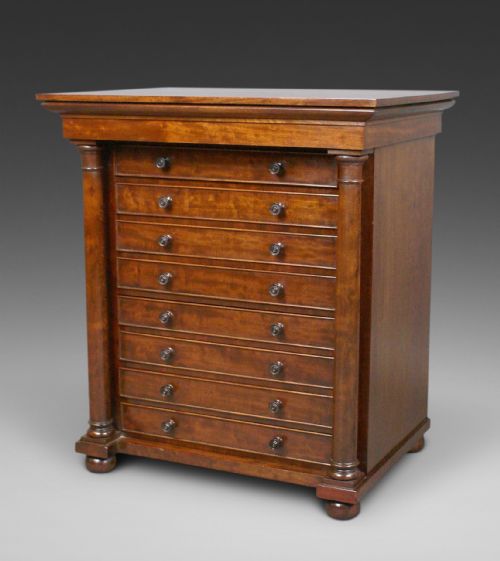


Victorian Desk Top Chest
These Victorian desk top chest examples offer compact storage for letters and papers, crafted to sit neatly on a larger surface.
Victorian Desk Top Chest
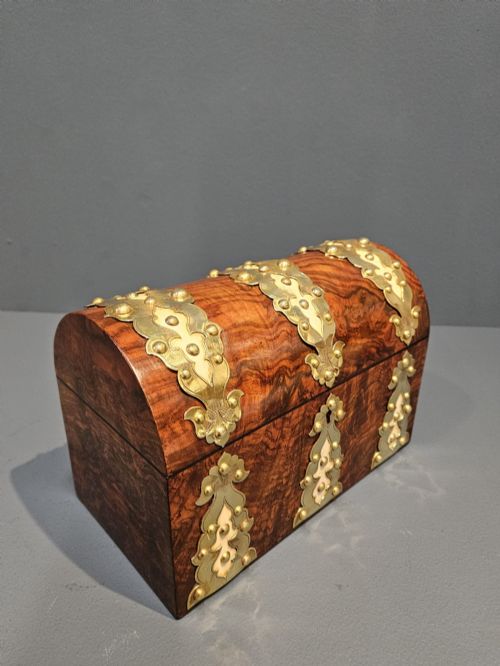
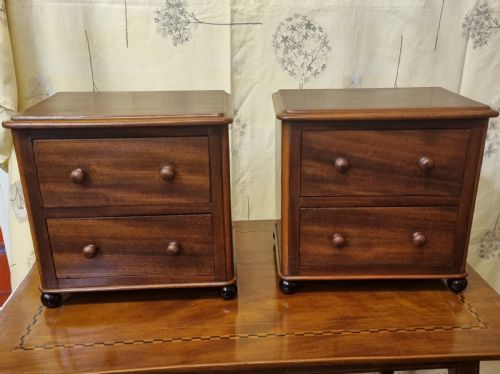
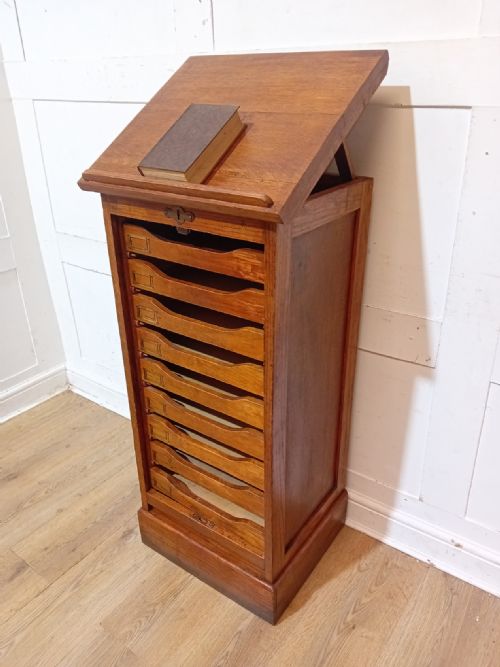
A Victorian desk top chest provides miniature drawer space or stationery storage designed to sit upon a writing table or bureau. These pieces range from small folding drawer units to brass-bound stationery boxes and tabletop chests from the nineteenth century.
The selections on this page capture the varied domestic and campaign storage forms of the era. Buyers encounter mahogany, oak, and burr walnut constructions built for organising correspondence and small valuables.
Materials and Construction
Cabinet makers utilised dense hardwoods such as mahogany, oak, and walnut, frequently enhancing surfaces with burr veneers like walnut, elm, and amboyna. These woods provided both structural stability and rich grain patterns.
Metalwork played a key structural and decorative role, with brass corner mounts, campaign straps, and handles fitted securely to protect edges and facilitate transport. Interiors often incorporated fitted compartments, mirror glass, or leather writing slopes.
Victorian Desk Top Chest Retail Price Guide 2026
Typical asking prices for victorian desk top chest among the pieces listed under this phrase on Sellingantiques today, from the lower quarter to the upper quarter. They describe what is for sale here now, not the wider market.
Some nineteenth-century portable desks folded out with concealed spring mechanisms designed to surprise the unwary traveller.
Factors of Quality
Quality rests upon the selection of timber veneers and the precision of the joinery. Superior examples display carefully matched burr walnut or mahogany grains that wrap seamlessly across corners and drawer fronts.
Hardware integration distinguishes finer pieces, seen in heavy cast brass mounts fitted flush to the wood and robust locking mechanisms. The complexity of interior fittings, such as secret drawers or metamorphic folding actions, further elevates the standard.
Edwards & Roberts
The Victorian Desk Top Chest Glossary
- Burr Walnut
- A figured wood veneer taken from the excrescences or burls of walnut trees, prized for its swirling, highly decorative grain patterns. It appeared frequently on high-status Victorian boxes and cabinets.
- Campaign
- Portable furniture designed for military officers and travellers during the nineteenth century. These pieces typically feature recessed brass handles and reinforced corners for durability.
- Stationery Box
- A desk accessory constructed with sloping or domed lids to hold writing paper and envelopes. Victorian versions often include internal divisions and pen trays.
- Metamorphic
- Furniture designed to transform from one form into another, such as a writing box that unfolds into a sloping desk. These pieces rely on clever internal hinges and folding supports.
- Davenport
- A small compact desk featuring a sloping writing surface above a pedestal of drawers. The nineteenth-century forms frequently incorporated side stationery wells and pull-out slides.
Victorian Desk Top Chest: Frequently Asked Questions
What is a Victorian desk top chest used for?
These small chests provided secure storage for letters, writing paper, and personal valuables in nineteenth-century homes and offices. They sat directly on top of larger desks or tables to keep essential papers organised.
Today, they serve a similar purpose for storing modern stationery, photographs, or small keepsakes while adding period character to a room.
How do I identify a nineteenth-century piece?
Look for construction traits typical of the period, such as hand-cut dovetail joints on drawers and the use of solid secondary timbers like oak or pine behind veneers. Materials like burr walnut, coromandel, and heavy brass mounts also point to nineteenth-century manufacturing.
Examine the locks and hinges for hand-finishing marks and check for timber shrinkage consistent with age.
What woods were used for these chests?
Cabinet makers relied primarily on durable hardwoods such as mahogany and oak for the main carcase and drawer linings. Highly decorative veneers like burr walnut, amboyna, and pollard oak decorated the exterior surfaces.
Exotic woods like coromandel and camphor also appear, particularly on campaign and travel pieces intended for durability.
Where should I place a tabletop chest?
These compact pieces fit well on top of writing desks, sideboards, or large chest of drawers where their detailed grain and brass mounts can be appreciated. Ensure the surface is stable and shaded from direct sunlight to protect the wood and veneer.
They also work effectively on hallway tables for holding keys and daily correspondence.